



The fuel shortage is becoming increasingly serious. Lufthansa has already cancelled 20,000 flights. Air France has increased prices for economy class tickets by 50 euros per return journey, and the Dutch airline KLM has suspended more than 160 flights. At the same time, the International Energy Agency has announced that Europe will only have enough aircraft fuel reserves to last six weeks. However, the problem is already affecting industries across the globe. All major airlines are currently making massive cuts, particularly Turkish Airlines, which has cancelled nearly 20 routes. There are already companies that simply haven’t been able to cope with the situation. One such company is the US carrier Spirit Airlines, which filed for bankruptcy a few days ago. Although the name of this carrier may mean little to many readers, it is worth looking at the figures. Last year, the company operated more than 300,000 flights, carried 30 million passengers and held a 3.5% market share among US airlines. It is therefore not a small airline, but a national giant with more than 17,000 employees.
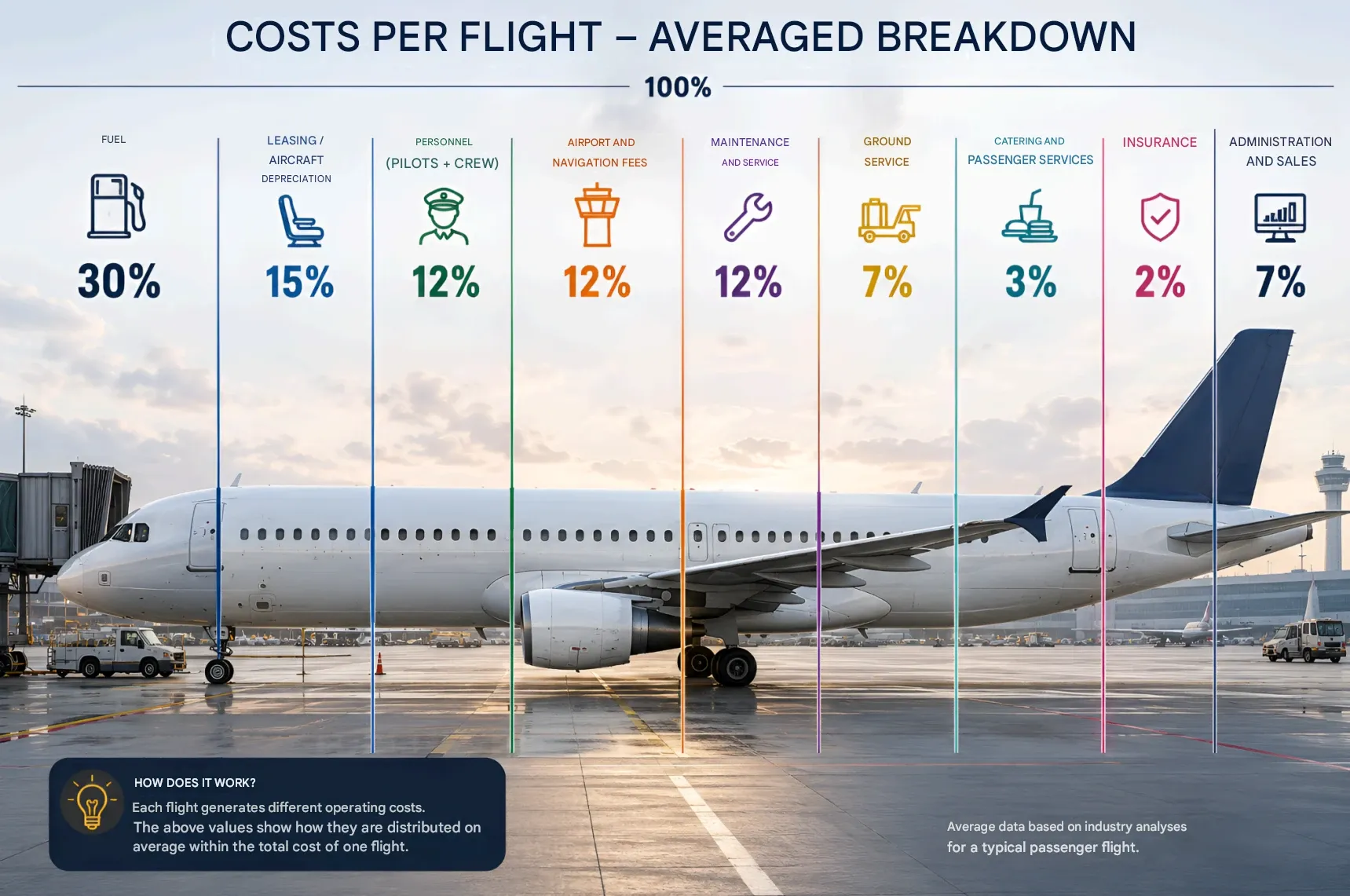
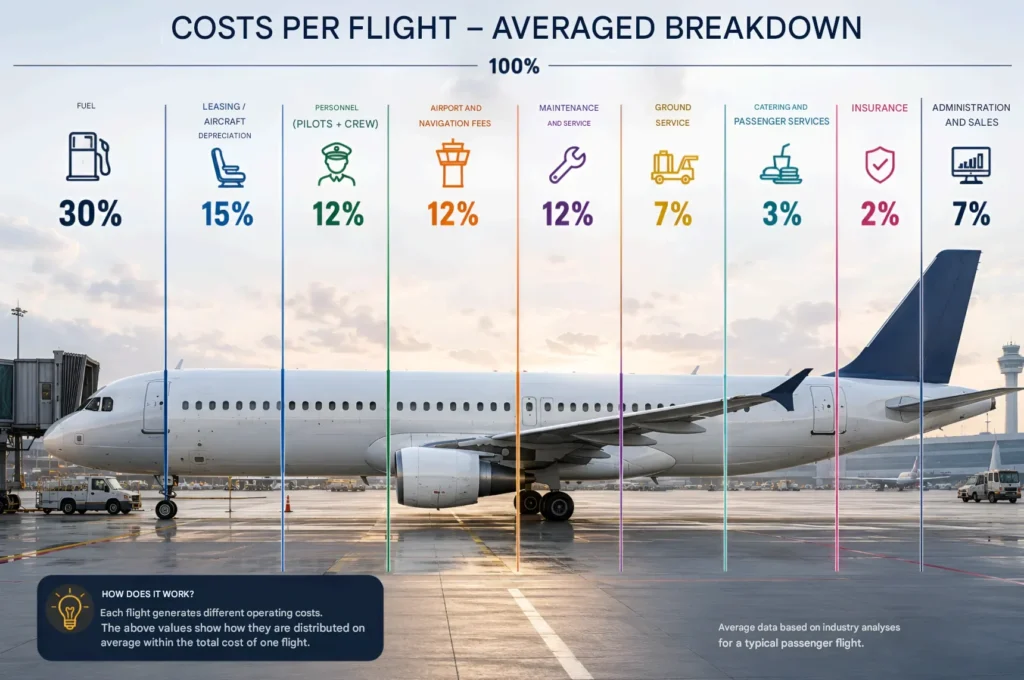
If we break down the cost of a typical passenger flight into its main categories, we can see that airlines are heavily dependent on the price of aviation fuel. On average, this accounts for 30% of the total cost.
And that is why Europe finds itself in a particularly difficult situation. This is because up to 70% of the crude oil that is subsequently processed into Jet A-1 aviation fuel comes from the Gulf region. This primarily includes Kuwait and Saudi Arabia, as well as the United Arab Emirates and Qatar. This makes the situation very dangerous, as any further blockade of the Strait of Hormuz will exacerbate these problems on a daily basis. Furthermore, it should be remembered that the availability of aviation fuel affects not only passenger traffic but also freight transport, which in practice is the first to feel the impact of disruptions. This is because, unlike passenger transport, where part of the costs can be passed on to customers gradually, any change in fuel prices for cargo is almost immediately reflected in the freight rates for every kilogram of cargo.
So here’s a handy tip: if you’re planning to fly on holiday, book a package with a price guarantee, as travel agencies such as TUI or DERTOUR are entitled to charge us a so-called fuel surcharge. These are additional costs, in accordance with the rules, which they can impose on the customer 20 days before departure if travel costs rise significantly.


