Global Analysis from the European Perspective. Preparing for the world of tomorrow


Ukraine


Swallowing insult after insult

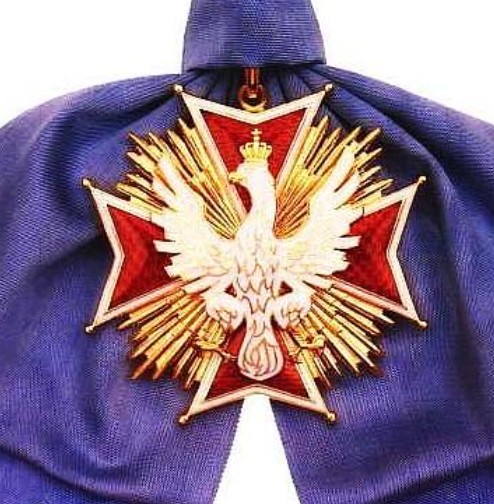
 Sometime ago we wrote about the Polish president who wanted to strip the Ukrainian president of his Order of the White Eagle. Ukraine’s president received that order in the time when Russia invaded Ukraine. It was a mark of recognition on the part of the Polish state that Ukraine had the right to defend itself and it was also a kind of support on the part with Polish government, the Polish authorities, the Polish people that Ukraine should continue fighting, should continue resisting Russian aggression. Then came an event that upset the Polish president and the Poles in general. It was the fact that Ukraine’s president gave the name of the heroes of the Ukraine Uprising Army UPA) to a newly formed Ukrainian military unit. the Ukraine Uprising Army (UPA) was notorious for its numerous murders that its members of perpetrated during the time of the Second World War predominantly on the Polish people, but also in Russians, and Jews who inhabited the terrain that today belongs to Western Ukraine but before the war belonged to the Polish state. Historians estimate that Ukrainian bandits killed all together approximately 100,000 Polish people.

 The atrocities were such that it is difficult to find similar atrocities anywhere around the world in the past or in the present. Polish villages would be regularly surrounded, attacked, the houses were set on fire, the people were killed, tormented, tortured, burnt alive, and crucified; they had their limbs cut off and so on and so forth. These atrocities were committed by the militants of the UPA organization. The acronym UPA to many Polish people is synonymous with the most heinous atrocities one can imagine. These infernal scenes that took place in the years 1943-1945 have been depicted in historical books, historical novels, and movies. The man who was responsible ideologically for these atrocities was Stepan Bandera. It is not only in Polish but also in other languages that – coincidentally – his surname overlaps to a certain degree with the word bandit, which compounds the unpleasantness of the historical memory. The trauma that millions of people suffered after the Second World War was caused in Poland not only by the killings carried out by the Germans, but also by the carnage carried out by Ukrainians. No wonder then that the Polish president wanted to strip the Ukrainian president of the highest order that the Polish Republic can grant: the Order of the White Eagle. 

 At the time when we wrote about the presidential considerations, it was yet not known whether the Polish president would eventually decide to strip the Ukrainian president of this Polish highest order. Now it came to pass that word became flesh: the Ukrainian president has been stripped of this order. And do you know what happened next? 

 Volodymir Zelensky ostentatiously packed his order of the White Eagle and sent it back by courier to Warsaw. He also wrote that he was glad to receive the Order because this order had also been given to Russian Zarin Catherine II and to Benito Mussolini. The reader will have remembered that we, too, mentioned the many names of the recipients of this highest Polish order who did not deserve it at all (the only merit oftentimes seems to have been the fact that the recipient was a head of state). These names also included people who were even enemies of Poland. The Ukrainian president used the same argument while sending back the Order of the White Eagle: he wrote that it was given to individuals who had not deserved, which is why the Ukrainian president preferred not to be in their company. 

 Do you know what also happened next? After Ukraine’s president had sent his order back to Warsaw, a number of Ukrainian diplomats, politicians, ministers, and presidents began returning their Polish orders or crosses to the Polish authorities, to the Polish president. They showed solidarity with the head of the Ukrainian State, and they also showed how little they valued the decoration that they had received from the Polish authorities. 

 You may start wondering what will happen next. To be precise, you may start asking questions whether the political relationship between Warsaw and Kiev will deteriorate. If you think that Poland feels insulted and consequently will retaliate then think again. rest assured that Poland will certainly continue supporting Ukraine. For one thing, simply because the Polish people hate Russians so much that they are ready to support the devil himself if the devil happens to fight against Russians. For the other, Poland is anchored in the western system. Warsaw will not – and cannot – and even must not – pursue a policy that diverges from that of Brussels or Washington. The comedy that we have been witnessing for the last few days will fizzle out and end in nothing. Yes, the Polish authorities have been insulted, and they have insulted twice: by the fact that Ukrainians openly venerate as national heroes those who murdered the Polish people by the thousands during the Second World War; and by the fact that Ukrainian diplomats showed in how small regard they held the Polish crosses, orders, and other decorations. 

 Why didn’t the Ukrainian diplomats think that giving the name of the heroes of the Ukrainian Uprising Army known as UPA to an Ukrainian military unit would not entail serious consequences for Kiev? Why were they not afraid that such a move might provoke Warsaw to bring about an end to the support that Poland gives to Ukraine? Well, the answer is simple. Kiev knows full well that Poland is going to support Ukraine irrespective of what Ukraine does the Poland. How do they know that? Why, they know the Polish national spirit; they know that Poland will not stop supporting Ukraine if the United States or the European Union continue to support Kiev. It may also be that they are familiar with the famous quotation by Roman Dmowski, a Polish politician and the ideologue of the Polish national movement, who acted at the end of the 19th and the beginning of the 20th century. He is known to have said that there are many Polish people who hate Russia more than they love Poland. That means, as we have already said above, that the Polish authorities along with the overwhelming majority of the Polish people, are ready to accept insult after insult and still continue to support Ukraine so long as Ukraine fights against Russia. 

Sit down at the negotiating table, you paranoid wimp!

On 4 June 2026 the President of Ukraine published an Open Letter to the President of the Russian Federation. In this letter, Volodymyr Zelenskyy proposes talks on putting an end to the ongoing war. The letter (which we recommend reading it in full) has been written in a tone that is fraught with threats and personal insults while depicting Ukraine’s leader as the one who holds moral high ground. The text also presents Ukraine as holding the winning hand in the conflict. The last mentioned is a quirky idea. If Ukraine’s about to win, why should Ukraine’s president suggest peace talks? It is by definition the losing party that sues for peace, is it not? But never mind that.

Consider first Volodymyr Zelenskyy’s claim that this war is your personal choice — a war without a real cause. For those who strive to remain unbiased, the cause is plain to see: NATO expansion and the resultant encirclement of the Russian Federation. The idea that Ukraine might become a NATO member-state would compel even such a dissident as Navalny – if he were alive and held the reins of power – to respond to it militarily. That’s game theory! You cannot allow your competitor to gradually encircle, bleed and eventually entrap your state. Think about the 1962 Cuban Missile Crisis and the reaction of the United States to the Soviets deploying their missiles so close to America. It would have triggered the World War Three had the Soviets not backed out. (Remember that the decision of the deployment of Russian rockets in Cuba had been provoked by the deployment of American missiles in Turkey!). The decision on the part of the United States and the collective West to suggest NATO membership for Ukraine set the alarm bells ringing in the Kremlin.

In the letter, Ukraine’s President Volodymyr Zelenskyy uses language that is challenging and defying, aimed at ridiculing the Russian leader. Ukraine’s president says, among others, Do not be afraid to take the path out of this war. Rather than looking for words and phrases that might subtly make the Russian president consider peace talks, Ukraine’s president chooses to look down on him – much like an elder brother looks down on a younger one – implying timidity to force him into action.

This defiance is followed by unveiled threats when Ukraine’s President Volodymyr Zelenskyy brings up Hungarian Prime Minister Viktor Orban’s electoral loss. Why did Viktor Orban lose? Because he dared to support Russia and all those who support Russia are fighting a losing battle, or – to use Ukraine’s President Volodymyr Zelenskyy’s own words: Orban shows how those who choose to help Russia in its war against us end in disgrace.

The again Volodymyr Zelenskyy resorts to ridicule and scoff, saying to Vladimir Putin, you would not have been able to cope with it without North Korea’s help. You are the first ruler of Russia to turn to Pyongyang for assistance. And today you are fully dependent on China — also for the first time in Russia’s history. Aha, North Korea is a pariah state, and it is precisely this pariah state on whose aid the Russian president relies! How humiliating, how demeaning, how degrading!

As if denying reality and anticipating Putin’s arguments, Ukraine’s President Volodymyr Zelenskyy goes on to say that the world has not grown tired of Ukraine, as you long hoped it would. Really? Wishful thinking pure.

To top it all, Volodymyr Zelenskyy claims that Russian losses are a few times larger than those of Ukraine. If that were the case, why on earth should Ukraine’s President propose peace talks? Why should Russian troops be still operating on Ukraine’s terrain rather than the other way around?

Finally, the Ukrainian President points to Vladimir Putin’s age – age is beginning to take its toll (does Putin seem senile to you the way Trump does or, especially, Biden did?) – and doubles down on the Russian leader with a final and personal threat: you (…) will have to fight much harder for your own existence — not Russia’s, but your own. You might think that Volodymyr Zelenskyy is magnanimously extending his helping hand to rescue his Russian counterpart from the latter’s personal catastrophe!

There is nothing, virtually nothing in the letter that sounds like Volodymyr Zelenskyy genuinely wants peace. The tone is aggressive and scornful, and much of its content is simply mendacious. You do not invite your opponent to a negotiating table, telling him that he is a senile, carven coward relying on a pariah state, aging and fighting for mere survival.

If the open letter is not a genuine invitation to talks, then what is it? 

Give a Thing and Take a Thing, to Wear the Devil’s Golden Ring

They were just the two of them: Czech and Lech. They wandered the terrain along the Carpathian Mountain chain and eventually made a stop on a plain on both sides of the Moldau/Vltava River. There they settled and grew in numbers: two extended families, that of Czech, and that of Lech. With the passage of time, as they populated the new land, it turned out that there was little room for two families whose numbers were constantly rising. One of the brothers – Lech – decided to part with Czech and look for a new land to settle. His family moved north, crossing the Giant Mountains (Sudeten) and wended its way through primordial forests, till they spotted a big white eagle spreading its magnificent wings over an impressive nest. That’s the place we want to settle, said the forefather Lech, and so his extended family struck root in the country that later came to be known as Greater Poland. Centuries later it was here that a strong dynasty was established whose successive leaders managed to gradually join the neighbouring tribes – offshoots of the original Lech family – into one political entity, giving rise to what later was to be known as Poland. The white eagle became the country’s national emblem and has remained so till this day.

No wonder then that Order of the White Eagle is the name of the highest decoration that a Polish monarch or president can bestow. It traces its origin back to the year 1705, and its motto reads pro fide, lege et rege, or for faith, law and king.

Throughout its history the order has been given to a number of individuals, Polish and foreign. After Poland had been partitioned by Austria, Prussia and Russia, the Russian Empire adopted the order as its own and its monarch continued bestowing it. Russian emperors were simultaneously Polish kings during that time.

After World War Two, though the order was not officially abolished, it was not conferred by the so-called communist authorities. The Polish government in exile (representing the anti-communist political forces) continued to bestow it.

With the fall of communism in Eastern Europe (1989), the Polish authorities resumed the bestowal of the order, decorating both Polish citizens and foreign individuals. The order is conferred by Poland’s president who is aided in this task by a special Chapter of the Order of the White Eagle. Each Polish president is a recipient of this order ex officio.

Among the foreign recipients of the order is Ukraine’s President Volodymyr Zelenskyy. He received it in April 2023 when Andrzej Duda was Poland’s president. Why did he receive the order? Officially because Volodymyr Zelenskyy is a champion for freedom and democracy and the human rights and all that blah, blah, blah. In fact, he was given this decoration because he is the commander-in-chief of the Ukrainian army which fights against Russia, and there is nothing more pleasing to the majority of the Polish people than to reward anti-Russian political conduct.

But there is a big snag. Though Poland supports Ukraine in its fights against Russia with all its might, there are historical events that divide the two nations. During the Second World War the Ukrainian Insurgent Army UPA (Українська повстанська армія, УПА) and its ideological background – The Organisation of Ukrainian Nationalists OUN (Організація українських націоналістів, ОУН) – decided to ethnically cleanse the territories with mixed Polish-Ukrainian population. The year 1943 was an especially terrible year, which came down in history as the Volhynia Massacre, during which an estimated 100.000 Polish people were murdered and tortured. It was the time when the whole of pre-war Poland was under German occupation, the time when Ukrainian political leaders flirted with the Third Reich and provided Germany with Ukrainian auxiliary military units, the time when Ukrainian elites hoped for creating a Ukrainian state, free of national minorities. The Volhynia Massacre has become an iconic symbol of the events, but the ethnic cleansing continued for three years in between 1943 and 1945, spreading to East Galicia (today’s area around the city of Lvov) and today’s easternmost Poland.

Now the past is the past. The Volhynia Massacre is not the only one such event in human history. What makes it politically explosive is the fact that the Ukrainian political elites have not even attempted to condemn the event, nor have they decided to denounce the then political leaders and ideologues. To the contrary, Ukrainian nationalism is based on the veneration of the instigators and perpetrators of the massacres. Ukrainian cities and towns have monuments and commemorative plaques devoted to as well as streets or squares named after the same instigators and perpetrators. Though Kiev receives as much support from Poland as it is physically possible, Ukraine’s authorities show no willingness to apologise for the evil done to the Poles by Ukrainian past generations. When – to top it all – recently President Volodymyr Zelenskyy decided to name a military unit after the “Heroes of the UPA” (Ukrainian Insurgent Army), Polish President Karol Nawrocki said that enough is enough, and made a suggestion to strip the Ukrainian leader of the decoration of the White Eagle.

But why was Volodymyr Zelenskyy conferred this order in the first place? Did the Polish elites not know that their Ukrainian counterparts kept venerating the OUN/UPA leaders and ideologues? Did they not know that Ukrainian cities and towns are peppered with OUN/UPA memorabilia? Did the Polish elites not sense that Ukrainian politicians were reluctant to take any steps towards historical reconciliation? Was President Andrzej Duda, President Karol Nawrocki’s predecessor, not aware of all this when in April 2023 he was decorating President Volodymyr Zelenskyy with the Order of the White Eagle? Of course, he knew everything and was aware of everything, and for all that he continued supporting Ukrainian chauvinists, thus marring the memory of the tens of thousands of his compatriots who had been maimed, tortured, dismembered, crucified, burnt alive, murdered, expelled from their homes, from their villages, and, and, and. President Andrzej Duda represented the same political faction as President Incumbent Karol Nawrocki. Now President Karol Nawrocki wants to strip Volodymyr Zelenskyy of the order. Well, it’s like having the right hand giving a gift and the left hand taking it back. In their total helplessness the Polish authorities are exposing themselves to ridicule.

Besides, why all this fuss over the bestowal of the said order? Ukraine’s President Volodymyr Zelenskyy is by no means the only one recipient of the White Eagle unworthy of the honour. Let us survey the list of the recipients of this decoration. Who do we find there?

We have mentioned the partitions of Poland, the time when the Polish state as a political entity was annulled by the three neighbouring powers of Prussia, Austria and Russia. Poland – or to be accurate: the Polish-Lithuanian Commonwealth – collapsed also due to the high treason of some members of its nobility. Many of these traitors received the Order of the White Eagle prior to or after the act of treason. Did they deserve the order? During the time of Congress Poland – a semi-independent Polish state created on the lands of the Russian partition in 1815 – it was the Russian tsars who received the said decoration ex officio, as Polish heads of state. Among other recipients was General Ivan Paskevich, who suppressed the 1930-31 Polish national uprising, or Adam Wirtemberski, who while commanding Russian troops shelled the Puławy Palace, where Polish insurgents found refuge. Adam Wirtemberski had the palace bombed knowing full-well that among its residents was his own mother, Maria, a Polish patriot… Did he deserve the decoration?

Pre-war Poland awarded the Order of the White Eagle to August Hlond, Primate of Poland, who later (1939), when Germany attacked his country, fled abroad in a cowardly way, leaving the Polish Catholics alone face to face with the German occupiers.

Also today’s Poland has conferred this order to very many individuals, also foreigners, whose merits are – to put it mildly – doubtful. Who do we see among the recipients? We can see Valdas Adamkus or François Hollande or Helmut Kohl, whose only merit was that they were presidents or Prime Minister of, respectively, Lithuania, France, and Germany. (How does that relate to Poland and Poland’s interests?) Also, quite a few monarchs were recipients of the Order of the White Eagle: Queen Mathilde of Belgium, Queen Paola of Belgium, Queen Máxima of the Netherlands, Queen Beatrix of the Netherlands, Queen Margrethe II of Denmark, Queen Sonja of Norway, Queen Sofía of Spain (what a propensity for queens!), or Emperor of Japan Akihito.

President Volodymyr Zelenskyy is by no means the only Ukrainian president who received this said order. The other recipients are President Leonid Kuchma (1997), President Viktor Yushchenko (2005), and President Petro Poroshenko (2014). Why did they get this decoration? It looks like they were awarded the order ex officio, just like their Polish counterparts (four Ukrainian presidents were decorated out of just six in total!).

Virtuti Militari (for Military Virtue) is Poland’s highest decoration for heroism and courage. Between the Second World War and the fall of communism (1945-1989) in Poland it was considered to be the highest order, since the Order of the White Eagle, though not abolished, was not granted any more. Now in the year 1974 the communist authorities conferred Virtuti Militari on Leonid Brezhnev, Secretary General of the Communist Party of the Soviet Union, the leader of the USSR. That gesture on the part of the Polish authorities met with a widespread and strong disapproval among the Polish people. Why should a foreign leader, a leader of a country that was regarded as Poland’s overlord be decorated with Virtuti Militari? When communism collapsed, the bestowal of the cross was annulled in 1990. Leonid Brezhnev, the recipient, had been dead for eight years… The decision of stripping Leonid Brezhnev of Virtuti Militari was signed by the then President of Poland Wojciech Jaruzelski, a communist by conviction, Leonid Brezhnev’s erstwhile political friend… What a comedy!

They call stripping of such an order an act of historical justice, but such decisions are rather acts of childishness: it is giving a thing and taking a thing to wear the devil’s golden ring. One cannot erase the fact that unworthy recipients were considered worthy at the time of bestowal; you cannot undo history. Damnatio memoriae or condemnation of memory – because that’s what it is all about – has been practised in the past many times across cultures and continents. In some cases damnatio memoriae is somehow understandable, when representatives of a new political system want to undo, unsay, or offset what their predecessors have done. In the case of the revocation of the bestowal of the said Order of the White Eagle on Ukraine’s President Volodymyr Zelenskyy we are facing ridicule pure: while Poland’s political system has not undergone a change, Poland’s current president wishes to undo what his predecessor did, a predecessor who belonged to the same political persuasion! What does that say about political leaders and political ruling elites?

Whether President Karol Nawrocki will be successful in stripping President Volodymyr Zelenskyy of his Order of the White Eagle remains to be seen. The decision to become effective needs to be countersigned by Poland’s prime minister, and he is a strong political opponent of the current head of state. He may choose not to oblige the president. The Prime Minister has already said that such the proposal on the part of the Polish president to strip Volodymyr Zelenskyy of his order plays into the hands of the Kremlin: a dispute between Warsaw and Kiev is precisely what Moscow is looking forward to. If (in a few days’ time) Poland’s Prime Minister blocks the president’s initiative, then Karol Nawrocki will suffer a dent on his political prestige. Why put forward a proposal that is not going to be pushed through?


Ukrainian national identity

What comes to mind when you think about William Wordsworth, John Milton George Gordon Byron, Alfred Tennyson, Henry Wadsworth Longfellow, Johann Wolfgang Goette, Friedrich Schiller, Charles Baudelaire, Alexandr Pushkin, Mikhail Lermontov, Dante Alighieri, and, and, and? Well, that they all wrote in their native tongues. Now, when it comes to Taras Shevchenko — the national bard of Ukraine – he wrote both in Ukrainian and Russian. His prose is exclusively in Russian and – which is a very telling factor – his personal diary is in Russian as well. Nonetheless, he is regarded as the Ukrainian national poet. Despite that fact, Russian is being suppressed in present-day Ukraine or at least its usage is strongly discouraged, even though the national bard did not think it wrong to confide his innermost thoughts in Russian.

Taras Shevchenko (1814-1861) is a good example of the problematic Ukrainian national identity. There are circles in Ukraine who would do anything to sharply delineate anything Ukrainian from anything Russian, but then – lo and behold! – their own national bard poses such a big problem. His use of the Ukrainian language appears to have been reserved for poetry only, which might point to things other than patriotic sentiment in the broad nationalistic sense of the word. Taras Shevchenko’s choice of Ukrainian may have been a poet’s preference of the regional kind of Russian that he found… more melodious? more charming? more mysterious or enigmatic? It is perhaps only due to the certain subjects that he sang about in his poetry that Taras Shevchenko opted for that regional kind of Russian. Who can tell?

This distinction between Ukrainian and Russian is like the distinction between the Czech and Slovak languages. Using a phenetic term for comparison purposes, one is tempted to say that Russian and Ukrainian as well as Czech and Slovak are allophones of the same tongue. (Allophones are two varieties of the same language sound, like the dark and light L occurring, respectively, in feel and look. The smallness of the difference between them in pronunciation does not merit different characters in writing.). In the Czech and Slovak lands, in the 19th century, when those lands were part of the Habsburg monarchy, there was a national revival, which – among other things – consisted in restoring to its full literary use the language, Czech in the west, Slovak in the east. Now Slovak intellectuals stood before a choice: either to adopt the Czech language and give up on Slovak, regarding the latter as the regional allophone of Czech, or to opt for Slovak and develop it in opposition to the Czech language. The Slovak intellectuals chose to stick to the Slovak variety of the Czecho-Slovak allophones; hence, two languages – Czech and Slovak, although they are barely distinguishable.

Both, in the case of the Czech-and-Slovak divide as well as in the case of the Ukrainian-and-Russian divide the two varieties of the same language are mutually intelligible. Oh yes, Ukrainian chauvinists will try to talk you into believing that there is a huge gap between Ukrainian and Russian, just as the Croat chauvinists will try to convince you that there is a world of difference between Croatian and Serbian. To bring the point home they might point to the Latin script used by Croats and the Cyrillic script used by Serbs. Gullible people will readily fall for the trick and think, looking at the different scripts, that these are two different languages. People very often assess languages by the script that they are confronted with. The more bizarre from their point of view the script (Arabic, Chinese), the more they tend to think of a language as ‘difficult’, ‘strange’, or ‘weird’.

The case of the Ukrainian-Russian divide is compounded by the fact that there is no clear cut between the two allophones: between the Ukrainian spoken in western Ukraine and Russian spoken in eastern Ukraine. There exists a gamut of mixtures between the two, which collectively are known as Surzhyk, a hybrid language. There is nothing like that between Polish and Czech – two distinct Slavic languages – or between Polish and Russian – again two distinct Slavic languages, but there is this gradual transition between Ukrainian and Russian, an almost imperceptible transition like that in the colour spectrum in which it is very, very hard to point to a line clearly separating one shade of blue (green, red) from the other.

The fact that Taras Shevchenko used to write in both languages, but especially in Russian, reflects very well the problem of Ukrainian national and cultural identity. Nikita Khrushchev and Leonid Brezhnev (in office 1953-1964 and 1964-1984, respectively) – two consecutive leaders of the Soviet Union – had the same problem. It is disputable to this very day how much they identified as Russian and how much as Ukrainian. The former was visibly drawn to certain elements of Ukrainian culture, the latter’s personal documents identify him as Russian or Ukrainian, with no consistency. The fact that Nikita Khrushchev had otherwise Russian Crimea incorporated into the Ukrainian Soviet Socialist Republic (tearing it away from the Russian Soviet Federative Socialist Republic) testifies to either Khrushchev’s Ukrainian proclivities or his view that Ukraine and Russia are the two sides of the same coin; hence, the transfer of a province from one to the other was like handing a car over between brothers.

Coming back to Taras Shevchenko. Of his 47 years of life, he spent 17 adult years in Saint Petersburg. It was predominantly his childhood that he spent in Ukraine. It was there and at that time that Ukrainian folklore sank into his soul to later resonate in his Ukrainian poetry. Not an infrequent phenomenon: Alexandr Pushkin would recreate his nanny’s folk stories in his later poetry as did many other poets around the globe. Writers and poets from all countries of the world sometimes fancy to write partly or generally in a local variety of their mother tongue. Think about Robert Burns, the national poet of Scotland, who – just as Taras Shevchenko – wrote in both English and in Scots dialects, often mixing the two. In fact, when you take a look at such a stanza composed by Burns as this one:

Thy wee-bit housie, too, in ruin!

Its silly wa’s the win’s are strewin!

An’ naething, now, to big a new ane,

O’ foggage green!

An’ bleak December’s winds ensuin,

Baith snell an’ keen!


and compare it with the anglicised version:


Thy wee-bit house, too, in ruin!

Its silly walls the winds are strewin!

An’ nothing, now, to build a new one,

O’ grass green!

An’ bleak December’s winds ensuin,

Both bitter an’ keen!


you can get a taste of what it is for a native of Russian to confront a Ukrainian – written or spoken – text. See in the above comparison that apart from only three words (marked in blue) that are entirely different, the others (marked in green) are very similar.

Ivan Franko (1856-1916) was another Ukrainian national bard. His case is as interesting as that of Taras Shevchenko when you think about Ukrainian national identity. Ivan Franko wrote his poetry and novels in Ukrainian and… Polish. Yes, and in Polish. He is credited to have written more than a thousand articles in Polish. Interestingly enough, he would also translate some of his Ukrainian poetry into Polish. No wonder, then: Ivan Franko lived and wrote in the city of Lvov, a predominantly Polish city at that time, a Polish demographic island in a sea of mostly Ukrainian villages.

What is even more surprising is that in the 19th century there emerged a branch of Polish romantic poets who are collectively referred to as the poets of the Ukrainian School. Though they wrote in Polish, the themes and protagonists of their poetry were Ukrainian folklore, Ukrainian myths and legends, Ukrainian mythical heroes. Antoni Malczewski wrote Maria, a Ukrainian Story, Józef Bohdan Zaleski wrote poems about Kosinsky and Mazepa – Kossak or Ukrainian national heroes, while Seweryn Goszczyński wrote Kaniov Castle, a narrative poem set in Ukraine, whose protagonists are Ukrainians and Poles. Ukraine, Ukrainian folklore, Ukrainian legendary or historical heroes feature in many a poem of other romantic and post-romantic Polish poets, some of whom (Juliusz Słowacki, Wincenty Pol) till this very day enjoy the status of Polish (not Ukrainian) national bards.

Considering all this one might extend the above adduced linguistic spectrum from (starting from the west) Polish, through Ukrainian, Surzhyk to Russian (in the east). This can be illustrated by the three texts of the Lord’s Prayer placed alongside. Surzhyk is not present in the juxtaposition below as by definition there is no one Surzhyk, but – rather – many varieties of it.    

(Ukrainian and Russian texts have been transcribed into the Latin script.)  


POLISH UKRAINIAN RUSSIAN
  Ojcze nasz, któryś jest w niebie,   Otche nash, shcho yesy na nebesakh!   Otche nash, izhe yesi na nebesekh!
  święć się imię Twoje;   Nekhay sviatytsia imia Tvoie,   Da sviatitsia imia Tvoye,
  przyjdź królestwo Twoje;   nekhay pryide Tsarstvo Tvoie,   da priidet Tsarstviye Tvoye,
  bądź wola Twoja jako w niebie, tak i na   ziemi.   nekhay bude volia Tvoia, yak na nebi, tak i     na zemli.   da budet volia Tvoya, yako na nebesi i na   zemli.
  Chleba naszego powszedniego daj nam   dzisiaj;   Khlib nash nasushchnyi dai nam siohodni;   Khleb nash nasushchnyi dazhd nam dnes;
  i odpuść nam nasze winy, jako i my   odpuszczamy naszym winowajcom;   i prosty nam provyny nashi, yak i my       proshchaiemo vynuvattsiam nashym;   i ostavi nam dolgi nasha, yakozye i my   ostavliayem dolzhnikam nashim;
  i nie wódź nas na pokuszenie,   i ne vvedy nas u spokusu,   i ne vvedi nas vo iskusheniye,
 ale nas zbaw ode złego.   ale vyzvoly nas vid lukavoho.   no izbavi nas ot lukavogo


The reader can assess for himself the affinity of the three languages. Of course, the comparison is heavily predicated on the translation of the Lord’s Prayer. One can easily adjust the texts to make them even more similar.

The similarity of the languages does not decide the identity in and of itself. The fact whether a writer or a poet writes exclusively in one or two languages tells a lot about his identity. Yes, people used to employ foreign languages to express themselves: in the Middle Ages it used to be Latin, later French. These used to be fashionable, international languages. The aristocracy of the 18th and 19th centuries gave preference to French rather than to their mother tongues. Prussian King Frederick the Great loved expressing himself in French rather than in German. Yet, neither Taras Shevchenko nor Ivan Franko opted for French: the former chose Russian, the latter Polish. These were not fashionable, international languages.

Ukrainian identity seems to be hung in between Polish and Russian heritages. Western Ukraine, which borders on Poland and used to be a part of the Polish Kingdom, has become hostile to eastern Ukraine, which borders on Russia and used to be a part of the Russian Empire. Ukraine is torn apart with the undecided Surzhyk area in the middle. Either the west or the east will win over, or – most likely – Ukraine will split simply because neither part seems to be getting the upper hand, and – as is commonly known – a house divided against itself will not stand.


2 million draft dodgers

On Jan 30. 2026, Czech Radio Plus (Český rozhlas Plus) conducted a thirty-minute interview with Ukraine’s President Volodymyr Zelenskyy. The journalist kept asking questions in English, President Volodymyr Zelenskyy kept answering in Ukrainian.

Most of the time the talk was predictable and boring. President Zelenskyy is giving such interviews by the hundreds, and there is really nothing new he might say. The war is going on as it has been going on for four years now. The president’s pleas and requests that he has been making throughout this time – at first embraced with understanding – have slowly begun to fall on deaf ears: Europe is no more capable of supporting Ukraine while the United States has reversed political course. If the European Union cannot send more aid to Kiev, what could Czechia do?

Towards the end of the talk there emerged an interesting piece of information. The journalist quoted Ukraine’s current minister of defence saying that there are as many as two million Ukrainian men avoiding draft, men who are for the most part outside Ukraine. President Volodymyr Zelenskyy was asked what he would like to say to those men and whether he would not like European governments – among others the Czech government – to push those men back to Ukraine. What may come as a surprise Volodymyr Zelenskyy neither condemned military dodgers nor did he call for measures to make them join the Ukrainian army. Ukraine’s president tried to understand the different motivations behind the decision that made those men quit their homeland. He also grew philosophical when he began describing the war-seasoned soldiers in the front and saying that they would not be too happy to have among themselves guys who are unwilling to fight. Fighting men necessarily hugely rely on their brothers in arms because they depend on them for their life. A dodger forced into military service might bring more detriment than be of any use.

Volodymyr Zelenskyy’s lenient stance on draft evasion poses questions. Has the president become soft on dodgers because he feels politically insecure? Has he become soft because he fears being imprisoned at the war’s end and accused of sending hundreds of thousands to the front to be killed and mutilated, knowing full well that the war cannot be won? Has Volodymyr Zelenskyy understood the senselessness of the hostilities? Does he anticipate the near end of the war? Or maybe he has realised that Ukraine will need men – lots of men – after the war for reconstruction? Has he understood that even if Ukraine won the war, the huge lack of men would make it impossible for the country to rebuild its economy? 

One of the final questions was whether Volodymyr Zelenskyy considered being elected for the second term. The reply was that he did not know yet whether he would run again for president, but – yes – he kept thinking about it. Now, the Western listener might remain indifferent to this statement on the part of Ukraine’s president, but Ukrainians – at least some of them — remember that Volodymyr Zelenskyy promised to act in the capacity of president for only one term. What has changed? Has Volodymyr Zelenskyy tasted the flavour of power? Are the powers that be still backing him? Do the powers that be still wish him to occupy the highest post in Ukraine?

Two million draft dodgers and their families are not likely to vote Volodymyr Zelenskyy into office again. They remember one more thing: Volodymyr Zelenskyy promised to stop the hostilities in the Donbass. They remember that he even performed theatricals in the public in that he knelt down to show how urgently and humbly he would be in his talks with Moscow only to deescalate the conflict and bring peace. People remember. Instead of peace they got war and bussification – abducting people from the streets in broad daylight and sending them to the front. Two million draft dodgers are the tip of the iceberg. There are certainly more others who would have followed suit but for one reason or another could not. Ukrainians voted for Zelenskyy precisely because he promised to end the hostilities. Does he not know it? Does he cherish hopes of still being liked by the people? Does he think he might be elected?

It is often said that people vote with their feet. Yes, two million (officially) draftable men have already voted against Kiev’s bellicose policy. Add to this the women and the men that cannot be drafted, add the silent resistance inside the country and you will get the picture. Some commentators say that Volodymyr Zelenskyy is divorced from reality. His statement that he thinks about being re-elected – i.e. about being liked by the majority of Ukrainians – confirms that he is. 


Stated goals – genuine goals

Among the twenty-eight points of the peace proposal that has been drafted by the Americans is one that – if agreed upon – promises amnesty to all the participants of the conflict in Ukraine. This point reveals a huge lot.

For a long time now we’ve been fed the narrative that it was the Russian soldiers who were cruel and inhumane. Stories were spun and, indeed, pictures shown in the media about the atrocities committed by the Russians on Ukrainians. Do you still remember the notorious Bucha massacre? The intended pun on words – Butchery in Bucha or Butchers from Bucha – and the village carefully and intentionally selected to make the headlines sound alarming?

At the same time we’ve been fed the narrative that Ukrainian soldiers behave themselves gallantly. They are not the ones who commit atrocities, they are not the ones who assault civilians. Such things are only done by those evil Russians.

Let us assume the veracity of such statements. Then, like a bombshell, we can read one of the points of the peace proposals about pardoning the perpetrators of war crimes or other atrocities. If it was the Russians who committed those crimes, then the pardon extends to them and them alone, right? Why does the United States want to spare the Russian ruffians in uniform? Why such magnanimity? Didn’t the collective West – the United States and the European Union – label Russia’s president a killer, didn’t the commissioners want him on trial in the Hague? They wanted to hold accountable no less a figure than Russia’s president: surely they would be much stricter while handling figures of a lesser caliber!

Reading this point of the peace proposal you suddenly learn that atrocities and war crimes are not worth prosecuting. Are the Americans genuinely trying to shield the hated Russian evil-doers? Do the Americans genuinely suggest that justice should not be done? No, certainly not.

As usual, we need to distinguish between stated goals and genuine goals. The stated goal is the amnesty, something enticing for the Russians who are allegedly up to their hilts in blood. The genuine goal is – yes, you guessed it right – to protect the Ukrainian soldiers and the multiple mercenaries fighting on the Ukrainian side who have committed atrocities and downright war crimes. They are to be shielded from justice, they are to be protected, they are to be saved for future conflicts when they will come in handy.

Barely anyone remembers or, indeed, knows about the 2014 Odessa fire, a fire that burnt fifty or so (Russian) men and women alive in the Trade Union House, which was set ablaze by Ukrainian political activists. Still fewer people took notice when Russia’s President Vladimir Putin announced in one of his speeches at the very beginning of the conflict in Ukraine that Moscow knew the identity of the perpetrators of that fire and was about to track them down with the purpose of bringing them to book. Europeans or Americans may not have taken notice of those words; most probably they wouldn’t have heard them, since they only consume the news from the official channels. Yet, the wrongdoers would certainly have heard those words and consequently must have had the fright of their lives. The influential ones, those with connections to the powerful figures in the West, must have used all their influence to extract that kind of guarantee for themselves from their Western overlords.

gif loading


VIDEOS

category youtube video ...

MORE NEWS


With attention focused on Ukraine’s need to create an independent anti-corruption court as a prerequisite for getting more low-interest International Monetary Fund loans, it’s easy to forget that Ukraine is still a long way from qualifying for any of the second half of the conditionally approved $17.5 billion in credits under a program that expires in March. Source Kievpost


Christine Lagarde, Managing Director of the International Monetary Fund (IMF), made the following statement today in Washington, D.C.:

“We are deeply concerned by recent events in Ukraine that could roll back progress that has been made in setting up independent institutions to tackle high-level corruption, including the National Anticorruption Bureau of Ukraine (NABU) and the Special Anticorruption Prosecutor’s Office (SAPO). Fighting corruption is a key demand of the Ukrainian society, is crucial to achieving stronger and equitable growth, and is part of the government’s commitment under the program with the IMF.

“We urge the Ukrainian authorities and parliament to safeguard the independence of NABU and SAPO. We also urge the authorities to move quickly with legislation to operationalize an independent anticorruption court consistent with the recommendations of the Venice Commission of the Council of Europe, which is essential to credibly adjudicate high-level corruption cases.” Source IMF


gif loading

Former Georgian president and Ukrainian politician Mikheil Saakashvili, freed by his supporters after police in Kyiv bungled his arrest on Dec. 5, has now marched on parliament and called on his supporters to oust President Petro Poroshenko. Earlier the day, the law enforcers arrested Saakashvili on the rooftop of his house, but he was freed by his supporters, who blocked the way of a police minivan in which police had attempted to transport the politician in an hours-long standoff. Source Kyivpost


The Foreign Ministry of Ukraine is summoning Polish Ambassador to Ukraine Jan Pieklo over the fact that Secretary of the Interagency Commission for the Commemoration of Victims of War and Political Repressions Sviatoslav Sheremeta has been refused entry to Poland, spokesperson of the Foreign Ministry of Ukraine Mariana Betsa has said. Source Interfax Ukraine


Old wounds are reopened as Warsaw and Kyiv revive nagging grievances. Poland’s foreign minister, Witold Waszczykowski, has urged Ukraine to “take concrete steps” to help defuse a dispute over World War II-era crimes. In remarks at the Polish consulate in Lviv Saturday, Waszczykowski also asked Ukraine to “unblock” the work of a Polish team searching for the remains of Polish war crime victims in what is now Ukraine. Source TOL


An explosion in Kiev on Wednesday killed one man and wounded three others including Ukrainian lawmaker Ihor Mosiychuk, an Interior Ministry official said in a post on Facebook. “Altogether four people were wounded in the explosion. Unfortunately, one could not be saved. He died on the way to the hospital from the wounds he received. This man is around 30 years old and his identity is being confirmed,” ministry adviser Zoryan Shkiryak said. Source Tomson Reuters


Some 500 national guardsmen and police have been deployed outside the Verkhovna Rada premises. There are also metal frames, people are checked for weapons and dangerous substances. Read also Brussels to continue dialogue with Ukraine on possible violations of minority rights based on Venice Commission’s opinion Chief of the Kyiv National Police Department Andriy Kryschenko said that, according to various estimates, up to 10, 000 people are expected to attend today’s rally outside the Verkhovna Rada. Source Unian


gif loading
 
Menu
More