
Why must raw materials become more expensive?

Gold

For a gold mine to be profitable, the deposit must contain at least 2 million ounces of the precious metal, as this is the only way to ensure production for many years to come. In previous years/decades, new deposits were discovered and supply was guaranteed. However, in the last two years of the gold rush, when gold was being sought everywhere, no major deposits were discovered anywhere in the world! This is the first time in history and, of course, an argument for a further rise in price.

Petroleum

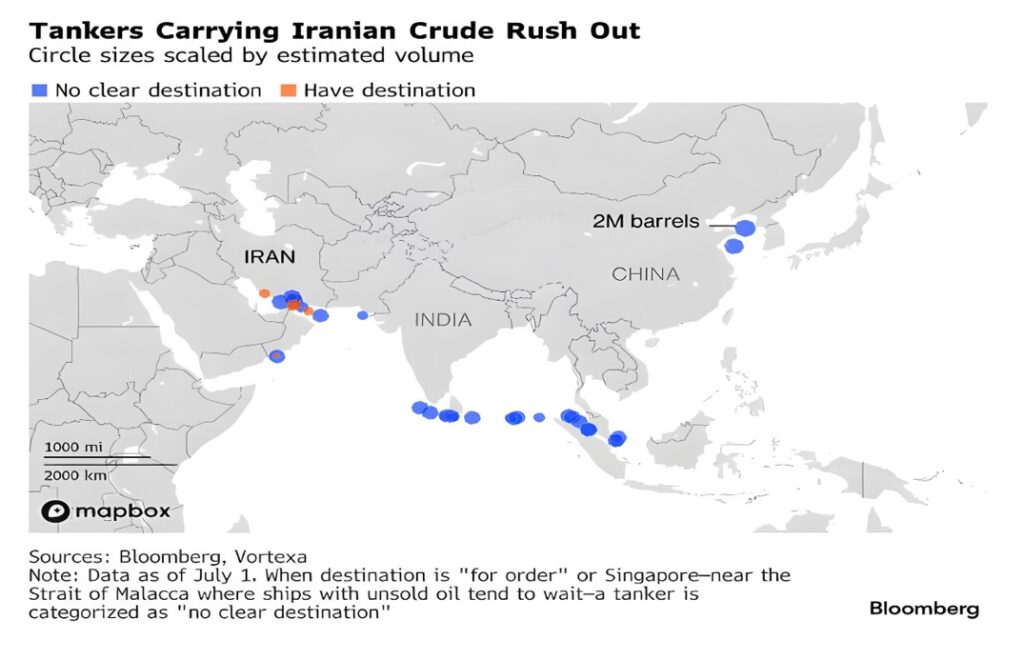
Shale oil is running out in the United States. According to the latest data from the Energy Information Administration (EIA), shale oil production will gradually decline, mainly due to the depletion of deposits. The Permian Basin, one of the largest and most important shale basins in the world, is expected to produce less and less shale oil in the coming years. The impending supply deficit and the ever-increasing demand for this raw material are prompting leading oil producers to seek alternative sources for extracting black gold, especially in offshore deposits. Perhaps this is also the reason for the possible war against Iran, in order to secure reserves there, as in Venezuela.

Metals and rare earths

When it comes to both, the West is completely dependent on China and Africa. The following graph shows how heavily the US depends on other countries when it comes to minerals:

Source: Elements

Particular attention should be paid to rare earths, a group of 17 nearly indistinguishable heavy metals with similar properties that are indispensable in a wide variety of technologies, high-performance magnets, electronics and industry as a whole, as well as natural graphite, which is found in lithium-ion batteries. When Trump imposed tariffs on China, Beijing responded with restrictions on rare earth exports, which only exacerbated the geopolitical situation surrounding these materials.

The data shows that Africa’s share of resources and production of important raw materials is as follows:

  • Platinum: 90% of global resources (mainly South Africa and Zimbabwe). Platinum is needed in catalytic converters and hydrogen technologies.
  • Cobalt: 70-75% of global production comes from the Democratic Republic of Congo. It is one of the key components of lithium-ion batteries.
  • Chromium: 85% of global reserves are of high quality. Required for the production of stainless steel.
  • Manganese: 80% of global resources (mainly South Africa). Key to the production of steel and batteries.
  • Tantalum: 60-70% of global resources (DRC, Rwanda). Indispensable in every smartphone and laptop (capacitors).
  • Gold: approx. 40% of global resources.

At the same time, Africa remains the least geologically explored continent on Earth. Canada spends more than US$2 billion annually on field exploration, while all African countries combined spend just over US$1 billion. This shows that if the African continent were not so politically unstable, many more deposits would likely be discovered there. In addition, more and more mines are being controlled by the Chinese (e.g. the cobalt mines in Congo), which poses a real threat to the West. 

Market situation at the end of January 2026

I. The Magnificent Seven lose their cohesion

Analysts are beginning to divide the Magnificent 7 into smaller subgroups. They talk about the “Fab 4” or “Mag5” – that is, the 4 or 5 companies from the group that continue to drive the market upwards, while the rest have become a burden. Only Alphabet and Nvidia outperformed the S&P 500 in 2025. The gap between Mag7 share prices in the second half of 2025 was enormous. 

Competition in the field of AI has become a wedge that divides the group. Amazon, Alphabet, Microsoft and Meta are spending hundreds of billions on AI infrastructure and data centres. Nvidia dominates the market for the chips needed to power these models. Apple and Tesla are lagging behind. Apple has been criticised for lower costs and slower AI development, while Tesla has suffered from slowing electric car sales. Nevertheless, the “magnificent seven” still have a huge impact on the market, accounting for about 36% of the S&P 500’s capitalisation.

Source: MSN

II. Withdrawal from defensive sectors

The defensive sectors of the US economy are currently the most undervalued relative to high-tech companies in history. Defensive sectors include companies whose services are in demand regardless of the state of the economy or consumer sentiment: healthcare, consumer staples, utilities, including electricity, water and gas companies, and the telecommunications industry. We observed similarly low valuations for defensive companies before the dot-com bubble burst in 2000. Investors were so obsessed with the internet craze that they forgot about the major sectors. The same is true today, with the difference that the above-mentioned glorious companies are benefiting from it.

III. Can precious metals continue to shine?

In 2025, the price of gold rose by 64% in dollar terms. Over the past 5 years, this growth has been 152%, and the price of gold is currently at its ATH (all-time high). Does gold have a chance for further growth? Let’s take the ratio of US stocks to gold. Every time gold reached its 1929 peak of 1.54 gold, it provided a solid foundation for growth in the gold market. 

Factors that point to a further rise in GOLD prices include geopolitical tensions, interest rate cuts by central banks, mistrust of the bond market and the weakness of the US dollar. Another such factor is high demand from central banks. In 2025, after a hiatus of almost 30 years, central banks hold more gold than US bonds. However, we must remember the dangers. These include a possible recovery of the dollar, the return of investors (at least temporarily) to the bond market, and young investors choosing Bitcoin over gold. It should also be noted that gold has grown by an average of 11% per year since 2000.

2025 was also a phenomenal year for silver. The metal rose 146% in dollar terms. This growth had a solid foundation, as it was driven by demand for silver in the economy and the limited availability of the metal. Another important factor was that the US classified the metal as strategic and China (the world leader in silver processing) restricted its exports. Is silver expensive now? At over $90 per ounce, silver is at an all-time high. However, compared to M2 (a measure of money in circulation that takes into account funds in current and savings accounts), this value is well below its historical peak. If the price of silver had reached a level similar to that of 2011, given the growth in M2, the price would be $97. But if it were the same as in the 1980s, an ounce of silver would cost approximately $531!

Silver therefore has potential for further growth. This may be driven by increased demand from industry, the aforementioned export controls from China, or the fact that the silver market is relatively small and demand for silver is high. Since 2000, silver has grown by an average of 10.4%. The 146% growth projected for 2025 is a significant deviation from the norm. It is also worth noting that the gold-silver ratio, i.e. the ratio of how many ounces of silver we can buy for one ounce of gold, is currently at a low level of 50. This indicates that silver has become significantly more expensive compared to gold over the last 30 years. Speculators, industrial lobbies and politicians, who would benefit from a fall in the price of silver, could have a negative impact on the price of the metal.

IV. Refinanzierung von US-Schulden

The high price of precious metals is mainly due to capital migration from bonds. The US debt will have to be repaid in 2026. This problem will be solved through refinancing, i.e. issuing new bonds (taking on new debt) to repay bonds that are approaching maturity. The last two times we saw a similar situation – during the GFC, the global financial crisis, and the “Covid recession” – interest rates were at 0%. Currently, interest rates are at 3.75%. The higher the interest rates, the higher the borrowing costs and the burden on the government, which is already enormous. In the current fiscal year 2026 (since October 2025), the government spent $179 billion in just two months to service its debt. This is the second largest expenditure after social spending.


V. Die Globalisierung des Renminbis

The dollar’s share of global reserves (black line) is falling in favour of gold. The decline in confidence in the US financial system will not go unnoticed by its biggest competitor, China. Beijing is expanding its financial payments network and developing an alternative to the US-led Swift system. The Middle Kingdom is lending more and more money to developing countries and encouraging international companies to issue bonds denominated in Chinese currency. About half of cross-border transactions in China are currently denominated in its own currency, compared with almost zero yuan share in such transactions 15 years ago. As a former member of the Chinese central bank said, the government wants the yuan “to be seen as a strong currency that is used more globally”. The yuan currently accounts for 8.5% of global foreign exchange transactions. That is a small amount compared to the dollar, which accounts for 89% of this category. However, the message is clear: China will fight to strengthen the role of its currency in international trade. This is another area in which Beijing is challenging the United States.


Silver flying high 

The price of silver has performed very well since the beginning of the year, due to both investment and industrial demand (mainly due to the production of solar panels by China), but it was only recently that information emerged about a real decline in supply in this market. As a result, the silver price hit new all-time records.  

The supply crisis was to begin with India and the Diwali festival there. At this time, Indians bought millions of rupees worth of jewelry to worship their goddess of wealth, Lakshmi. In previous years, this demand was for gold and the supply came from Asian refineries. This year, however, was different. For months, there has been speculation on social media in India that after such a big rally in gold, it is now time for silver. The breakthrough was to be the statement by banker and investor Sartak Ahuja, who in one of the videos targeting his 3 million follower community, stated that the silver to gold price ratio, currently 100:1 makes silver the obvious choice this year. After the video with the statements was released, Indians started buying silver massively, leading to the first silver shortage at the largest precious metals refinery in India. As per various Indian sources, the demand for silver was huge, never seen before, leading to a situation where Indians had to pay 8 dollars more for an ounce of silver than in the world markets. 

Due to the fact that the Chinese refineries were not working at the time because of a week’s break (public holidays), demand from Indian refineries shifted to the West and in particular to the LBMA (Bullion Stock Exchange in London) in London. There it quickly became apparent that 83% of the accumulated silver in LBMA warehouses is in the hands of ETFs and cannot be lent out (the refinery borrows the silver, processes it and sells it, earns a margin on it and then buys it back and returns it to their lender). Considering that there are 790 million ounces of silver in the LBMA, only 150 million ounces can be made available to refineries and other institutions. Thus, the low availability of metal led to an increase in silver rental costs to 39% per year if the rental period of the metal is 1 month.

As Metal Focus reports, the cost of borrowing silver for one day (overnight) rose to 200%, and the difference between the buy and sell price (spread) rose so high that trading became impossible. Although there are currently already forecasts for higher silver prices in 2026 (Bank of America is betting on $65 per ounce in 2026, which seems very likely), the current crisis is expected to subside within a few days when the LBMA finally delivers silver from New York and China.  

Silver is important

The USA recently officially classified silver as a “critical mineral” on the Department of the Interior’s list. What is this list and what does it mean? It contains minerals that the United States considers critical to its economy and national security. Many come from countries that are considered political adversaries, such as Russia or China. What does it mean for silver to be included on this list? First of all, any project related to the extraction, exploration or processing of such a mineral can claim state financial support. In addition, the process of obtaining mining permits is reduced from 10 years to 1-2 years, which can significantly support the development of national resources of this mineral.

Silver, together with gold, has been a real hit for stock market players in recent years and is steadily gaining in value. Readers of our Bulletin may recall our multiple recommendations for gold and silver. The US government’s decision and the possible imminent upheaval in the financial world – the switch to digital currencies by some central banks (CBDCs) with a return to gold backing – will ensure that the two precious metals will continue to shine for a long time to come.

Americans will live in the offices

The situation of the average American is getting worse. The middle class is being hit hard by the rising cost of living.

While prices in general for consumers have risen by 35% over the last decade, car insurance rates have increased by 45% in the last 5 years.

Higher education is increasingly valued more highly. Over the past 40 years, tuition at US universities has risen by more than 700%, while general consumer prices (the US Consumer Price Index) have risen by 199%.

However, it is worst in the real estate market, which is becoming increasingly inaccessible for an ordinary citizen. As we can read from the chart below, the median household income in the US is 79 thousand dollars (blue line). The same median should be at least 123 thousand dollars (or 56% more – the orange line) for the average Americans to be able to afford to buy a house at an average market price. This was calculated on the condition that a US citizen can provide 30% of their annual income to repay the mortgage and cover the short-term obligations for the property they occupy. It is worth noting that the gap in question has widened very dynamically since 2020.

It is therefore not surprising that real estate prices have just recorded the second-highest year-on-year decline in the last ten years: -2.2% in May. This is mainly due to the growing oversupply. There are currently 1.9 million sellers compared to 1.4 million buyers. This is the biggest difference in the last twelve years.

In addition, HOA (Homeowners Association) fees, often associated with maintenance of common areas or infrastructure, are increasing, adding to owners’ monthly costs and deterring potential buyers. Insurance costs, such as those associated with increased risk of natural disasters (hurricanes, flooding), are also on the rise. Costs are also increased by additional, ever more expensive fees (e.g. for repairs to various facilities). An important point in the whole situation is the fact that potential buyers are finding it increasingly difficult to obtain a mortgage due to persistently high interest rates and increased caution on the part of banks. It is worth remembering that the USA currently has the most expensive loans in the last 15 years.

The above-mentioned phenomena are leading to lower real estate prices. In large cities, we are seeing discounts of ten to ten percent year-on-year. In Florida’s metropolitan areas, we can buy properties at a discount of more than 30%.

House prices will certainly not be helped by the fact that the conversion of offices into residential buildings or apartments is rising sharply. According to the chart below, this phenomenon is expected to gain momentum and really take off within two years. The last, highest blue column corresponds to the announced conversion projects to be implemented from 2027.

The process of converting offices into living spaces is being accelerated by the fact that the number of unused offices is increasing. This is due to the recession (which has been kept quiet and swept under the carpet) and the increasing popularity of telecommuting.

Add to this picture of the US economy the fact that unemployment is rising and it becomes clear why President Trump is increasing the pressure on the Fed to lower interest rates. But would cheaper credit really be a way out of this downward spiral?

What do stats say?

First and foremost note that the stats that we are going to look at below are taken from the International Monetary Fund website. In other words, they are neither Russian nor Chinese propaganda. As the year 2024 is running to its end, the IMF has made predictions about the annual projected real GDP. That is, what is projected is the remaining one last month of 2024 because the data from the preceding eleven months are available.

The data show that the growth of GDP of the G7 countries ranged between 0.0 (zero) and 2.8. The United States’ growth is that of 2.8, while that of Germany – Europe’s economic powerhouse! – hit zero, nada, nil, naught, nix. Japan with its 0.3 is following in Germany’s footsteps, while the GDP of such countries as France, Italy, the United Kingdom and Canada oscillates around 1.0:

  1. United States 2.8
  2. Canada 1.3
  3. United Kingdom 1.1
  4. France 1.1
  5. Germany 0.0
  6. Italy 0.7
  7. Japan 0.3

What do stats tell us about the growth of the GDP of the five original BRICS countries? South Africa can boast 1.1, which does not come as a surprise, Brazil is just better off than the United States. Russia’s GDP stands at 3.6 – more than that of the United States by a large margin – while China’s and India’s – with 4.8 and 7.0 respectively – dwarfs that of the United States:

  1. India 7.0
  2. China  4.8
  3. Russia 3.6
  4. Brazil 3.0
  5. South Africa 1.1

If we compile a list that combines the G7 (in blue) and the five original BRICS (in red) countries in descending order, that’s what we get:

  1. India 7.0
  2. China  4.8
  3. Russia 3.6
  4. Brazil 3.0
  5. United States 2.8
  6. Canada 1.3
  7. United Kingdom 1.1 = France 1.1 = South Africa 1.1
  8. Italy 0.7
  9. Japan 0.3
  10. Germany 0.0

The BRICS countries take the first four places. What is more remarkable, Russia and China are doing very well despite the numerous sanctions and tariffs. Surprisingly(?), Belarus with its GDP of 3.6, and Serbia with its GDP of 3.9 – both non-EU states – are doing better than the G7 countries and better than Poland (3.0) and Czechia (2.3) – both the EU member-states whose GDP is among the highest in the Union.

Even Asiatic and African countries can boast higher GDPs than the G7 states:

  • Vietnam 6.1
  • Uzbekistan 5.6
  • Iran 3.7
  • Kazakhstan 3.5
  • Nigeria 2.9
  • Zimbabwe 2.0

Notice Iran – another country that has been beset with sanctions for decades – and Zimbabwe, known rather for its hyperinflation, with a GDP higher than that of the United Kingdom, Canada, Italy, France or Germany.

Haven’t we been told again and again that combining European states into one big economic organism would be beneficial to them all? It doesn’t seem it is. Haven’t we been told again and again that sanctions would ruin Russia and Iran? It doesn’t seem they have.

AU10TIX or how Israelis act

AU10TIX is an Israeli identity service that verifies people or companies on the Internet. For example, people who want to earn money on Twitter (X) have their identity checked and authenticated by AU10TIX. So far, so good, but there are two appalling facts about the Israeli company:

1. AU10TIX has close ties to Israeli intelligence. It was set up by members of the Israeli elite intelligence services Shin Bet and Unit 8200. Ton Atzomm, its CEO, was a member of Unit 8200 has been committed to the surveillance of Palestinians and has been utilizing the information gained in the process to politically persecute and divide them. Edo Soroka, the Vice President for Sales in Europe, the Middle East and Africa, previously worked for the Israeli startup AnyVision, which is accused of monitoring Palestinians in the occupied West Bank. Erez Hershkovitz had earlier been employed by the Israeli company Voyager Labs, which was sued by Meta for using dozens of fake Facebook accounts to collect data from more than half a million users.

2. AU10TIX suffered a serious security breach that exposed the personal data of millions of its users. Customers that fell victim to the June 2024 scandal include some of the world’s most renowned companies, such as X, TikTok, LinkedIn, Coinbase, eToro, PayPal, Fiverr, Upwork, Bumble, and Uber. Names, dates of birth, nationalities and images of identification documents such as driver’s licenses and passports, facial scans and authentication metrics for documents and photos were disclosed. It was a massive security breach with unforeseeable long-term consequences. The exposed data could be used by cybercriminals for various illegal purposes such as identity theft, financial fraud or even blackmail.

Several questions could be brought up:

1. How does all that square with the U.S.-Israeli friendship and alliance?

2. Why does the Israeli intelligence agency want to collect – manage – control the data of millions of Americans?

3. Why do the US services do not hinder such deep intrusions into the security of US citizens?