



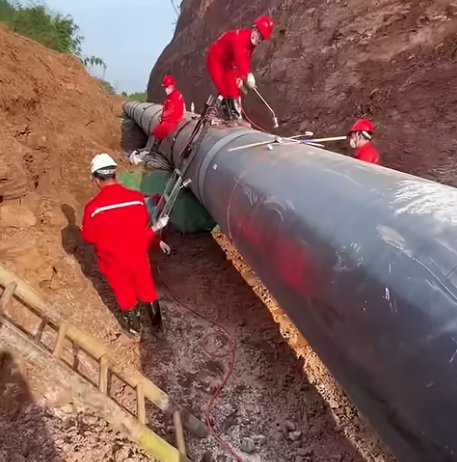
One of the very important outcomes of the SCO (Shanghai Cooperation Organization) conference held on 31 August – 1 September was the deal made between Moscow and Beijing about constructing and completing by 2030 the Power of Siberia 2 pipeline (the Power of Siberia 1 is already in operation), which will run through Mongolia. The pipeline will be built by Gazprom and it will provide the Middle Kingdom with natural gas extracted – among others – from the same fields which up to quite recently supplied Europe with this resource.
The consequences of this move are neither to be overlooked nor underestimated. Waging a crusade against Russia, Europe deliberately and purposefully cut itself off from Russian gas. Long before the conflict in Ukraine broke out, the leaders of the Old Continent for years kept complaining about the continent’s dependence on Russian gas. For years they they would make the cooperation for Gazprom ever more difficult. Then came the war in Ukraine and an eruption of Russophobia. Europe turned its back on Russian gas while the United States made sure that no one would think about reversing course: as we know the supply pipelines – NordStream and NordStream 2 – were sabotaged.
Europe is still purchasing some Russian gas through middlemen, but generally the Old Continent has switched to American LNG, which is more expensive as it requires shipment, liquefaction, and vaporization. The Russia-China deal will make it impossible for Europe to return to purchasing Russian gas: the Chinese market will swallow up any quantities of it. We are witnessing an epic change: the two NordStream pipelines are about to be replaced by the two Power of Siberia pipelines, redirecting immense amounts of gas from Europe to Asia. Simultaneously, since the Power of Siberia 2 will run through Mongolia, it is Mongolia that will greatly benefit from the Moscow-Beijing deal rather than Poland or Ukraine, through which the pipelines Yamal and Druzhba/Brotherhood run. Russian gas was supplied to Germany and Italy. It was cheap, cheaper than its American alternative, and so both these countries benefited from it a lot economically. All of this is in a complete reversal. What was done during the SCO session is like switching the railway points: the tank cars full of gas that used to be headed for Europe will all soon be headed for China.
Just as over time European and Russian economies will diverge one from the other, those of Russia and China will become closer and closer. The pipelines supplying Europe were in operation for decades, long before the collapse of the Soviet Union. With them gone, a new economic alliance between Moscow and Beijing will be forged. We can only wonder what European leaders think about this change. Sure, on the face of it they are still belligerent, but are they in their heart of hearts? If they are clever enough, they must be smelling a rat. The war that they had hoped to win is going sour, the sanctions that they had thought would coerce Russia into submission backfired, while the economic situation of the Old Continent is deteriorating with every month. Still, once they all invested so much hatred and scorn into Russia, they simply cannot put into reverse. Such is human psyche. They must wage their crusade to the bitter end.


