



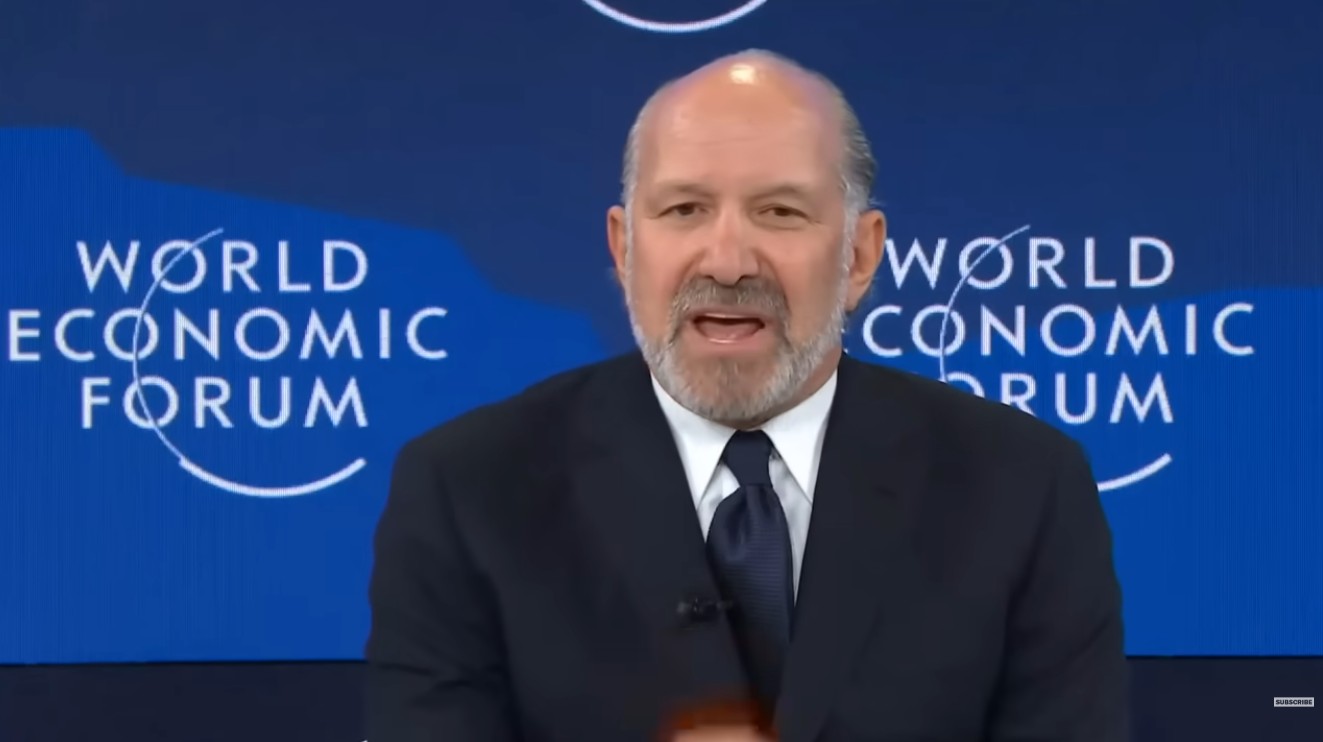
After the notorious Klaus Schwab, founder of the World Economic Forum, resigned following allegations of financial and ethical misconduct, the forum took on a new dynamic. Whereas speeches used to be an expression of blind faith in mainstream ideology such as globalisation, green transition, climate change, sustainable development, human and LGBT rights, today they feel like a breath of fresh air. Take, for example, US Secretary of Commerce Howard Lutnick, who said:
“We are in Davos at the World Economic Forum and the Trump administration and myself, we are here to make a very clear point. Globalization has failed the West and the United States of America. It’s a failed policy. It is what the W has stood for which is export offshore farshore find the cheapest labor in the world and the world is a better place for it. The fact is it has left America behind. It has left the American workers behind and what we are here to say is that America first is a different model. one that we encourage other countries to consider, which is that our workers come first. We can have policies that impact our workers. Sovereignty is your borders. You’re entitled to have borders. You shouldn’t offshore your medicine. You shouldn’t offshore your semiconductors. You shouldn’t offshore your entire industrial base and have it be hollowed out beneath you. You should not be dependent for that which is fundamental to your sovereignty on any other nation. And if you’re going to be dependent on someone, it darn well better be your best allies. Okay? And so that is a different way of thinking. It is completely different than the WEF” (Video)
Oh dear! It’s a good thing Klaus Schwab can’t hear that, otherwise he’d have a heart attack.
Canadian Prime Minister Carney also pointed out in Davos that “the existing world order is collapsing.” He also highlighted the plight of small and medium-sized countries, which now have to cope with pressure from the largest ones. The Canadian Prime Minister said that these states should join forces so as “not to be crushed by the rivalry of the superpowers.” It seems that these words refer most to the countries of the European Union, which in recent months have pursued a different policy as a group from what Donald Trump is trying to do.
Due to the many controversial actions of the US president, we are gradually reaching a situation where simply showing resistance to him is enough to gain popularity. Previously, Justin Trudeau’s popularity grew because of such a conflict (it was Trump’s fault, not Trudeau’s merit), and now Carney also received a lot of praise after his speech, although as a former banker, he is more reminiscent of Macron in terms of credibility.
Among other important statements from Davos, the following are also worth mentioning:
[1] Larry Fink (CEO of Blackrock) stated that tokenising assets is the only sensible decision and that next-generation financial markets should already be based on tokenised shares or bonds.
This proves that the elites have not given up the fight against cash.
[2] Christine Lagarde (head of the ECB) drew attention to the problem of wealth inequality. And indeed, this problem does exist, but Ms Lagarde has probably forgotten who fuelled this problem over the last decade through massive money printing and intervention in the financial markets.
[3] Javier Milei (President of Argentina) reminded us that the West could still have a bright future ahead of it, but that it needs to turn towards freedom. These words were probably directed at the United Kingdom, Belarus and Germany, where freedom of expression is being fiercely opposed. (See also: Article in Gefira)


