



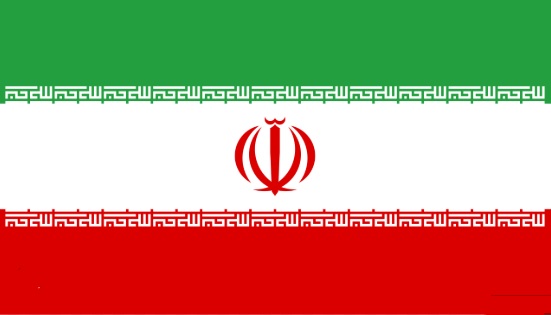
The world is asking the question whether the United States will attack Iran. Some say it will, others say it won’t. Time will tell. Neither are we going to predict the future. Someone wise said once that although God created man in his image, he reserved exclusively for himself three things: to be able to make something out of nothing, to judge human conscience, and to know the future. Neither we nor any pundit knows the future, and all the prophets – religious or non-religious – are useless. The stuff that they impart is such that you and me can create similar prophecies because all the prophecies go something like this: somewhere, sometimes, someone will do something if something somewhere sometime performs something or fails to perform something. The only prophecy that comes true is the timetable showing the arrivals and departures of trains, buses and planes. Even if reality diverges from what the timetable says, it diverges but a little and only sometimes. In comparison to religious or non-religious (the famed Nostradamus) prophecies, timetable prophecies exhibit pinpoint accuracy and are 99% reliable.
Having said which, we are not going to predict the future, viewing such business as pointless. We are more into the whys and the wherefores of the mounting conflict between the United States and Iran. But facts first.
It is not the United States against Iran, but rather the United States and Israel on the one hand, and Iran on the other. Or, to be more precise: the conflict is between Israel and Iran, with the United States acting as a battering ram for the Jewish state.
Tel Aviv wishes to weaken Iran because Tel Aviv views Iran as its greatest enemy. Israel fears Tehran as such, but it will fear it even more if Tehran manufactures its own nuclear weapons. Though Israel is separated from Iran by Jordan or Syria and Iraq, Tel Aviv fears that Iran, once it produces its own nukes, will be capable of delivering a deadly strike by means of long-range missiles.
Now, does Iran want to strike Israel? According to Tel Aviv it does. Is that claim substantiated? Hardly.
Does Israel have nuclear weapons of its own? The whole world knows it does. If it does have nuclear weapons, then why should Iran or any other state, indeed, also have such weapons? Israel’s claim that it fears Iran, especially a nuclear-armed Iran, can be easily flipped to say that Iran fears nuclear-armed Israel. Whose fear is (more) legitimate? Tel Aviv claims it has peaceful intentions while Tehran has bellicose plans. Again, Tehran might flip the argumentation and say precisely the same about Tel Aviv. Such arguments and counterarguments just don’t make sense. It is obvious that if one country has weapons of mass destruction, the other feels threatened; and it is all too obvious that to allow one country (Israel) to have nukes while denying it another country (Iran) is simply an example of gross injustice.
The picture can be broadened. Why should France and the United Kingdom have weapons of mass destruction and not Italy or Spain? Why should Pakistan or India have such weapons, but God forbid that Indonesia or Vietnam should have them?
Iraq, Libya and Syria have been politically incapacitated by the actions of the United States and Israel. It is now Iran’s turn to be incapacitated. But why should Iranians toe the line drawn by Tel Aviv and Washington? Why should they swallow their national pride, why should they convert into Washington’s and Tel Aviv’s vassals? Sure enough, Tel Aviv would like to see Iran fragmented into a number of smaller states, but why should Tehran oblige Tel Aviv? Iran’s authorities know it all too well that once they deprive themselves of the possibility of manufacturing the weapons of mass destruction, once they cave in to American (Israeli) demands, they are going to slide into crisis and chaos and final disintegration. Once they lose the military leverage – even if potential as at present – they will be viewed as fair game.
Iranian leaders are fully aware of what happened to Russia once it had followed the West’s lead: it became weak and as such incapable of defending its most basic national interests. Both Gorbachev and Yeltsin acted in good faith towards the West, but this good faith was mercilessly exploited. Think of the economic crisis that Russia fell into and was stuck in throughout 1990s, think of the expansion of NATO that began to strangle Russia. Should Iran give in an inch, the same fate will surely haunt it as well. Already at present, Tehran has experienced US-controlled street riots and a twelve-day war that erupted on June 13, 2025, and was conducted while the US-Iranian talks were in full swing! Consider this perfidy.
Does this perfidy not remind you of the perfidy perpetrated by the Europeans who – having signed the Minsk I and Minsk II Accords between Ukraine and Russia – violated them on the following day? You will have remembered that both President Hollande and Chancellor Merkel bragged about it that they only signed those accords in order to play for time and lull the opponent. Why should Tehran believe Washington and Tel Aviv? Russia believed and lost on more than one occasion.
While Iraq, Yugoslavia, Libya and Syria were isolated at the time when they were being attacked by the West, Iran is not. It can count on the support of Russia and China. The Middle Kingdom purchases much oil from Iran (between 13% and 20% of its oil imports) and certainly does not wish to lose such a trade partner or to have this partner under US dominance.
Why should pressurizing Iran into submission be viewed as a justified action? What if the roles were inverted? What if Israel were pressurized into a similar submission? Or the United Kingdom? Or France?


