



In recent decades, the US strategy towards China has been based on economic opening towards the Middle Kingdom, which was particularly evident in the outsourcing of American manufacturing there. This was made possible by the reforms of Deng Xiaoping, who facilitated and advocated this opening. The subsequent leaders of the People’s Republic of China (Jiang Zemin, Hu Jintao) zealously fulfilled Deng’s legacy, although the current leader, Xi Jinping, has violated one of his predecessor’s most important teachings: the famous 24 character-mantra. Deng’s testament read as follows: Observe coolly and calmly, secure your positions. Gain trust, conceal your capabilities, bide your time without stepping out of line, do not raise your head if you wish to retain your leadership.
Xi broke ranks: he flooded the West with cheap goods of ever-improving quality, sold US Treasury bonds, hoarded gold, built artificial islands for his bases in foreign waters in the South China Sea, expanded his fleet, developed hypersonic missiles, landed on the moon, helped the Serbs, Iranians, Russians, won over half of Africa, and built the world’s longest bridges, dams and cities. A colossal emperor!
Meanwhile, the US empire survived only thanks to innovation and increased productivity. That is not enough. The Americans know this and, in response to China’s abandonment of Deng’s policies, have sent Emperor Trump to the front line. The guns are now thundering against Beijing’s allies; tariffs and sanctions are being imposed. But… if this continues, it could well end in a kinetic, direct conflict between the US and China.
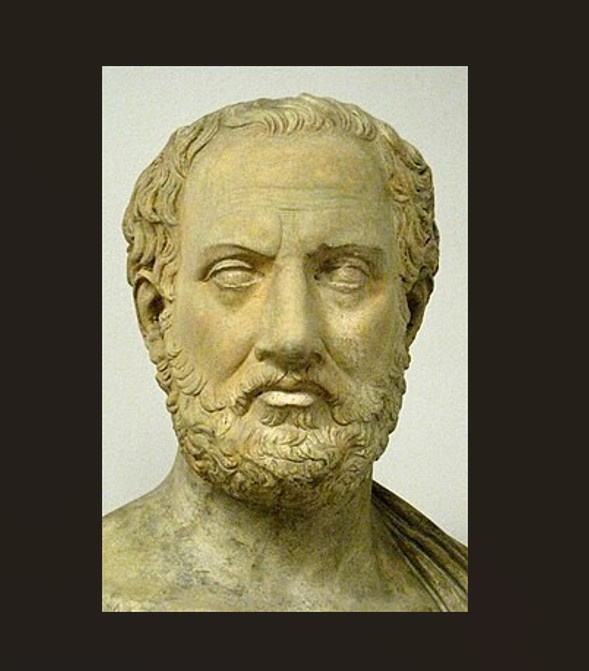
Many political scientists see parallels here with the so-called Thucydides Trap. The ancient Greek historian Thucydides wrote a famous work, The History of the Peloponnesian War, which describes the conflict between the two greatest city-states. The aforementioned “trap” suggests that ancient Sparta, seeing its position in Hellas under threat, sought an escalation with Athens, which claimed the role of hegemon. At that time, the Greek world was bipolar, which threatened to escalate. This occurred in 431 BC. According to Thucydides, this war was inevitable precisely because one of the city-states wanted to retain the status of hegemon and the other wanted to attain that status. However, the war ended with both the Spartans and the Athenians losing their influence.
The historian Graham T. Allison has expanded on the concept of Thucydides’ Trap and, in his study, described 16 examples of it, 12 of which ended in war, e.g.:
[1] Late 17th to mid-18th century – Kingdom of France vs. Kingdom of Great Britain – war
[2] Mid-19th century – France vs. German Empire – war
[3] Mid-20th century – United States vs. Empire of Japan – war
Allison’s concept has been criticised by many political scientists, such as Hal Brands and Michael Beckley. They argued that in many of the cases identified by Allison as the Thucydides Trap, it was not the impending overtaking of an old hegemonic power that triggered the war, but rather the rising power struck first when its rapid rise turned into stagnation.
At present, however, we are seeing that the Chinese economy may be stagnating in the face of the new oil crisis and tariffs.


