The United Kingdom is selling out

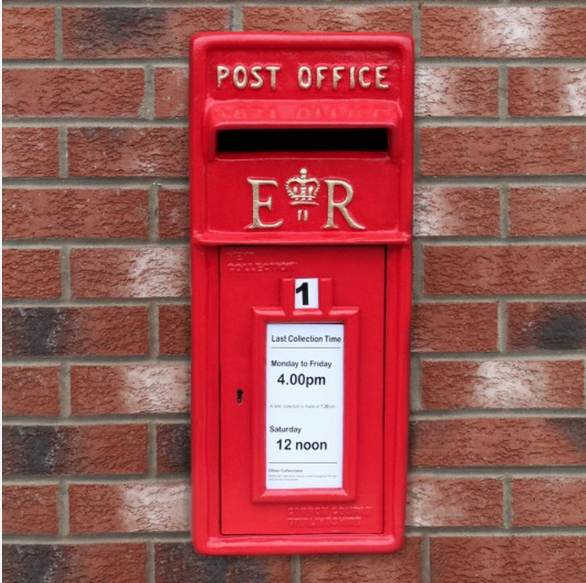
The Royal Mail, one of the United Kingdom’s cultural and economic icons, a historical brand, is being sold to a billionaire from outside Great Britain. The Royal Mail with its characteristic red pillar boxes, with its stamps featuring the monarch’s head (the post has been royal after all since Henry VIII established it) is being sold to a billionaire from… not from the United States, nor from someone from Saudi Arabia, not even to someone from China, but to a billionaire from Czechia. Not that I want to belittle a Czech billionaire, you know. I only intend to show the dimension of the changes that are taking place in the world. Merely thirty years ago Czechia – then a part of Czechoslovakia – was emerging from the Soviet bloc. It was a country that lagged behind the Western European nations in about everything, and had no big private businessmen or entrepreneurs (socialist system did not allow it). A really wealthy individual could boast at most a house or two and a car or two. Private ownership of a small factory was out of the question. Czechs looked up to Westerners, and obviously the United Kingdom was a dreamland. Thirty years later…

Thirty years later the United Kingdom is nominally ruled by a Hindu while its national symbol is being sold to a foreign entrepreneur billionaire Daniel Křetínský. Yes, you are going to say it’s a normal practice, that companies are sold and resold irrespective of national boundaries. True enough, and yet. The British managers of the Royal Mail say the company has not been profitable. Why then in heaven’s name a businessman who by definition is profit-oriented wants to buy it? Obviously, Daniel Křetínský hopes or is even certain – after all you do not spend $4.6 billion for the fun of it – that he can make money owning and managing the Royal Mail. Why can’t its present managers do the same? Why is not the British state interested in it anymore? The Royal Mail was privatized in 2013, but then the government might buy it back, and somehow it does not. The Royal Mail needs investment, you will say. Possibly. Then why can’t the British government assign some of the monies it has at its disposal? Maybe because the money needs to be used for the provision of hundreds of thousands resettlers… or for the war with Putin? Tough luck!

The country’s stewardship is at the hands of a Hindu, London’s municipal duties have long been entrusted to a Pakistani, now the Royal Mail is going to be managed by a Czech. Sure enough, all the mass media will tell you that nothing negative whatsoever is taking place. You know what? The more they are going to say so, the more mistrustful you should be. They are going to tell you that the Royal Mail became irrelevant in our times of mobile phones and parcel lockers, anyway. And still: Daniel Křetínský must be aware of it, mustn’t he? Besides, even is the Royal Mail has become irrelevant, unprofitable, you do not sell historical symbols unless… unless you are either self-loathing or bankrupt. Imagine selling the most precious family photographs, documents, maybe military orders and crosses of your granddad… You must be pressed really hard to take such a decision.

The sale of all these signs – symbols – iconic enterprises is a message of historic proportions that needs to be correctly construed. Let it sink in: it is not the Czech national postal services that are being taken over by the British, but the other way round. Why not sell Trafalgar Square or Nelson’s Column? Why not sell the London Tube or the Globe Theatre? Maybe I’m not in the picture and some of them have already been sold…? Why not sell St Paul’s Cathedral? After all churches in the United Kingdom are sold and turned into mosques, so why not? They are not profitable and certainly have become irrelevant with the majority of British society being irreligious…

Albion is dying. Albion is dying before our eyes. It might take years but the senility has set in as is the process of debilitating. Albion is dying and the country does not have a Lionheart to make it great again. Cato is credited to have said, Ante senectutem curavi, ut bene viverem; in senectute curo, ut bene moriar, or, Before old age I took care that I might live well; in my old age I take care that I may die well. That’s the only reasonable prescription for the United Kingdom. Sadly.

UK is a Third World Country

The United Kingdom under Rishi Sunak has become a Third World country. What is a Third World country? It is a country battling such problems as economic instability, high poverty rates, lack of basic infrastructure and basic necessities, lack of life-saving drugs, overcrowded prisons, shortage of electricity networks, polluted rivers and the like. No, we are not talking about Venezuela or Sudan: we are talking about the United Kingdom. Such was a comment delivered on WION (World Is One News), an Indian international English language news channel, three weeks ago.

The United Kingdom, once the ruler of India (then this term included today’s India along with Pakistan and Bangladesh), the United Kingdom run by a Hindu, has been lambasted by an Indian broadcaster. The former colony is looking down on the former colonizer, almost with satisfaction and – who knows? – contempt. British women – WION continues in the same report and in the same vein – are more and more stressed and sadder; many bank branches are closing down while Great Britain has a housing crisis (do we know by any chance why?). The United Kingdom’s economy is the worst performing among the countries of the G7.

Rishi Sunak, one of those precious enrichments imported to the Isles, has received from his Indian compatriots severe criticism. If someone who qualifies for the position of the country’s prime minister is such a failure, what can we say about all the other millions of enrichments flocking into Great Britain day after day after another day? WION cannot be denounced as racists or nationalists: WION’s staff are Hindu and they took on Rishi Sunak – a Hindu who has been made and identifies as British (never mind his religion, totally alien to the British Isles).

Britannia, which onces ruled the waves, Britannia, which once possessed India, Australia and New Zealand, a third of Africa, Canada and what later came to be known as the United States; Britannia, which has given the world such scientists as Isaac Newton and Charles Darwin, James Watt and Michael Faraday, economists David Ricardo and Adam Smith, writers William Shakespeare and Charles Dickens, philosophers John Locke and Thomas Hobbes, the poetry of William Wordsworth and Alfred Tennyson, the music of the Rolling Stones and the Beatles; Britannia, whose much admired and imitated Queen Victoria was crowned Empress of India, the same Britannia is looked down on by India, which used to be Britain’s dependent territory.

And mind you! When India was ruled by the Saxon Race, as the British would have called themselves at that time, India was elevated in terms of civilization. It was a time when the nations of the subcontinent looked up to the United Kingdom. Now when Great Britain is ruled by a Hindu and blessed with millions of Third World arrivals, it is becoming a laughing stock of this part of the globe that for many, many years was termed as… the Third World.

India, once definitely a Third World country, castigates its former colonizer for dirty rivers, lack of drugs, poor infrastructure, overcrowded prisons, economic instability, housing crisis, psychological depression of a large sector of its society, and so on! The world is changing. What used to be its military, economic, scientific and cultural centre is spiraling downwards. How does it fare with the other G7 countries? They cannot be much different. All G7 states pursue the same policy: they are hellbent on ecology, they all import Third World people by the thousands, and they all propagate the alphabet-plus sexuality. Soon the Western World will be synonymous with the term the Third World, and replaced by China and India, Brazil and Iran, Argentina and Mexico, and… who’s going to complete the new G7? What a historic turn, indeed! 

Georgia or what’s good for a gander is not good for a goose.

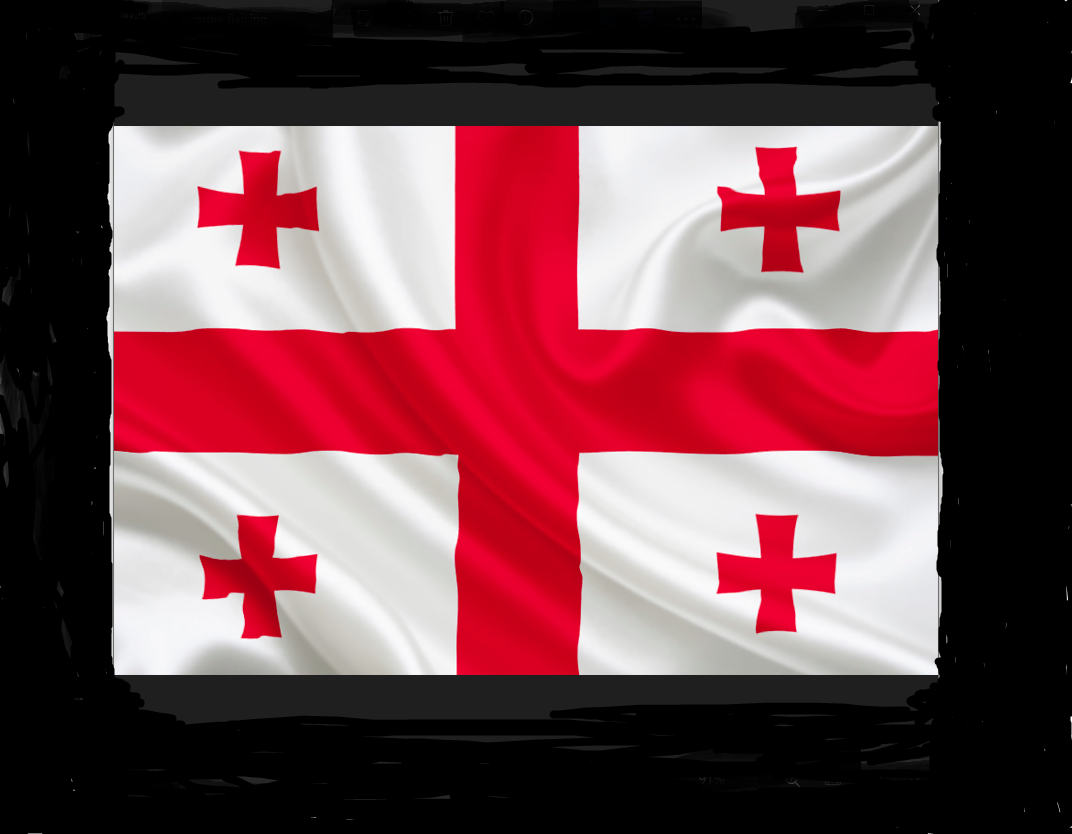
A change in legislature has caused quite a stir in Georgia. People have been mobilized to take to the streets. A lot of people. (Georgia has a lot of non-government organizations supported from abroad, you know.) Mainly young, as is usual where pressure is exerted by the managers of the world to make a government cave in. What is this law that has sparked such internal turmoil? It is a law about the media and non-government organizations which now will be required to make public the information if they are paid by foreign entities to the amount surpassing 20% of their budgets. Let it sink in: such media and NGOs are not going to be banned: they will only be required to admit the fact of foreign financing. What’s wrong with such a law?

Yes, you guessed it right. It is undemocratic and against all the liberties. How can a government of a country demand that non-government organizations state it openly that they are financed from abroad? How can a government of a country dare to know such irrelevant details about the media and the non-government organizations operating within the country’s borders? Why should a government of a country want to know such insignificant details?

If you are groomed by the Western mass media, then you are going to agree with what has been said above. Or maybe you are going to have second thoughts, anyway?

The interesting part of the whole event is that the new law drafted in Georgia is for all practical purposes a copy of the 1938 law that was passed in the United States. The American administration somehow wanted to know and wanted all the citizens to know which of the organizations were financed by foreign agents. Why what was good in the case of the United States is wrong in the case of Georgia? Probably because the United States is a democracy the likes of which the world has never seen and is not likely to see in the future, while Georgia – well – Georgia needs to learn what democracy is all about.

Georgia’s president – Salome Zourabichvili – holds… French citizenship (and Georgian, by the way) and was born and raised in France, so naturally she is in favour of preserving democracy in the country that she is in charge of. Where did she learn what democracy is all about? Why, in France, of course. She knows better, does she not? She has vetoed the draft bill about foreign agents as it is called, but on May 18 Georgia’s parliament overrode her veto. CNN – a beacon of democracy – has said in one of its headlines that the foreign agents bill is “Kremlin-styled”, admitting in the same headline that Georgia’s parliament “defied Western pressure.” The same CNN duly reports that Natalie Sabanadze, Georgia’s former ambassador to the EU, said that the Georgian government “is siding with the Putinist, anti-liberal forces of the world.” How otherwise?

The ultimate culprit is always and invariably one and the same man: Putin. The world is simple as a plot in a morality play: Joe Biden is god, Western leaders are his archangels (the United Kingdom, France, Germany, Italy), and angels (the lesser countries) or saints (very small vassals, the likes of the Baltic States); Vladimir Putin is Satan with his devils (leaders of China, Iran, Korea, Belarus), while the world is the scene where Armageddon is being played out. Georgia happens to be torn between the gods and the devils, Georgia happens to be a tug of war between the good and the bad fairies.

Georgia’s law on the Transparency of Foreign Influence is construed by the West (by the good guys) as stigmatizing such media and non-government organizations that are financed by foreign agencies. You see, each phenomenon can be viewed from two opposing vantage points. What one party to the conflict (the bad guys) labels transparency, the other calls it stigmatization. That’s the question of whether the glass is half full or half empty. Is the 1938 Foreign Agents Registration Act passed in the United States (mentioned above) an instrument enabling transparency or stigmatization? Since we know that the United States is the beacon of democracy the likes of which the world has not see and is not likely to see anytime soon, we may be sure that in this case transparency was intended. It’s quite the other way round with a similar bill drafted in Georgia: that one is all about stigmatization and… Putinism. I hope you agree. 

Restaurants offering free dishes

Every historical epoch or age has its religion. It may be a religion par excellence with a god or gods and a devil or devils, with a belief in afterlife, final judgement, reincarnation and what not. Such is not the only form a creed may take. Religions also assume forms of ideologies: apart from the beliefs in the otherworldly reality, man has also believed and continues to believe in the set of assumptions – laws – principles of his own making. Man’s strict observance of them transforms ideologies into religions. Humanity has had a number of such non-religious religions. This are socialism or enlightenment, human rights or the rights of the citizen, ecologism or globalism, with the list being by no means exhausted. One of the tenets of the last mentioned religions is the belief in the advantageousness of open borders. The argument is that man ought not to be restricted in his movement around the globe, that we are all one human race and hence citizens of the world.

The argument is false on a number of counts. For one, there are many natural borders of which language and culture are the most powerful in separating and dividing groups of people. Language itself makes runaways from one nation to another or one cultural region to another feel very much ill at ease. Hence, geographical or administrative borders merely reflect reality. It is very often recklessly repeated that nationalities only came into existence in the 19th century, but that’s not true. When you consider the borders of the medieval kingdom of France or England or Bohemia or Sweden, they somehow more or less overlap with the territory inhabited by the French the English or the Czech. The many German dukedoms and principalities along with kingdoms were still… German rather than mixtures of German and Italian or French nations. Sure, occasionally each of those political entities contained some ethnic minorities, but these were ethnic minorities and if they were bog enough, they sooner or later separated. The managers of the world seem not to be aware of all it. Also, the managers and ideologues of the world let themselves be seduced by their wishful thinking. But then who are they? Geniuses? But we are diverging.

Be it as it may, the concept of having open borders has been preached by today’s intellectuals as a kind of new commandment that has been etched into stone. The concept, however – just like about anything that has been born in the brains of the ideologues – is false and its falsity is glaring to anybody with common sense. What do we mean?

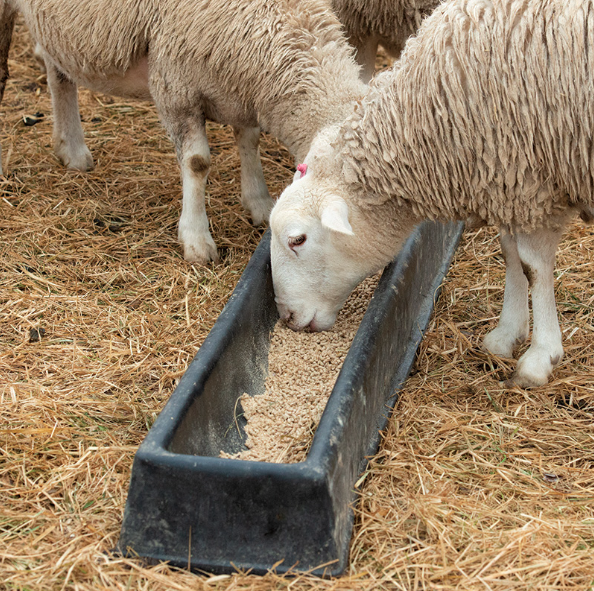
The Western countries have not merely opened their borders – doors – wide for anyone to come. That in itself would not be all that bad. After all, we have shops and restaurants and offices open for anybody and there is no problem with it. The Western countries have made it obligatory on themselves to provide for anybody who turns up with food and clothing and medical care and what not. The Western countries have not merely turned themselves into restaurants – offices – cinemas where anybody can come in and order something… in return for money. The Western countries turned themselves into such a type of restaurants – offices – cinemas where anybody who turns up is given food and beverages without having to pay for them. That’s the glaring falsity of the open borders ideology. It is not – let us reiterate it – that the restaurants are open: those restaurants have been turned into troughs regularly replenished with free-of-charge food, and naturally they act as magnets. Tens and hundreds of thousands flock to those troughs because why shouldn’t they?

Another falsity of the open-borders ideology consists in the fact that the Western ideologues provide the incomers with all the life necessities redistributing the wealth that is produced by of the host countries. It is not that the residents or prime ministers or the enlightened intellectuals give supplies to the needy from outside the Western world: it is that they take it away from their own citizens and redirect it to the aliens. Yes, the citizens of the host countries being brain-washed by the decades-long propaganda are generally in favour of aiding the aliens but herein lies yet another falsity. The citizens pay taxes and their governments funnel some of the money to the arrivals. Imagine now that not a penny is taken away from the citizens for the aid for the arrivals, but each citizen is asked to share voluntarily some of his income with all those Afghans, Somalis, Nigerians and Moroccans. How many people do you think – even among those who have been brainwashed – would support day in, day out the perfect strangers and how much money would they assign to the needs of the newcomers? It is one thing to have your money spent by the government when you have no say, and quite another to regularly and voluntarily deplete your bank account and transfer the money to aliens, especially those you are afraid or scared of every time you pass them by in the street of your town or city. How many helpers would we have under such conditions?

In other words, imagine running a restaurant and… having its door open to anybody who pleases to enter and… serving them all the dishes they wish without being paid for it! I dare say you wouldn’t like to do it even if you had money to burn. Especially – let me repeat it – if you were afraid or scared of your “guests”.

The legal case of Volodymyr Zelenskyy’s presidency

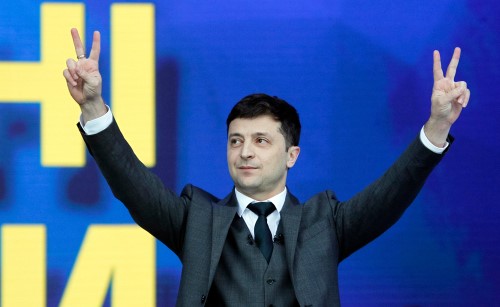
On May 20 Volodymyr Zelenskyy’s presidential term expired, which poses a very interesting legal and political case. Russia does not recognize Volodymyr Zelenskyy’s authority any more. Which is not a malicious act on her part. The argument is that any agreement, accord, whatever signed by someone who simultaneously is not the head of a country entails grave political problems. Any next president of Ukraine may either feel bound by the agreement that Ukraine entered into with Russia under the presidency of Volodymyr Zelenskyy or may renege on it as signed by someone who did not have the legal authority to act as the country’s leader. Why should the Kremlin even bother to consider any talks with Zelenskyy if such is the case?

As of now, the West recognizes Volodymyr Zelenskyy’s power despite the expiry of his presidential term of office. Yet, the same legal case might be used by the diplomats in Washington, London, or Paris in any later development of events in Ukraine. They, too, might one of these days make a statement that they do not feel bound to honour any international settlement signed by Volodymyr Zelenskyy if only such a political move suits their purposes.

As is known, it is the interaction of the real military and economic factors that are at the disposal of the international players that matters. Diplomacy is merely a reflection of those real factors. Hence, if the West feels coerced to enter into an unfavourable settlement with Russia over Ukraine, it may intentionally make Volodymyr Zelenskyy sign it with the hindsight that the settlement is going to be revoked the moment the balance of powers tilts in the West’s favour. The fact that the legality of Volodymyr Zelenskyy’s presidential authority is questionable might be viewed as a wild card in any future diplomatic dealings between the West and Russia if the latter agrees to honour Volodymyr Zelenskyy’s signature.

At present, Ukrainian jurisprudence might recognize the current Ukrainian leader as the country’s legitimate president. That may change overnight. Particular legal provisions can be construed to mean whatever pleases the powerful. We all know that.

Do not sink in the quagmire of petty facts! Step back and set your sights on the broad picture!

I keep returning to the same topic again and again. Yes, reporters and journalists, analysts and politicians love dealing with petty problems of whatever is happening, has happened or is going to happen. They immerse themselves and their minds in what was said by whom and what significance is to be assigned to this or that gesture. They love discussing the legal questions like whether Volodymyr Zelenskyy is still Ukraine’s legitimate president – his term ran out on 20th of May – or how and when the war in Ukraine will end. They are currently speculating about the outcome of the elections that are planned in June for the European Union and – how otherwise! – are afraid (who told them to be afraid?) of the “far right” winning too much of the vote. They set their sights on Trump and Biden and indulge in the same speculation about the outcome of American presidential election that is to take place later this year. Lots and lots of items of petty information. The term information noise is just the right one here. But why listen to all this petty news and these petty analyses every single day? All we need to do is to step back and see the broad picture. All we need to do is to understand the whole, the overriding trends, the phenomena as such. What are these phenomena? What are these general trends? What does the big picture look like?

We are having a big war in the territory that once was a part of the Soviet Union: in Ukraine. We have been having a number of local wars in the Caucasus, that is to say, also in the territory that once belonged to the Soviet Union. We have had successful or attempted coups d’état in Belarus, Kazakhstan, Georgia and elsewhere, also in the territories that were once parts of the Soviet Union. We have been told that hundreds of people have been killed as a result, still more have been maimed, displaced, driven into poverty. We have been witnessing heightened tensions between the West and Russia, with frequent military exercises and an increasingly frequent talk about the use of nuclear weapons. Now, these are the big, hard facts. What do we do with them?

If we view them as subsequent pages of the history book that is being written and has been written since the dawn of mankind, if we – as said above – let the petty facts and data capture our attention, if we – what’s even worse – assimilate and internalize the data for the sake of assimilating and internalizing them without drawing inferences, then we are wasting our time and life energy. We behave like students who attend lectures and classes and even try to memorize and practise things but who fail to grasp the overall picture, the workings of the mechanism; students who never really let the message of the overall body of lectures, classes and handbooks sink in and work its way into their awareness.

Take a step back, rid yourself of all the petty data and useless comments of the analysts or experts. Instead, ask yourselves a few questions and try answering them.

One. Would all those wars have taken place if the Soviet Union still existed? Would all those hundreds of thousands of people have been killed, maimed or driven into poverty if the Soviet Union continued to exist today?

Two. Would the West have ever dreamed about sending troops – mercenaries – military equipment inside the Soviet Union? Would the West have interfered so rabidly with the Soviet Union if it had existed till the present day?

Would Ukraine have lost at least 50% of its population, most of its industry; would Ukraine lost (sold) much of its fertile land to Western companies had the Soviet Union existed till this day? Would the Baltic States have become depopulated as they are (being) depopulated now, had the Soviet Union existed till this day?

Three. Would the still existing Soviet Union be a communist country or, rather, would it have gone the way of China, where capitalism is the base while communism is its ideological superstructure? In other words, is it not true that the Soviet Union, if it continued to exist today, would be communist but in name?

Four. Somehow anachronistically, but still: drawing a lesson from the fate of the post-Soviet area and era, if you have had decisive power before 1991 in the Soviet Union, would you have ever, EVER surrendered to the West? Would you have ever, EVER trusted the West? Would you have ever, EVER laid down your arms to the West?

Five. Again, having done your homework concerning the years 1991-2021, having been attentive during the classes and lectures delivered within the said period, would you ever want to become a part of the global market and manufacturing, doing away with some of your industries? Or, rather, you’d cling to autarchy as much is it is feasible and never relied on one global system of makings payments? As we know it has transpired that by letting your country become a part of the global system, you render your nation very much vulnerable: they – THEY – can cut you off from your own money and they – THEY – can try to starve you out in case you displease THEM.

Six. Do you still believe in free market economy, learning now and again that the United States – an alleged paragon of free market economy, of free economic competition and all those liberties – is going berserk imposing tariffs on Chinese products because they happen to be… better and cheaper? Hey, where do we have this lauded free market economy? Ah yes, we can have it so long as it serves the West’s purposes! The moment it dos not, we cannot have it. But of course, Chinese products are not blocked because they are better or cheaper – far be it from it! Chinese products are blocked because they have been manufactured under the conditions violating the human rights, and the like clap-trap!

By the way, if tariffs are imposed by the United States and the European Union because they protect respectively the American and European markets, why then tariffs among particular European states are viewed as detrimental? Would they not protect national economies? Or national economies are not worth protecting?

Seven. Being a responsible leader of any country, a patriot of your nation, or simply a good steward of the national economy and the territory that has been entrusted to you, and the security of your people, with the knowledge of the last thirty or so years, would you have ever, EVER signed those migration pacts? As can be seen, they only serve the purpose of diluting the local populations and ultimately destroying nations and states. Why talk about yet another batch of boats reaching this or that part of the European coast? They are coming here EVERY DAY. Why getting excited about it? It’s the huge problem that is important and this is: European and national politics have been hijacked by the powers that be and if you don’t like what is happening to your country – nation – you need to strike at the decision centre. Why in heaven’s name do they do it to us?

Eight. I know, this argument is repeated here and there, but I cannot refrain from rolling it out here again: war in Ukraine erupted because Russia could not tolerate Ukraine as a member of NATO or as a country used by NATO against Russia. Now Russia is of course to blame for the unprovoked aggression, is it not? But hey, if Mexico or Canada were to join a military alliance with Russia or China, if Mexico or Canada held joint military exercises with Russia or China, wouldn’t the United States invade Mexico? Would this invasion – aggression – be unprovoked?

Nine.

[a] Why are im-migrants to the Western world stubbornly referred to as _migrants as if they were to leave the West one of these days like migratory birds? Why is this misnomer applied and why do you – yes, you, my reader – recklessly, thoughtlessly repeat this term while talking about people who have arrived in the Old Continent or the United States to stay?

[b] The powers that be keep telling us that immigrants enrich each European country or the United States or Canada. Hang on for a moment: if the immigrants enrich us, by the same token they impoverish the countries they have left! Have you ever thought about it? So, we keep helping the poor countries by… impoverishing them! Wow!

[c] The powers that be reassure us that immigrants will assimilate and integrate and in the same breath they sermonize about the many human rights some of which guarantee anybody and everybody that his ethnicity, religion, customs and language be inviolable, inalienable, sacrosanct! How then are they going to assimilate and integrate?

[d] The immigrants keep coming to the Western world because of economic reasons, sometimes political ones. They are supposed to be loyal, good, law-abiding citizens in their adoptive countries. Hang on, again! Once such individuals left their own countries – nations – in search of a better life, they will not give two hoots about leaving the adoptive country the moment they figure out there is a better life somewhere else. What kind of loyalty is that? What civic virtues are these? How valuable are they?

Ten. If uniting nations – countries – is a good thing, why then most people approve of the dissolution of the Soviet Union, Czechoslovakia and Yugoslavia? Why did the nations of the three political entities mentioned in the foregoing sentence seek to separate themselves from the union on day one only to apply for membership in another union on day two? Consider, Czechs and Slovaks did not want to live within the same political structure known as Czechoslovakia, but they BOTH entered the European Union and so ARE members of THE SAME political structure. Where’s the sense? The same is true of the nations of former Yugoslavia: they divorced in order to… marry again within a broader family. Why didn’t German Lands divorce prior to collectively joining the European Union?

Eleven. So long as the Soviet Union existed, its citizens were presented to the world as homogeneous people who may have spoken different languages or observed different traditions but who basically were Soviet people. The same was true of Yugoslavia. The country may have been made up of Slovenes, Croats, Serbs; of Catholics, Orthodox Christians and Muslims, but all in all they were known as Yugoslavians. Now it took just a few minutes (from a historical perspective) for the many nations who allegedly were not all that important to be reborn with intense national sentiments and to be at each other’s throat. The BIG question is: why does it not occur to the EU commissioners that precisely the same fate awaits this political superstructure? Why does it not occur to them that by importing Third World people by the millions they add fuel to the fire of the future civil war rampaging across the continent? Whence this hubris? The feuds between particular ex-Soviet republics and the hostilities between ex-Yugoslavian republics are within human memory! What amount of hubris does it take to make the managers of the world and to make common people think that this time things are going to be different? We have assigned ourselves the scientific description of being homines sapientes – reasonable men. Where is our reason? Where is our reasoning?

Twelve. If Ukraine had not flirted with the Western military, if it had not provoked Russia, wouldn’t it have now ALL its 1991 territory INTACT? Even more interesting: if Ukraine had had a “dictator” like Belarus has had and continues to have, would Ukraine have experienced [a] war, [b] loss of territory, [c] loss of lives, [d] massive emigration (read depopulation), and [e] destruction of its infrastructure? Answer the following question with all sincerity you can muster: would you rather have been a citizen of Ukraine or Belarus for the last twenty or so years? Would you rather have a string of “democratic” presidents and war or a “dictator” and peace? I dare you to answer!

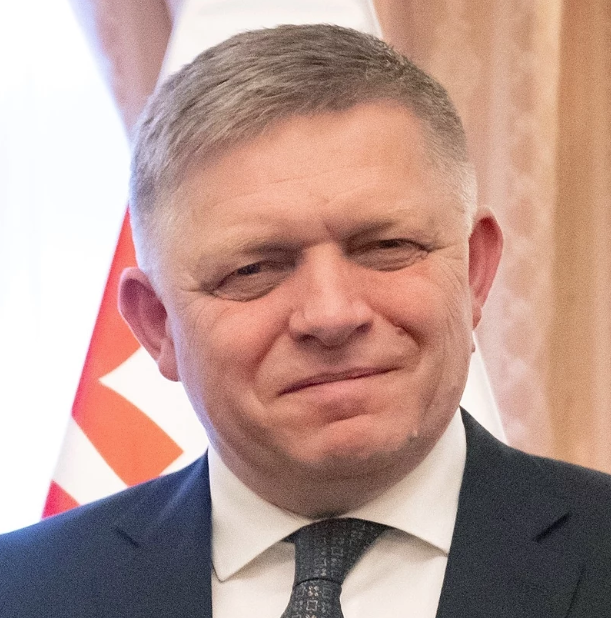
Assassination attempt on Robert Fico

The assassination in Slovakia – a shock for the public. The assassin from Slovakia – rather something familiar. A poet who used to give speeches at meetings of radical right-wing “Slovakian recruits”, only to take part in pro-Ukrainian demonstrations a few years later. A man makes sweeping changes in his political views, which is typical of secret agents who have to penetrate certain milieus, sometimes this one, sometimes that one, by presenting themselves as their own kind and telling fairy tales (a child’s play for poets). Such assassins are portrayed as madmen, as mavericks who often go berserk – all to justify the inadequacy of the secret services. No, no, the assassins never belonged, do not belong or will ever belong to the services themselves nor are they controlled by them, God forbid! To say so would be a conspiracy theory! And yet such acts are almost never committed by genuine extremists who have long been under the radar of the secret services: they are almost always people from nowhere who could not be located.

December 2009: Berlusconi is giving a speech in Piazza del Duomo in Milan. Suddenly a man throws a heavy figure from the cathedral right into his face. Serious wounds. Security officers react unprofessionally here too. It was a man with mental disorders who recently had his driver’s license revoked. Oh dear! How were we, secret service agents, supposed to suspect someone like that!

July 8, 2022: at an election rally, a former soldier easily threads his way to the immediate vicinity of Japanese Prime Minister Shinzo Abe. To top it all, he does so with a 40 cm shotgun. Abe doesn’t survive while the body guard reacts as quickly as an old chaperon. Motives? Supposedly Abe supported the Myung cult, a cult that allegedly drove the assassin’s family to ruin. What?

The assassinations of Kennedy, Reagan, you name them. Very good shooters, indeed, snipers. Madmen who kill themselves or… are killed by other madmen. History does not happen on its own: rather, it is written, written with ruthless invisible hands.