Why not see the elephant in the room?

The Western world appears to be apprehensive of the political and economic axis commonly known as BRICS i.e. the loose union of Brasilia, Russia, India, China and South Africa, all the more so because a number of other nations have expressed their willingness to join these five in an effort to contribute to the creation of an alternative world to that run by the United States and its vassals: the United Kingdom, Australia, New Zealand and the European Union. As the old wisdom says, the chain is as strong as its weakest link. Which is the weakest link in BRICS? Yes, you guessed it right: the Republic of South Africa.

As is known, the country has been run by its black majority (the African National Congress or ANC, to be precise) for three decades now and within this time its economy, the schooling system, societal cohesion and the basic infrastructure has been constantly collapsing. South Africa is notorious for rampant petty and violent crime, and for its power outages. Power outages lead to a string of other problems, since modern civilization is based on electricity. Why is South Africa on a slippery road to a collapse? Why is South Africa disintegrating? Why is South Africa about to become a failed state?

Various explanations have been advanced recently. Of these, the objective economic crises outside the country, the split of South African society along racial, class, tribal and sectarian divides, natural disasters that haunted the country, and ultimately the Marxist principles of equity that have been enforced are most frequently discussed. The experts, journalists or politicians who come up with these explanations seem not to notice the elephant in the room. Before 1994, when South Africa was ruled by the white minority and abided by the laws of apartheid, it faced the same problems: racial, class, tribal and sectarian divisions, objective, external economic crises, periodic natural disasters and the like, and yet, and despite these factors it was Africa’s top nation in terms of economy. What has changed since 1994?

Well, Marxism as the ruling political principle is one of the factors. Countries following Marxism in economy did not fare well anywhere in the world: think about the socialist countries of Eastern Europe, think about the Soviet Union, Maoist China or Cuba. Yet, in none of them did we observe power outages, in none of them did we see rampant theft of the elements of basic infrastructure; none of them was fraught with crime and none of them descended into lawlessness the way South Africa has done. Obviously, we need to look for another explanation. What else has changed since 1994?

Ah, yes! Pluck up your intellectual courage and own it up: South Africa has been ruled by its black majority. Now draw a comparison between the quality of life in black neighbourhoods in the United States or Europe and that in South Africa and you will spot a striking resemblance. That’s a fact of life, no more, no less. Some of the former communist countries were in very deep economic problems: in some of them almost all sorts of food! were rationed, and yet there was no trash in the streets, no theft of the items of infrastructure, no violent riots in the streets with torched cars and smashed shop windows, and no rampant petty or violent crime.

The reasonable, scientific approach dictates to us an impartial analysis of the factors that are in play. The Chinese and some of the European nations followed Marxist principles in economy and they did not have all the glaringly, blatantly negative phenomena that we are observing in South Africa. Conversely, there was no Marxism in the United States, and black communities behave the way they do in South Africa, and black neighbourhoods look pretty much like their counterparts in South Africa. Is there a significant difference between majority-black Chicago and majority-black Johannesburg? Why not see the elephant in the room? 

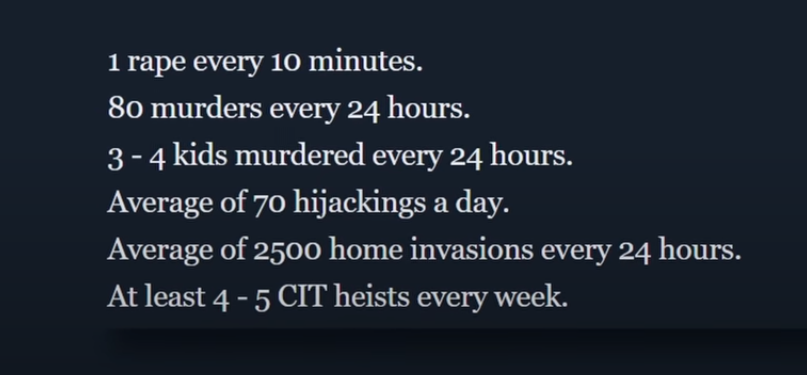
South Africa: crime statistics. Source: It’s True – South Africa Is Collapsing – Morning Shot.

Volhynia: a frozen conflict

They would cut out unborn babies from pregnant women’s bellies; they would chop off men’s hands and feet; they would impale little children on pitchforks and then hold a party to celebrate yet another act of ethnic cleansing. These events that occurred eighty (80) years ago remain oblivious to the Western reader who is otherwise so much sensitized to atrocities perpetrated anywhere around the world, in the past or at present. That the authorities of the nation that suffered such a bloodbath – the authorities of Poland – turn a blind eye to the fact that the perpetrators of the ethnic cleansing are regarded as national heroes in the neighbouring country, in Ukraine, is sickening. Imagine the state of Israel maintaining friendly relations with a Germany where Adolf Eichmann and Reinhard Heydrich have streets named after them and monuments devoted to them. Why are the Polish authorities operating as they are? Simply because Ukraine fights against Russia, the epitome of wickedness, as it is said on the Vistula, which is why – do you remember the classic novel? – now Oceania is our bosom friend and has ever been. Clear? And we should not wonder too much. As the saying goes: there are Poles who hate Russia more than they love Poland.

If these events had been taking place twenty or thirty years ago, they would have made headline in all the mainstream Western media; sadly, if these events had been taking place somewhere between 2014 and the present, the news about them would have been suppressed, the articles – heavily redacted, most of the information – withdrawn while YouTube would have banned videos, using the usual insolent excuse to the tune of an enigmatic community not wanting to have such material on the platform. What are we talking about?

We are talking about the bloodbath that took place in the summer and autumn months of 1943 in Volhynia, where Ukrainians would murder approximately 50 to 100 thousand defenceless Poles in the territory that had been a part of prewar Poland and is now a part of Ukraine. There are still survivors – witnesses to the atrocities committed by the Ukrainian Insurgent Army, and many compelling stories – first-hand accounts – retold by them, gathered in books and articles as well as shown in documentaries.

In prewar Poland, the province of Volhynia was inhabited by a mixture of Ukrainians, Poles and Jews. This was due to the history of the region, which originally was a part of medieval Rus’, then came under Lithuanian rule, and as the Grand Duchy of Lithuania merged with the Kingdom of Poland in 1569, the territory became a part of the Polish-Lithuanian Commonwealth. The higher classes – mainly the gentry – underwent Polonization and conversion to Catholicism, while the lower classes – mainly peasantry – remained “Russian” and Orthodox Christian. In the 19th, the Polish-Lithuanian Commonwealth fell prey to the three neighbouring European powers, of which Russia incorporated the Commonwealth’s eastern territories, enforcing Russification in turn and stripping the Polish population of its property as punishment for its participation in anti-Russian insurgencies. Then came World War One and the reemergence of the Polish state, which reclaimed some of its previous eastern territories, among them – Volhynia. A process of re-Polonization was launched in that retired officers and soldiers would be given plots of land while attempts were made to turn Ukrainians into Poles, which bred resentment among them.

Ukrainian national activists would establish political organisations and create para-military units that dealt with terrorism with the aim of subverting the Polish state. Elaborate national ideas were developed and floated among the Ukrainian population. They challenged the Polish political and economic dominance and advanced a cause of creating a living space for Ukrainians, a space free of Poles and Jews. Ukrainian activists managed to win support of common Ukrainians while their ideas gained traction with the Ukrainian intellectuals, not excluding priests and bishops of the Orthodox Church, who cemented this belief among its flocks in the excpetionalism of the Ukrainian nation and the parasitic character of the presence of Poles and Jews.

On September 1, 1939 Germany attacked Poland, while the Soviet Union did it September 17 of the same year. Volhynia and other eastern Polish territories came under Soviet rule. At this juncture Ukrainians kept a low profile. It was only with the the attack of the Third Reich on the Soviet Union that Ukrainians saw an opportunity for the pursuit of their political agenda and they seized it. They forged and consequently executed a plan of ethnic cleansing in Volhynia, with its peak occurring in the summer and autumn of 1943.

To put things in perspective: the beginning of 1943 saw the end of the Battle of Stalingrad, in July the Allies invaded Sicily; in September that year Italy would surrender and in November the allied leaders would meet at Tehran.

How did the bloodbath come about? Villages with Polish residents would be attacked at dawn or at night, usually surrounded by Ukrainian troops to prevent anybody escaping the dreadful fate. Then looting would begin accompanied by acts of arson, while men, women, and children would be hunted down and mercilessly murdered, usually subjected to torture before death. Pregnant women had their bellies cut or punched, men had their limbs lopped off, while little children were impaled on pitchforks. No one was spared. The acts of atrocity were committed not only by the henchmen of the Ukrainian Insurgent Army, but also by common Ukrainians, who had the bad habit of partying on the debris and ashes of the annihilated villages. The toll of life on the Polish side was enormous.

Why are we reminding the reader of these events? Well, German perpetrators of cruelties were duly put on trial and punished. It was not the case with Ukrainians. First, after the war, the territories were incorporated into the Ukrainian Soviet Socialist Republic, and its authorities had no interest in prosecuting Ukrainians for hostile acts against Polish residents. The Polish state was dependent on the Soviet Union and according to its ideology it strove to operate on friendly terms with the big brother from the east. Ukrainian crime was not forgotten or suppressed at that time in Poland, though: there were a few publications and even a couple of feature films devoted to the problem. Yet, generally, the authorities were not interested in exploring this particular historical theme.

The year was 1989. Poland became – if for a short time – a sovereign state. Survivors and the families of the survivors of the Volhynia massacre raised their voice and tried to make themselves heard. The authorities made believe they were concerned about the problem but somehow they always adopted a soft stance towards Kiev. Why? Yes, you guessed it right. First, Ukraine was to be used as a counterbalance against Russia, and, second, it was not in the West’s interests to have Poland conflicting with Ukraine and perhaps – God forbid! – allying herself with Russia. Warsaw stood idle by when in Ukraine monuments to the leaders of the Ukrainian insurgent army were raised, when streets and squares received names of Ukrainian national heroes whose hands were all red with the blood of the Polish residents of the eastern territories of prewar Poland. Despite the copious amount of historical evidence and painstaking research done by historians proving Ukrainian engagement in the mass slaughter of the Poles, Kiev refused to admit guilt, to make apologies, to tear down the monuments; Ukrainian historians would exonerate the murderers, undermine the research efforts of their Polish counterparts, challenge the authenticity of the evidence and eye-witness accounts, and they would claim that the numbers of the victims were inflated. What did Warsaw do? Nothing.

Then came the year 2014: overnight, Ukraine began to be perceived as an innocent victim of an unprovoked aggression, a victim who stood in need of aid, as a consequence of which any redress of past wrongs was suspended to an undetermined, later date. Websites that ran articles about the Volhynia massacre were shut down, while school historical contests that had been held annually on the same theme for many years were banned. For some time now the Polish authorities have been displaying and continue to display sheepish submission to Kiev and it looks like they have lost their moral compass. The same is true for the majority of the Polish nation, who hate Russia so much that they are ready to forgive Ukrainians everything. This attitude of the Polish nation stems from the historical resentment vis-à-vis Russia and the impact of the propaganda that in between 1989 and 2023 has presented Russia as the arch evil-doer on the planet.

It looks like this continued miscarriage of historical justice will have no end. The marching orders are: provide aid for Ukraine whatever the price and demand absolutely nothing in return. Millions of Ukrainians have found home in Poland, which was by no means reciprocated by Kiev with a gesture of historical good will, with an act of reconciliation, with the settlement of the Volhynia Massacre accompanied by some sort of apologies. Poles are told that they are friends of Ukrainians while Ukrainians are friends of Poles. Both parties have been told so – nay, reassured – many times before, throughout centuries. Sadly, most people let themselves be duped again and again and again. Historical memory does not usually extent beyond an individual’s lifetime, and not infrequently it does not stretch back even within this period. Yet, one may rest assured: in the relationships between Poles and Ukrainians we are facing but a frozen conflict. The two nations have had a bone to pick again and again throughout history. To think that now it will be different is like thinking that somehow this time I will not get intoxicated after I have drunk one over though eighth.

Chinese install themselves in Switzerland

On March 10, 2020, the Cantonal Council in Lausanne announced to the commune of Maudon that a display of the Tibetan flag on public buildings was not in accordance with the policy of the Ministry of Foreign Affairs in Bern. The protesting Tibetans, who had found their new home and protection from the Chinese dictatorship in Switzerland, were not allowed to manifest their freedom of expression on this day of their traditional protest (the commemoration day of the Tibetan uprising).

In the past, Chinese diplomats were like frightened or disoriented sheep running among the Russians and Americans, the bears and sheepdogs. Now the Chinese dragon has been reborn. Now they are more like sly foxes: they infiltrate Western democracies by having their diplomats rather than spies act in the field of culture, cooperation on international projects, or free trade. Beijing achieves its goals by shaping its positive image abroad.

In 2017, protesting Tibetans were arrested during Comrade Xi’s visit. The Confederates in Bern do not mind advocating cooperation with China since the 1970s. It began in 1949 when the country of banks, cheese makers and watchmakers was one of the first to recognize the newly formed People’s Republic of China. China remained grateful and signed new treaties with the country in the mountainous heart of Europe during the Cold War and again and again in the following decades. Most important was the 2013 Free Trade Treaty, which was never challenged by Brussels or Washington. While deglobalizing measures dominated the world stage under Trump shortly thereafter, such as those against TIPP and CEFTA, Bern remained loyal to Beijing profiting from globalism. Switzerland, Greece, Serbia, Montenegro, which are on the fringes of Washington’s and Brussels’ interests, are a training ground of China in Europe. The Middle Kingdom comes and buys Piraeus (Greece’s biggest port), comes where NATO bombs shattered its embassy and the main bridge in the city and rebuilds it. It opens its cultural institutes all over the West, just as Erdoğan weaves his web through Diyanet like a spider, and Western governments swallow this hard-to-digest Chinese soup in the form of forums, NGOs, scholarships, student exchanges, an overarching cooperation. Even before the pandemic, Swiss President Maurer assured of his support for the New Silk Road during his visit to Beijing, and despite the massive repression of Tibetans and Uyghurs at the time.

Professor Ralph Weber (University of Basel) examined the connections between Swiss companies and the Chinese Communist Party: Comrades from the Far East sit on the boards of many Swiss companies – at Nestle, UBS, SWISS RE.

China forced Turkey to deport the exiled Uyghurs back to China. Switzerland doesn’t care about them either, it is mercantile as far as it goes. And where there are high-tech and innovative solutions, there are also Chinese tentacles.

Who does the euro destroy?

After the 2015 introduction of the common currency in Lithuania, much has changed. On the one hand, the euro positively influenced economic growth, as loans became cheaper, resulting in increasing exports and investments, on the other hand, the gap between rich and poor and between the level of living in the cities and in the countryside deepened. Until the beginning of the post-pandemic inflation, prices and salaries increased continuously in the Baltic country, but the latter mainly in the cities. Already between 2015-2019, prices increased by 10%, among others food by 6% and services by 22%. In the post-pandemic period, all Baltic countries are now among those with the highest inflation, with salaries, including those of the richer urbanites, unable to catch up with galloping food prices for a good two years. The ECB’s policy is not helping anyone. If one speaks to a Lithuanian or Latvian on this topic, one hears the following: I used to be able to often invite my girlfriend to the restaurant, now I can hardly afford it (a Latvian truck driver aged around 30). Prices have become European, salaries have not.

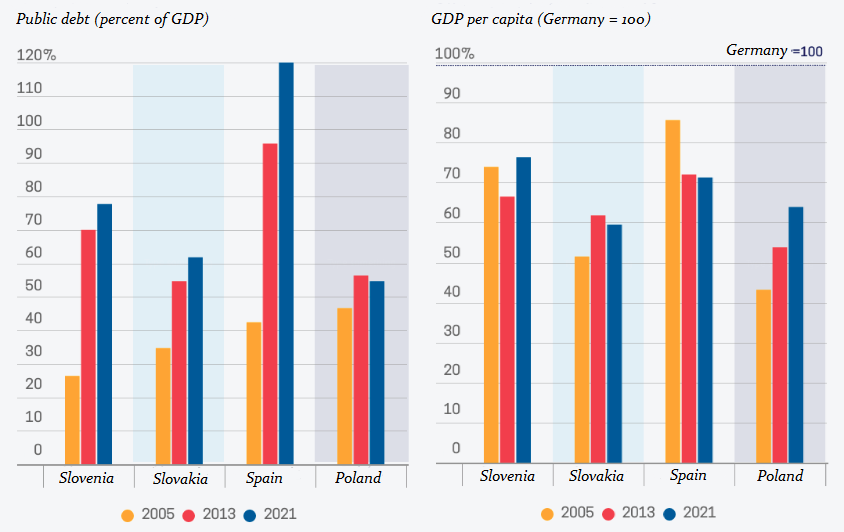
However, the argument with growth seems to be a bit misguided. Polish economy with its own currency is growing faster than that of Slovakia and Slovenia, which quickly adopted the euro. Since the introduction of the common currency in the PIGS countries, they systematically lose their growth rate compared to Germany. Contrary to the widespread complaints in the German media about Polish fiscal policy (and the hope that it would be “disciplined” after the introduction of the euro), public debt in Poland is keeping within limits – and this despite the policy of social transfers never seen before. In the euro zone, on the other hand, debt is exploding, despite various formal restrictions. This is true even for the countries that joined the euro without having a public debt problem. The debt has been created over time – precisely in this oh-so-fantastic union. This fact is illustrated in the following graph.

Source: Ameco

The culprit is the crazy idea that one monetary and fiscal policy should fit all countries like a universal recipe (one size fits all). One policy for 24 countries – that can’t work, like a 5 year plan for all Soviets, or one for the so very different regions of China. The same interest rate for the entire Eurozone cannot be effective. It leads to destabilizing and costly imbalances in individual member states, which subsequently spill over to the entire euro area, which cannot develop fast enough vis-à-vis the U.S. and China.

But what’s all the talk about? After all, it’s summer vacation and you want to relax. That’s when we recommend a vacation in Croatia – the latest to enjoy the benefits of the single currency. After the introduction of the euro this year, prices in the once cheap country rose to the level of Austria. The Austrian “Kronenzeitung” even compared the price level with Swiss health resorts. The Croatian newspaper “Slobodnaja Dalmacija” calculates that a kilo of cherries and figs now costs 8 euros – 10 percent more than a year ago. Wholesalers have to pay 5 euros for a kilo of pears, 3 euros for cucumbers and 5 euros for peaches. No wonder tourists are canceling their reservations in the country that depends on them the most in the whole EU (11% of GDP comes from them). Another local newspaper “Jutarnji list” points out the surprisingly high cost of daily rent of a deck chair. On the island of Hvar it costs €40, in Split €35 and in Dubrovnik €33. On Croatian social media, a video of an American tourist is very popular, where she aptly notes that the price of the service remained the same after the currency conversion from kuna to euro. The greed of (small) entrepreneurs is one downside of it all, the other is that the euro is actually always Teuro. So we wish you a nice vacation in Poland.

Three flags of continuity or the West’s failure in subduing Russian spirit

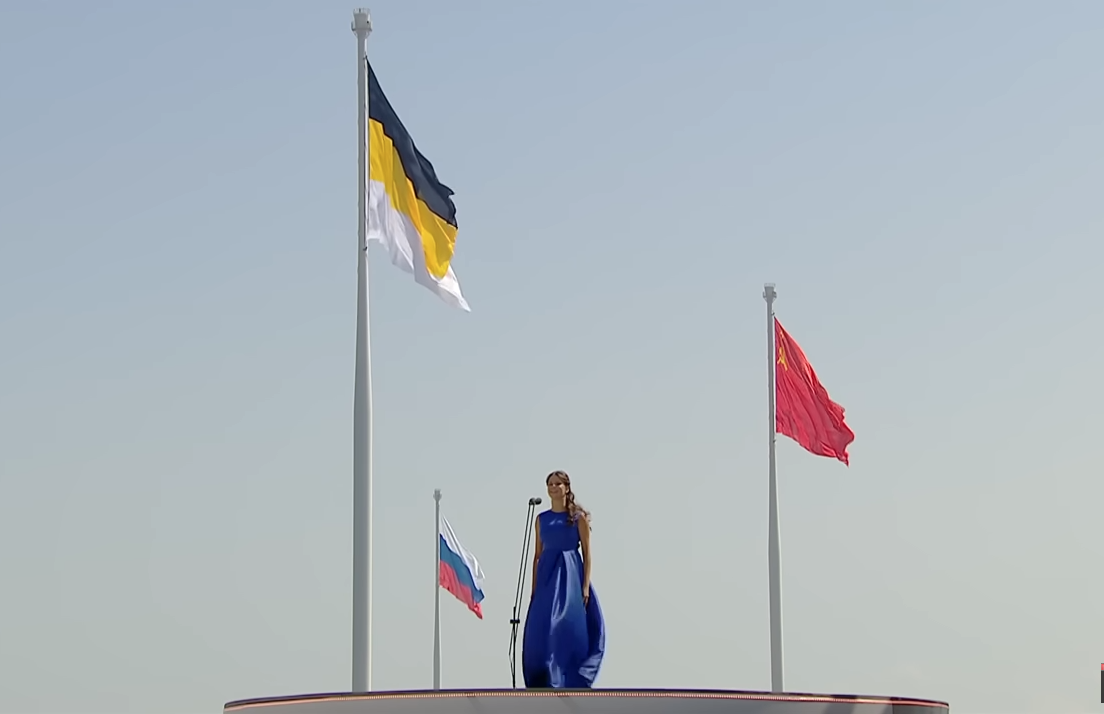
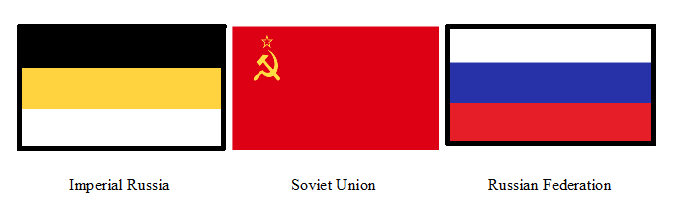
On June 17, 2023, in the park of the tercentenary of St. Petersburg there was a ceremony of raising three huge flags of the Russian statehood. They were the black-yellow-white flag of Imperial Russia, the red flag of the Soviet Union and the white-blue-red flag of the Russian Federation. They fly on 180 meter high masts anchored on the bottom of the Gulf of Finland. Each flag measures 40 x 60 meters (two such flags would cover a soccer field) and weighs half a ton. The ceremony was attended by a number of high-ranking officials, including Russian President Vladimir Putin, who watched the festivities from a yacht, accompanied by a Gazprom CEO who explained the details to him. An orchestra played celebratory music – including the national anthem of the Russian Federation – while actors recited patriotic poems during intermissions. So much for the event. 

The flying of three historically successive flags is an important indication of the continuity of Russian statehood. Only a few years ago, no one would have dared to dream that the flag of the Soviet Union would fly on an official mast. Today, after the orchestrated attack on Russia – its leadership, elites and ordinary people have returned to a fervent patriotism. Polls show that the popularity of Joseph Stalin and the Soviet Union is on the rise. And why? Because of the work of the psychologists of the West. They knew no moderation when it came to propagandizing Russian citizens and dragging the Russian past through the mud. Everything Soviet and everything Russian – that was the message inculcated in the citizens of the Federation – was supposed to be absolutely bad, evil, vile and repugnant. This worked up to a certain point. Then the realization dawned on even the dumbest minds: damn it, when we (Russians) were under the brutal tyrant, the West feared us; now that we are Westernized and want to comply with Western demands, the West began to trample Russia underfoot on a regular basis.

The Western managers of the world are supposedly advised by experienced sociologists, psychologists and masters of propaganda, at least that is what we are told. Strange. Like King Midas, everything these specialists touch turns sour. A frontal attack on a country – any country – usually causes the people to rally around their leader, whether he is a dictator, a satrap or a tyrant. Not for nothing do some historians say that the civil war in the Soviet Union that broke out after the Bolshevik coup d’état, commonly referred to as the Bolshevik or Russian Revolution, actually ended in 1941 and not – as officially stated – in 1923. While fratricide may have ended around 1923, the deep rift that ran through all segments of society did not. Then came June 22, 1941, the German attack that stretched from the Baltic to the Black Sea, and all walks of life and ethnic minorities rallied around Joseph Stalin, even though many had hated him just a day before the outbreak of hostilities. 

Certainly, Vladimir Putin does not remotely resemble Joseph Stalin, even if Western propaganda would have people believe so. How much more must the citizens of Russia rally around him now that they are all under relentless attack – economic and psychological? In this context, think of the Germans during World War II and their unwavering loyalty to Adolf Hitler. The Western Allies thought they could break that loyalty when they began carpet bombing German cities. With what result? There was not a single uprising. Even the incineration of Dresden three months before the end of hostilities did not help the Allies in this regard. The civilian survivors remained defiant against the enemy and even more loyal to the authorities. Why do policymakers in the West believe that this time will be different?

Just think of it. If you had listened to President Putin’s speeches over the last twenty years – and I dare say you haven’t – you would have noticed [1] how often he proposed cooperation between the collective West and Russia (including Russia’s membership in NATO), and [2] how often he warned the collective West not to expand its military presence in Ukraine. All of this fell on deaf ears. At the time, Russian elites were willing to do almost anything the West wanted to impose on them, but they expected a certain degree of reciprocity: equal treatment and respect. By 2000, Russia was down and out, displaying a fawning attitude toward everything Western. As so often happens – no less a person than Aesop, the Greek author of moral fables, described this phenomenon more than two millennia ago – the West seeing a weak partner and decided to make a killing. And yes, the West would have succeeded if Russia had been ruled by another Boris Yeltsin. Tough luck, though: Boris Yeltsin was replaced by Vladimir Putin.

But Vladimir Putin, as mentioned above, was also ready to cooperate instead of compete, to reciprocate good deeds instead of retaliating against bad ones, to benefit from each other instead of harming each other. In vain. Early on, he was labeled a dictator and treated as such. For a long time, the world’s Western managers tried to turn some of Russia’s elites against the country’s leader. This could have succeeded: After all, if Russian billionaires and millionaires had their accounts in Western banks, if they bought real estate in the West, if they had their children educated in Western universities, if – last but not least – Russian elites driven by inferiority complexes (so typical of Central and Eastern European nations) desperately tried to shake off their – as they thought – Russian backwardness and adopt the Western way of life, then these Russian elites were easy prey for the Western powers. Unfortunately for the Western elites, their overconfidence, vanity, coupled with utter contempt for their great Eastern partner, led them to overplay their hand. As a result, they must now watch in horror the resurgence of Russian patriotism, the strengthening of Russian consciousness of historical continuity, the reconciliation of Russia with its past, and the rallying of Russian citizens around the Russian leader. Moderation would have led to the West’s gentle domination of Russia; high-handedness has led to a clash. Moderation would have further weakened Russia’s patriotic and compliant spirit; hostility has aroused self-respect and self-esteem.

The three flags flying on the three poles symbolize not only historical continuity, but also unity between Russians of different political persuasions: Monarchists, Post-Communists, Republicans, you name it. Looking at the three symbols, everyone finds something for himself, for his beliefs and feelings. Would an American president dare to fly the Confederate flag opposite the national flag of the United States to please Southerners? Would a French president raise a white flag along with the French national flag to please French royalists? Would a German chancellor fly the German imperial flag – let alone the flag of the Third Reich! – in front of the Bundestag to show the continuity of German statehood? Would a German chancellor allow the flag of the short-lived German Democratic Republic to be displayed in a public place on an equal footing with today’s flag? No, European leaders prefer the flag of the European Union to their national symbols, while some of them – Angela Merkel in particular – are known to regard the national flag with disgust

France in flames

The dams are broken. The migrants show their true colors. Their rage is excessive and unbridled. The French police are on edge. This will not end well. Naked King Emmanuel Macron blames social media and video games for the riots. Such impudence will not be forgotten. Maybe in the next step he will block social media like once Erdoğan and Trudeau? In Moscow, Warsaw, Prague and Budapest, on the other hand, the streets are quiet. It is not reported that under Erdoğan’s terrible dictatorship hordes of discontented migrants want to set Istanbul on fire. And Brussels is just now enforcing its migration pact with coercion. Who are these technocrats who are plunging once proud nations and admired countries into the abyss? What is their real goal? Certainly not the rule of law.

“You will know them by their fruits” – this quote fits both EU politicians and migrants. But I like to use it in reference to parents and their children, that is, I know what parents are like by watching their children.

The Muslim percentage in many secondary schools in France is not infrequently 60%. Prayers are forbidden in school, yet they are organized by the students. These students also massively bully girls who do not wear appropriate clothing. Their parents don’t seem to mind. Are they able to educate their children to be law-abiding citizens?

The Muslim Brotherhood and the Turkish Ministry of Religious Affairs (Diyanet) have long since infiltrated Western Europe. The decision makers play into their hands by not allowing the special services to stop this process, by censoring critical statements about migrants, by turning a blind eye to what is happening in schools, by not encouraging police in the fight against silent/loud jihad, by making migration pacts, by pressuring Eastern European counterparts in this regard, by giving NGOs on the Mediterranean a free hand when it comes to migrant smuggling, by … Decision makers in France, Belgium, Sweden, Germany, Austria, in the Netherlands, in … .

Why do people trust central bankers?

I can’t understand that. I would rather say: There should be a movement here and there under the prevailing circumstances, a kind of yellow vest against the bankers. But lo and behold, the anti-globalists protest against the “rulers” during the G7 summits, as if they don’t know who pulls the strings in G7. The bankers were, are and will be spared. Look at the history of the “Occupy Wall Street” movement, how it was mercilessly swept away by the rulers. You could say: like an oppositional movement in Russia, but in the middle of freedom-loving America. What does the dictatorship of the bankers look like at the moment? And what threats does it pose to us?

Mario Draghi. Remember his assurance that he would do everything to preserve the euro and its stability? Whatever the cost? This is what he said and did in fact, but at the expense of taxpayers. A more recent example: Jerome Powell, the head of the FED assured on June 21 of this year, in relation to the problems of cryptocurrencies in the U.S. market, made by rigorous actions of the FED and SEC against the platforms and banks dealing in this digital money, that he would do everything to preserve the dollar as the main reserve currency in the world. How much will this cost the American taxpayers? Hello, Mr. Powell! Have you lost touch with reality? The Saudis are renouncing U.S. guarantees and reconciling with Iran; China is trading with the yuan with its partners; The BRICS countries are banding together, looking to add new members, including perhaps France – who knows? And you, Mister Powell, together with your colleagues, want to introduce the digital dollar, called “FED-NOW”, sometime in July 2023 at any cost to show every country in the world who rules here? Pride always comes before a fall.

As always, the next crisis is carefully prepared. One day an article appears, for example in “Financial Times”, the other “qualitative” media follow the topic. Then comes the “crisis,” always like a bolt from the blue. What is the “Financial Times” writing now? That the Bundesbank is broke. And that’s true. But then they publish a counter-statement. After all, the “crisis” has to be baptized in the media at the right time. They have to wait until the bankers themselves (the owners of the leading media) will give a sign to the editors; Yes, you may write that now because all the rats have long since fled the sinking ship and the captain never existed.

Why would the Bundesbank need a bailout right now? Because it is, of course, too big to simply let it fall? Yes, of course. But the reason is too boring for the average citizen, so he ignores the facts, but as always only until the headlines sound the alarm or until the next “unexpected” tax increase comes along. It is about bonds, the world of the bankers, which hardly everyone understands and therefore fails as a small investor mostly because he invests against the current, by the way.

Super Mario, otherwise called “Cost what it may”, bought for years from the member banks of the ECB their government bonds so that they (especially his Italian home central bank) could service their debts. Thus, the over-indebted PISA countries did not become insolvent. But, wait, wasn’t that forbidden by the Maastricht Treaty? Yes, of course, but only if the bank in Frankfurt am Main had bought the debt directly from the states. The states, however, wisely sold their debts to the biggest bigwigs in the financial world, including the infamous funds like Black Rock. Thus, the ECB financed and continues to finance the private US money industry, which has done nothing to any EU citizen. These piles of the securities were hoarded in the bunker in Frankfurt and the great Italian banker had hoped that they would not lose value. But then inflation came, and his successor (remember: he himself did not) had to raise interest rates significantly. Since while prime rates were rising, fixed-income securities were losing value, it turned out that the bunker was full of toilet paper. Independent journalists (not those from the leading media) have calculated that the total loss of the EU monetary guardians could be as high as 500 billion euros. If the Bundesbank takes a stake in the ECB of about 10%, that’s already a small problem. But as a well-known German politician once said: Not all Germans believe in God, but they all believe in the Bundesbank. The euro will last forever. Maybe for 1000 years.