So we have a war, a war that lasts more than six months, a civil war, a war between one Ruthenian nation and another Ruthenian nation (don’t be fooled by the propagandists that these are two different nations!), a war in which external forces support one side to keep fighting. This is reminiscent of the wars in Yugoslavia, where the Croats and Bosniaks were constantly supported by the West, were constantly turned by the West against the Serbs, were constantly encouraged not to stop resisting the Serbs, to constantly irritate the Serbs, to reject peace solutions and to renege on peace agreements, if any had already been made. Both Croats and Bosnians and Serbs speak one and the same language. Never mind that. Somewhere it was decided that Yugoslavia was to cease to exist, that Yugoslavia must disintegrate. A strange resolve, strange especially in a world where globalisation is professed, where nationalisms are condemned, where huge political blocs are formed. Why did Yugoslavia have to break up in such a world? That is a good question! Especially since, the very next day, the states, or rather pseudo-states, that emerged on the ruins of Yugoslavia, nations that never wanted to live together with the Serbs, nations that wanted sovereignty at all costs, these same states or these same nations were more than happy to apply to become members of the European Union and…. to lose that longed-for, fought-for sovereignty! Do you understand any of this?
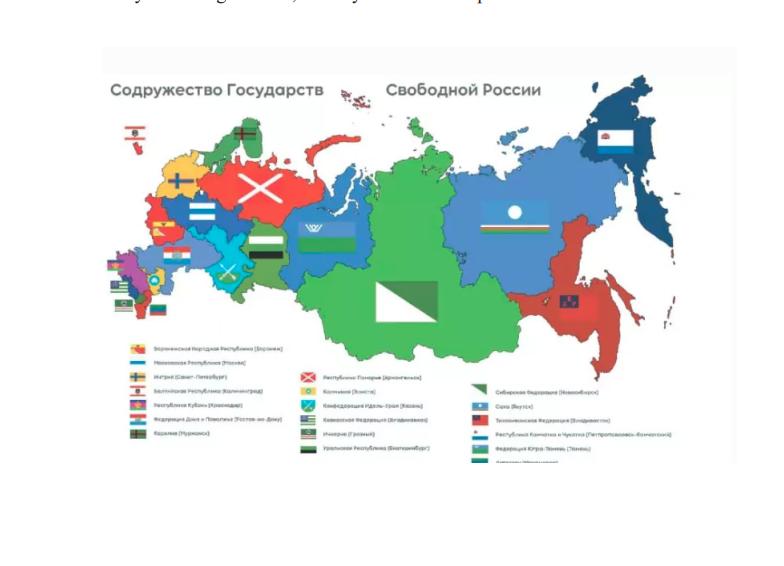
Yugoslavia was a dress rehearsal. The break-up of Yugoslavia happened between the peaceful break-up of the Soviet Union and the… planned – and, as it appears, non-peaceful – break-up of the Russian Federation. And yet it could have been quite different! Instead of war, we could have enjoyed peace and cooperation! Is this not what we dreamt of during the Cold War? Was it not then that we did not even dare to dream that the division between political East and political West could disappear in our lifetime?
Those of us who lived during the Soviet Union’s existence did not even imagine, did not even dare to suppose that the Soviet Union would cease to exist in their lifetime. The end of this enormous state, which had at its disposal a huge arsenal of nuclear weapons, seemed inconceivable. Unless…. unless there was to be another world war, which nobody wanted.
And lo and behold, the seemingly impossible happened: a giant empire hoisted the white flag. The giant empire dissolved like a failed business, the giant empire went out of business like a dissolved sports club. The individual republics – members of this empire – filed for a no-fault divorce and received this divorce overnight. Everything went smoothly and was accompanied by great enthusiasm. Do we remember the song ‘Winds of Change’ sung by the Scorpions? This is what it was like at the time. It seemed that humanity was entering a new era, an era of peace and cooperation.
Why did the Soviet Union collapse? There are many more or less convincing explanations – the economic bankruptcy of the socialist system, the effective penetration of Western intelligence, reforms that escaped the control of the reformers – we will not cite them all here. We will only point to an extremely important factor, a psychological factor: the peoples of central and eastern Europe, and therefore also the Russians (as well as the Ukrainians, Poles, Czechs, Slovaks, Romanians, Hungarians, etc.), have lived, are living and will continue to live nurturing a huge inferiority complex against the West. This inferiority complex did not arise when communism took hold in the countries of central and eastern Europe. No. It existed there from the cradle of these nations, from the dawn of their history. They all adopted civilisation from the West, their elites were educated in the West, they travelled to the West, they imitated Western styles in art and literature, they modelled their legal systems on Western legal systems and they learnt Western languages. In the languages of the above-mentioned nations, there is a huge proportion of words – and everyday words! at that – taken from French, Italian, German and English. These words came along with new technology or cultural currents, and were adopted and assimilated even though more often than not they had equivalents in their native languages. Foreign words in the mouths of central and eastern Europeans gave them social status. Continue reading