Global Analysis from the European Perspective. Preparing for the world of tomorrow


Oil and Gas


Switching the Points

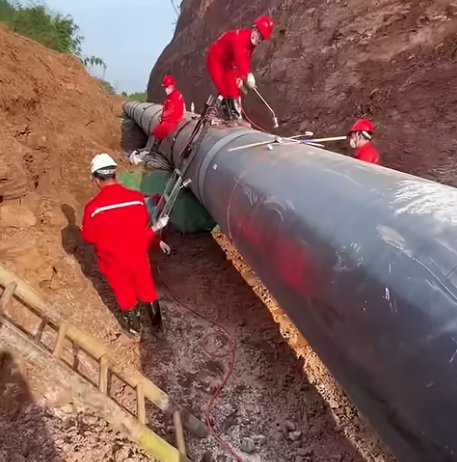
One of the very important outcomes of the SCO (Shanghai Cooperation Organization) conference held on 31 August – 1 September was the deal made between Moscow and Beijing about constructing and completing by 2030 the Power of Siberia 2 pipeline (the Power of Siberia 1 is already in operation), which will run through Mongolia. The pipeline will be built by Gazprom and it will provide the Middle Kingdom with natural gas extracted – among others – from the same fields which up to quite recently supplied Europe with this resource.

The consequences of this move are neither to be overlooked nor underestimated. Waging a crusade against Russia, Europe deliberately and purposefully cut itself off from Russian gas. Long before the conflict in Ukraine broke out, the leaders of the Old Continent for years kept complaining about the continent’s dependence on Russian gas. For years they they would make the cooperation for Gazprom ever more difficult. Then came the war in Ukraine and an eruption of Russophobia. Europe turned its back on Russian gas while the United States made sure that no one would think about reversing course: as we know the supply pipelines – NordStream and NordStream 2 – were sabotaged.

Europe is still purchasing some Russian gas through middlemen, but generally the Old Continent has switched to American LNG, which is more expensive as it requires shipment, liquefaction, and vaporization. The Russia-China deal will make it impossible for Europe to return to purchasing Russian gas: the Chinese market will swallow up any quantities of it. We are witnessing an epic change: the two NordStream pipelines are about to be replaced by the two Power of Siberia pipelines, redirecting immense amounts of gas from Europe to Asia. Simultaneously, since the Power of Siberia 2 will run through Mongolia, it is Mongolia that will greatly benefit from the Moscow-Beijing deal rather than Poland or Ukraine, through which the pipelines Yamal and Druzhba/Brotherhood run. Russian gas was supplied to Germany and Italy. It was cheap, cheaper than its American alternative, and so both these countries benefited from it a lot economically. All of this is in a complete reversal. What was done during the SCO session is like switching the railway points: the tank cars full of gas that used to be headed for Europe will all soon be headed for China.

Just as over time European and Russian economies will diverge one from the other, those of Russia and China will become closer and closer. The pipelines supplying Europe were in operation for decades, long before the collapse of the Soviet Union. With them gone, a new economic alliance between Moscow and Beijing will be forged. We can only wonder what European leaders think about this change. Sure, on the face of it they are still belligerent, but are they in their heart of hearts? If they are clever enough, they must be smelling a rat. The war that they had hoped to win is going sour, the sanctions that they had thought would coerce Russia into submission backfired, while the economic situation of the Old Continent is deteriorating with every month. Still, once they all invested so much hatred and scorn into Russia, they simply cannot put into reverse. Such is human psyche. They must wage their crusade to the bitter end.
The ruble as an international currency

In retaliation for freezing Russian assets by the West, President Putin has signed a decree that enables Russian exporters of gas to demand rubles rather than dollars or euros. This is an interesting development in the war that is being waged between the West and Russia. The European Union depends to a very large extent on Russian gas. The efforts to create the green economy (they like to call it sustainable economy) are far from being completed. (To think of it: they have sought to put us on the green economy to spite Russia! Climate change was the bait for the gullible to join in.) Europe will need Russian gas (and oil). In order to buy it, it will need to have the Russian national currency. To acquire the Russian national currency, the West will be forced to trade dollars or euros for rubles at the Moscow stock exchange, thus raising international demand for the Russian currency and turning it into a means of international exchange. Sanctions work both ways.

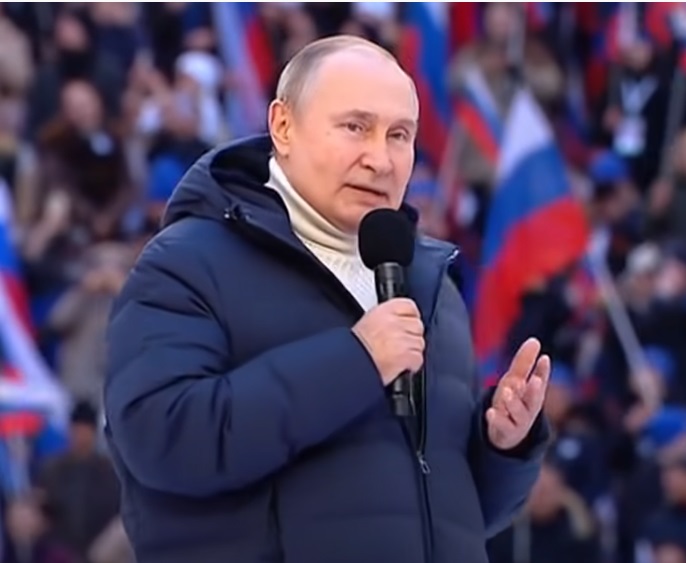
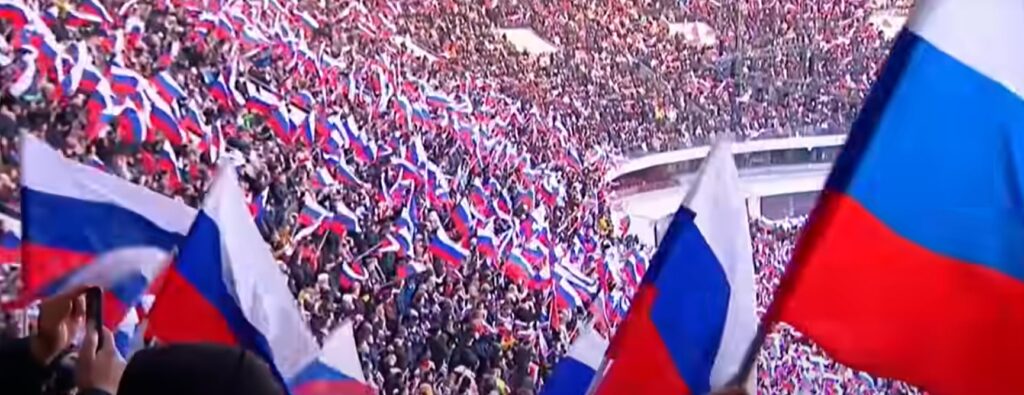
On March 18, the Luzhniki Stadium gathered thousands of Russians in a patriotic rally, attended by various artists and the Russian president himself. Vladimir Putin delivered a speech in which – quoting the Gospel – he praised the efforts of the soldiers of the Russian Russian Federation fighting in Ukraine. A sea of waving Russia’s national white-blue-red flags dominated the scenery. The event was an eruption of patriotic feelings, something unknown in the West. If you think that the “regime” in Moscow is about to collapse or to be toppled, then think again.

Europe’s Inevitable Intervention in Libya Will Add 1.3 Million Barrels to the World Oil Glut

LibyaEUEurope is planning on recolonizing Libya, and so it will send in armed forces in the coming months to restore order and stem the flow of migrants coming from Africa. If this expedition army succeeds in securing parts of the country and restoring law and order, Italian and German engineers from ENI and Wintershall will follow suit to help resume the country’s oil production, which will add 1.3 million barrels per day (Libya produced 1.7 million barrels per day before Muammar Gaddafi was toppled in 2011) to the world oil glut . Continue reading

Retail Oil Investors get Burned

burningoilLast month we saw the iPath S&P GSCI Crude Oil ETN (USA) making an unusual dive, doing completely the opposite of what it was designed to do. Exchange Traded Funds (ETF) and Exchange Traded Notes (ETN) are mainly designed to follow an index. To explain the basic principles of an ETF real quick, we take the AEX index as an example. The AEX is formed out of 25 funds each with their own weighing. The ETF issuer buys the shares of the companies according to their weighing in the AEX index. One is able to track the index pretty accurately this way. The ETF issuer buys it on a big scale and sells shares of their basket of AEX shares. The share that they are selling are called ETFs. The difference between an ETF and an ETN is the fact that the ETN is a note. The problem is the third party risk, with an ETN you’re facing the risk of the issuing party going bankrupt. If they do, the chances are that you will lose your money. Continue reading

Meet Manifa and other giant oil projects that will add to the global oil glut

manifa-project-webWorld oil consumption is more than 90 million barrels a day. Between 2009 and 2014 oil was traded for about 110 dollars a barrel; now oil is changing hands for 32 dollars a barrel. Roughly a 7-billion-dollar cash flow a day is vanishing from the global market. Norway’s sovereign wealth fund that has accumulated a stake of 4.5 billion dollars in Apple over the past years1, will turn from an Apple buyer into an Apple seller.

The China Development Bank (a Chinese policy bank) has poured nearly 50 billion dollars into Venezuela in return for oil, with the country now collapsing under the Chinese debt, having no other choice but to drill for more oil. These are just some of the challenges the world is facing in 2016 as oil prices are heading towards 20 dollars a barrel.

Speculators and manipulators were able to manipulate the oil price to more than 120 dollars a barrel,  with the production cost being roughly between 20 and 80 dollars. With a huge profit margin the world was digging for more and more liquid gold. Continue reading

US and Canadian oil producer suffer the most from current oil price collapse

Oil price has collapsed and is not going to rebound quickly. But not all the oil-consumer countries benefit from low prices in the same way. And not all oil-producer countries suffer equally.

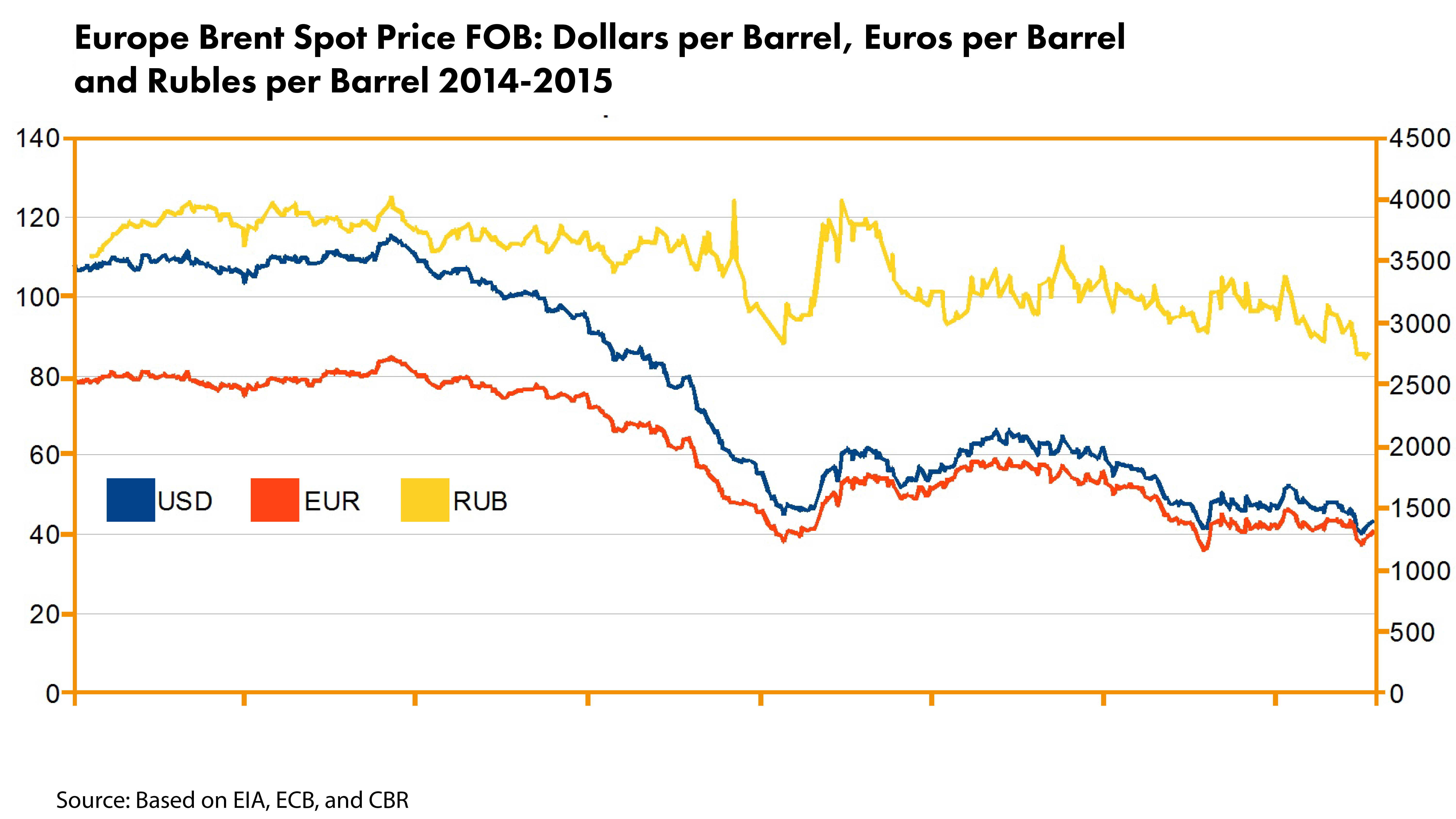
Europe Brent3

Oil prices change as the values of currencies do. Purchase or sale contracts for oil are usually long term ones, the price of oil in such contracts does not change very frequently. Fluctuating exchange rates of currencies are still enormously important for the economies. Oil for $40 per barrel does not mean that this barrel is also as cheap in all countries as consumers have to buy dollars in order to purchase a barrel. Or producers sell their barrels for dollars and then exchange these dollars for their own currency. The domestic price based on the exchange rate is not always stable. Continue reading

gif loading

CRUDE OIL (WTI)


CRUDE OIL (BRENT)


VIDEOS

category youtube video ...

MORE NEWS

The chaos in gas and electricity markets is set to hit one group of people the hardest this winter: the four million households that use prepayment meters (PPMs).

While most people pay their bills monthly for energy they have already used, PPMs require people to pay for energy before they use it. PPMs take whatever money is in the meter and supply energy to the household.  Source Open Democracy


Russia’s Gazprom has damped hopes for additional gas exports to Europe next month as the continent struggles with record prices, despite recent hints from President Vladimir Putin that more could be forthcoming.

UK and European gas prices surged as much as 18 per cent on Monday after a keenly awaited pipeline capacity auction showed no increase from Russia either through the Ukrainian pipeline system or lines passing via Poland to north-west Europe. Source FT


  • November contracts at the Dutch TTF hub — a European benchmark for natural gas — were trading at around 118 euros per megawatt hour (MWH) just after midday in London.
  • The front-month contract has risen almost 400% since the start of the year.
  • Several British energy suppliers have collapsed amid the gas price crisis. September alone reportedly saw nine companies cease trading.
  • In recent weeks, governments in Spain, Italy, Greece, and France have taken drastic actions to minimize the impact of wholesale price rises on consumers. Source CNBC

EU environment ministers are set to discuss speculation in the bloc’s carbon market as part of a debate on high energy prices on Wednesday, with Poland and Spain pushing for curbs.
“We urgently need to reduce the influence of financial market participants on ETS allowance prices,” said the Polish government in a note to the ministers ahead of the meeting. Source Montel


gif loading


France will move to ease the cost of rising prices for consumers by blocking further natural gas price hikes and by preventing a planned increase in electricity tariffs scheduled in February, Prime Minister Jean Castex said on Thursday.

“For natural gas and electricity, we’ll put in place what I would call a tariffs shield. We’re going to shield ourselves against those tariff hikes,” Castex told TF1 television. Source Reuters


New price will be applicable for the six-month period beginning October 1

The government on Thursday raised price of natural gas by 62 per cent. This gas is used to produce electricity. Also, it is used as fuel for producing fertilisers and as CNG (Compressed Natural Gas) to use as fuel in automobiles and cooking gas for household kitchens. Source Business Line


Two more energy firms have ceased trading as rocketing wholesale gas and electricity prices push the majority of the UK’s smaller energy suppliers to the brink. Avro Energy and energy firm Green have both collapsed today putting hundreds of thousands of customers into limbo. Ofgem has reassured people affected that their energy supplies will continue. Source Wales Online


Russian gas giant Gazprom has turned down an option to maximize gas shipments to Europe as the continent faces a looming energy crisis amid surging natural gas prices. Gazprom did not book any of the additional capacity available in transit pipelines running through Ukraine in auctions for October, the state-run Interfax news agency reported Monday. The company also reserved only a third of the space it was offered on the Yamal gas pipeline, which goes through Poland. Source The Moscow Times


-European gas prices surged more than 10% as Russia is keeping its grip on the market, opting to cap additional flows to the continent. Gazprom PJSC opted not to flow more gas to Europe via Ukraine in October, according to the results of an auction on Monday. There were also signs Russian flows via the key Yamal-Europe pipeline will remain limited, with traders booking just a fraction of the capacity offered to flow gas next month into Germany via the Mallnow compressor station. Source World Oil


gif loading
 
Menu
More