Global Analysis from the European Perspective. Preparing for the world of tomorrow


China


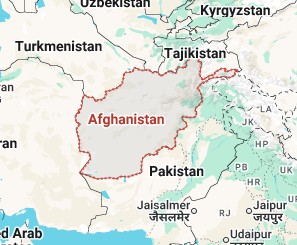
Afghanistan

When Joe Biden initiated the chaotic withdrawal of the US army, he may not have been in his right mind. Kabul witnessed Dantesque scenes at its airport while 70,000 Afghan US army personnel who could not be evacuated, and 7 billion dollars worth of military equipment was handed over to the Taliban. That alone merits the name of treason, or at least – disgrace. Still, Joe remained politically unscathed and continued to hold office.

Now Trump says the airfield in Bagram should be recaptured. Why? Because the Taliban should be combated again? Not at all. It’s about big geopolitical plans.

The simple answer is that the airfield is only an hour’s drive from the Chinese factories that manufacture nuclear weapons.

In a broader context, it is also about raw materials. The withdrawal of the USA has opened up space for China, which although not officially recognizing the Taliban government, is conducting intensive economic negotiations with it. Afghanistan has huge reserves of copper, lithium, cobalt, gold, uranium and rare earths – estimated to be worth up to 3 trillion dollars. It is precisely these raw materials that are crucial for the production of batteries, electronics and the development of green energy technology, which is exactly what China needs. One of the Middle Kingdom’s biggest projects in Afghanistan is Mes Aynak – a huge copper mine. But that’s not all. Afghanistan could be a land corridor connecting China with Iran, the Middle East and Europe. That’s why China is investing in roads, railroads and the energy sector there as part of the New Silk Road. 

The Taliban are not stupid either and invest in their own country. The most blatant example of this is a huge Taliban project – the Kosh Tepa Canal. Its aim is to transform desert land into fertile agricultural land by diverting water from the Amu Darya River. It is an investment of enormous economic, but also political importance – it shows that the Taliban want to build a state despite the lack of international recognition.

A possible US intervention in Afghanistan would be met with a reaction from China and escalate tensions between Washington and Beijing, which could end in new tariffs and trade wars. China is already limiting the export of rare earths from its own country, for example, which is perhaps why Trump is looking to other countries.

A three-headed dragon looms large

The world is undergoing an epic change. The European Union is about to be dimmed by the Shanghai Cooperation Organization (SCO), so much so that the American tariff policy has just pushed India into Russia’s – which is not all that surprising – and China’s embraces. The last mentioned is a big event. India and China have been at loggerheads for decades, and now they are reconciling themselves against the pressure from the United States and their West in general. India and China means putting together almost three billion people. India, China and Russia have more nuclear warheads and missiles than the collective West. Why, even small North Korea has some and the nukes. The cooperation between the three main states – Russia, China and India – occupying the bulk of what is referred to as Asia along with the many smaller states that are members of the SCO is a huge political, economic and military challenge to the collective West. Washington, Paris, London and Berlin must have miscalculated heavily and overlooked what has been looming large on the political horizon for a long time. While they thought Russia would be an easy prey to be destroyed in the proxy war, they ended up facing a three-headed dragon emerging from Asia.

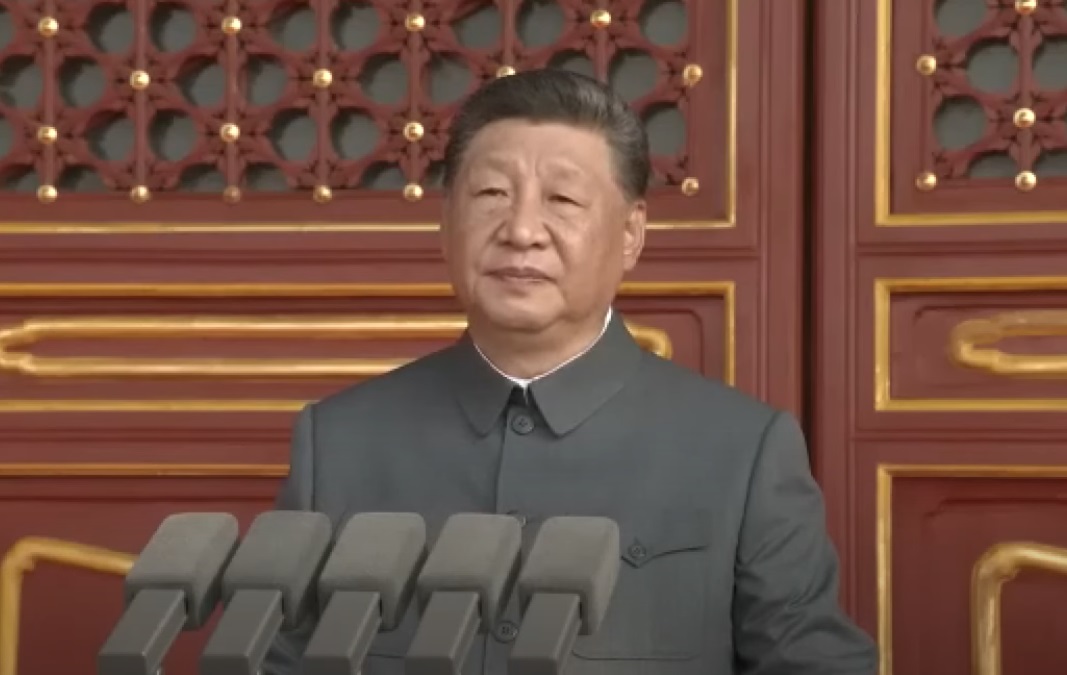
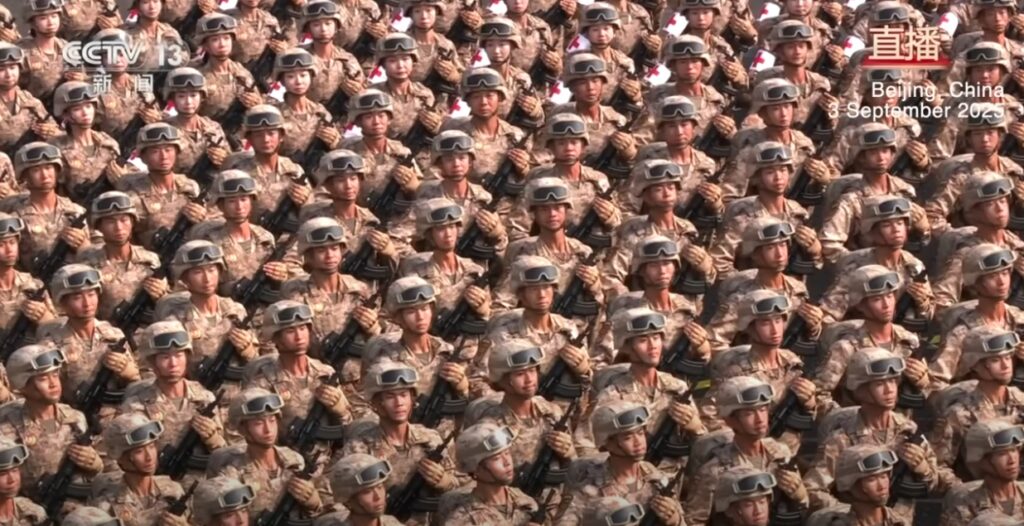
To think of it: China’s might has been created by the United States of America! What of the outsourcing, what of all the support that Washington would provide Beijing with just to spite the Soviet Union, the Middle Kingdom has become a superpower to be reckoned with. During the military parade occasioned by the 80th anniversary of the end of the Second World War in the Far East and the liberation of the Middle Kingdom from the Japanese occupation, China rolled out various kinds of armament, including drones and long-range missiles. China’s President Xi Jinping emerged in a limousine from the Tiananmen – the entrance to Beijing’s Forbidden City in a uniform habitually worn by Mao Zedong, a uniform resembling the one Joseph Stalin used to wear. Thus the Chinese leader stressed the connection with the recent past, although Chairman Mao was not the one who rendered positive services to the Chinese people. Russia does not preserve the continuity with its Soviet period of the past to that extent: true, the military parades in Moscow feature soldiers in uniforms and with military standards from the Second World War, but the tomb where mummified Lenin is till kept is shielded from public view; nor does Putin or the other members of the authorities climb the tomb as was the custom in the Soviet Union from where Soviet leaders would deliver their speeches and watch the marching soldiers.

Military parades in Moscow are compelling, yet the one in Beijing trumped Moscow’s parades. The parade held in Washington to mark the U.S. Army’s 250th birthday just cannot compare to either of the aforementioned: look for yourself. (Notice the rock music accompanying the American show; also, compare the Chinese vigorous march with the American languid walk.) China showed its military might also in equipment. 

Within the framework of SCO the three leaders – Putin, Modi and Xi Jinping – conferred about political and economic topics. SCO conferences were also attended by Turkey’s President Erdoğan, while the military march was watched by Slovakia’s leader Robert Fico and Hungary’s minister for foreign affairs. So, Europe was ultimately somehow present, though not Western Europe, apart from a minor representative from Belgium. Were the representatives from the EU absent because of Putin’s presence there?

Well, Europe is crusading against Russia, and has grandiose plans of conquering China. Kaja Kallas, one-time Estonia’s prime minister, now the face of European diplomacy made no bones about it: “If you are saying that you are not able to beat, that we collectively are not able to really pressure Russia so much that it would have an effect because… then how do you say that you’re able to take on China risk. (…) My point is that if we don’t get Russia right, we don’t get China right, either.” (The interviewer tries to tone her statement down, to little effect.) 

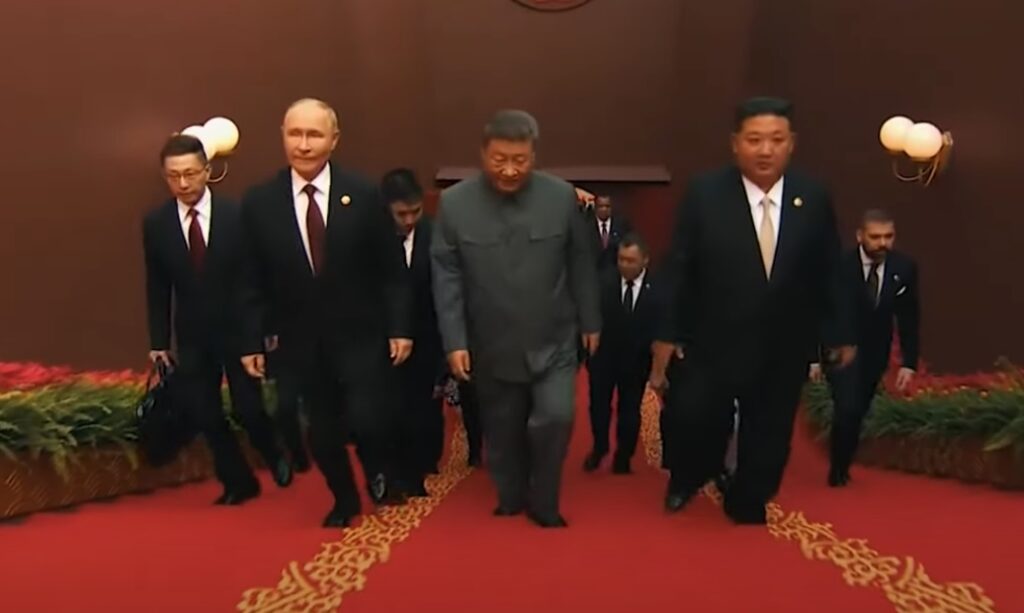
Vladimir Putin, Xi Jinping, Kim Jong Un

Strange that President Donald Trump failed to seize the opportunity to attend the anniversary of China’s liberation from Japan’s yoke. Just as Washington once pushed China and Russia into each other’s embraces, such a gesture on the part of the American president might have more favourably disposed the Middle Kingdom to the United States. Either Donald Trump didn’t want to go to Beijing of his own accord or he has bad advisors. The same is true of the European Union. Sadly, they could not be bothered to take part in China’s celebration. How can they then hope to develop friendly relations with the Middle Kingdom? How can then they hope to drive a wedge between China and Russia?

SCO’s membership includes India, Iran, Pakistan, Kazakhstan, China, Kyrgyzstan, Tajikistan, Uzbekistan, Belarus and Russia. It was established in 2001. SCO’s member states cumulatively make up 24% of the world’s area and 42% of the world’s population. (The European Union makes up less than 2% of the world’s area, and 5.5% of the world’s population.) Russia, China, India, and Iran are concurrently members of BRICS.

A third of all goods are manufactured in China 

So who would dare to go to war with China? It would be a shot in the West’s own knee. War with China would mean the introduction of numerous sanctions/lockdowns and, as a result:
enormous inflation in the West (caused by shortages of goods);
enormous unemployment in China (caused by the closure of many factories due to a lack of orders from the West);
an enormous strengthening of Russia and Iran through direct, massive arms supplies from China;
Emergence of new frontlines (possibly: Strait of Hormuz, the Baltic States, Taiwan, North Korea, islands in the South China Sea);
Conversion of the world economies to war production;
Social unrest;
Rise of the South American countries that would serve as “reservoirs”.

Who would dare? Perhaps Trump, as it is reported that he is keen on war against Iran. Beijing, however, proudly sides with the Persians and condemns Israel’s latest attacks. And rightly so, as they violate international rules. This could easily lead to a clash between the world powers.

Perhaps Trump wants war to cause hyperinflation, to weaken the dollar, to cure American companies of the sin of outsourcing and to bring all production back to America? Yes, and Europe would also become totally weak this way… Two birds with one stone. And he probably wouldn’t care that thousands of young Americans would die in the process, just as Zelenskyy and Putin don’t care that their youth are dying senselessly.

French Rafale aircraft got killed at the hands of their Chinese counterparts (just as German Leopards and American Abrams got crushed at the hands of Russian drones)

Of course we are making reference to the recent aerial clash between Pakistan and India. A skirmish or even a battle as it supposedly involved more than 100 planes with five of the Indian aircraft being downed (Islamabad’s claim) or none of them being down (Delhi’s claim).

Pakistan and India have not been on friendly terms for decades now. Be it the disputed region of Kashmir or the support that Islamabad lends to insurgents who cause trouble in India, there are intermittent clashes and skirmishes now and again. Some are minor, some are major. An attack launched by insurgents or terrorists (the name depends on the point of view) from Pakistan’s territory into Indian territory on 22 April this year left some 26 casualties. Delhi felt compelled to retaliate, at least symbolically, at least not to lose face before its own population, not to mention the rest of the world. So, on May 6/7 lots of aircraft were sent to hit 9 targets in Pakistan (5 of them in Kashmir). Islamabad did not intend to let itself be ridden roughshod and scrambled its air forces to punish the intruder. From the ensuing skirmish or battle the Pakistani air forces are said to have emerged victorious, which of course is denied by Delhi.

Up to now the event is one of the many that have occurred between Pakistan and India, and – of course – more are to be expected in the foreseeable future. What was special about the outburst of conflict this time was the fact – or speculations – or suppositions which made the headlines that Pakistani aircraft made in China successfully clashed with the Indian aircraft made in France. The aerial duels were fought between China-made J-10 (Chengdu) and the French-made Rafale, Mirage (and also Russian-made SU-30 and MiG 29). One Rafale and one Mirage are said to have been downed, which is now confirmed, now dismissed by the world media. Obviously, truth is not to be had in the nearest future, but still the event rings some interesting alarm bells.

One, Chinese aircraft made a successful debut in a military conflict. Even if their success is disputed or downplayed, their presence attracted the attention of military experts.

Two, the French aircraft manufacturer may have received a dent to its prestige. Again, even if the news are doubtful and challenged, current and prospective customers might have second thoughts.

Third, the news about downing at least one Rafale and one Mirage might be dismissed, but the fate of the German Leopards and American Abrams in Ukraine – the two tanks that were reputed to be crème de la crème – might support suspicions that Rafale aircraft are not as good as they are advertised, either.

Four, China shows its strength not only in economy but also in its military capacity. The reader will have remembered about the Chinese cosmonauts (or astronauts) orbiting the earth and working on the Chinese space station, a fact not properly emphasized by the media. The Western consumer of information, upon being asked about space exploration, will most likely associate it with Americans and Russians, barely the Chinese. And yet…

Five, technological prowess of the Chinese aircraft only proves that China’s industry and engineering is as advanced as their Western counterparts if not better. Washington’s trade war against China is a sign of America acting in panic mode: the Hill has belatedly realized that the Asian dragon is on America’s heels, poised to move in for the kill.

Six, the world is split between the West and the Rest (BRICS and the “non-aligned” to use the political term from the latter part of the previous century). This Rest might stop purchasing military equipment from the West and begin to opt for the Chinese offer in this respect. Why, if the J-10 aircraft matches the capabilities of the French Rafale or Mirage, and is at least twice as cheap ($40-60 million against $100-120 million), then why overpay? To make the choice of the provider easier, countries around the world must also take into consideration that buying American or generally Western military equipment comes with a tag of the piece of equipment being or not being allowed to be used for particular purposes. So, Pakistan could have used American F-16s against India in the conflict referred to above… only that it could not, because the sale contract stipulated that these aircraft were not to be used by Islamabad against India without American prior permission. Beijing does not attach such restrictions to its military products.

The whole event may be denounced as Pakistani or even Chinese propaganda, which it might be. Yet, it is the small changes that accumulate over time and bring about a breakthrough, a colossal change. Fifty years back no one thought China would challenge the United States: today the United States feels seriously threatened. Chinese automobiles, Chinese cell phones, Chinese this, Chinese that are all flooding the world market. High time for the Chinese military equipment to do the same. The outsourcing once initiated and practiced for decades in with United States along with the de-industrialization propagated in the European Union hugely contribute to the change of the global balance of power. While the West is obsessively preoccupied with ethnic replacement, (anti-)racism, culture cancel, and rainbow sexuality, the Middle Kingdom is going about its business of becoming the world’s superpower. Also militarily. 

China’s blow to luxury brands from the West

The owners of American and European luxury brands have recently learnt that all means are permitted in war. Due to reciprocal duties on goods, tariffs of 145% are being imposed on goods exported from China to the USA. The Middle Kingdom did not limit itself to the introduction of retaliatory tariffs. The TikTok platform, a Chinese social media app with a global reach of over 1 billion users, has developed a trend that at first glance resembles a grassroots mass initiative by Chinese citizens. Short videos are posted on TikTok that allegedly reveal the modus operandi of luxury brands such as Dior, Prada, Hermès, Chanel, Coach, Ralph Lauren, Apple, Michael Kors, Nike and many others. These companies are said to manufacture their products entirely in China, adding only logos, price tags and, of course, making sky-high profits in the official country of origin, such as America or France. The authors of the videos point out that, for example, a handbag selling for $38,000 only costs $1,300 to make, which should encourage Western customers to buy directly from the manufacturer rather than overpay at an expensive salon in Paris or New York. As you can imagine, these videos are gaining huge popularity and causing controversy. What’s surprising about the above trend?

Firstly, the videos show executives of Chinese factories and other not at all random people who probably could not make a spontaneous decision to record and publish such material on behalf of the company. Secondly, the popularity of this movement has been used by manufacturers of knockoffs to sell them even better. Thirdly, many luxury brands sign agreements with their contractors in China that oblige them to keep this collaboration secret. Fourthly, if a factory actually produces goods for a European luxury brand, how much will its sales fall if that brand ends all its co-operation with it due to the disclosure of company secrets? What will you sell and to whom?

I absolutely do not deny that many western brands use cheap Chinese production to increase their huge profits. Quality does not always go hand in hand with price, and often you only pay for the logo. However, you cannot assume that this is the case in every instance. Sometimes, for example, it is the pre-assembly of a particular product that has to be completed under completely different conditions and using different methods in a completely different country. Let’s also not forget that Chinese contractors do not bear the costs of product development (e.g. designers, electronics), which are often the highest in the entire cycle. Incidentally, experts in the luxury goods market claim that more is bought than the product itself. They talk about emotions, history, a sense of belonging, unique shopping experiences and brand philosophy. It is likely that the target group for these products will find such an argument convincing. Of course, this situation will force manufacturers to be more transparent about the supply chain, which is beneficial for consumers.

Gefira 93: A big picture of purpose

When it comes to the war in Ukraine, Europe – the European Union along with the United Kingdom – is in a fight mode while the United States is not. Europe is still flaunting its so-called human and democratic values, while the United States has just reversed the course of wokeism and genderism. European leaders have shut themselves off from the outside world in their echo chambers and surround themselves with like-minded bellicose individuals, while the United States is trying to find a balance in its foreign policy. Europe is still objectifying Ukraine – the country and the nation are only viewed as a battering ram against Russia, Europe’s topmost foe, while the new American administration seems to be red-pilled to for-ever wars and has become to deal with reality on the ground as it is. European and American ways have ceased to align.

Europe has a history of aggressiveness directed towards the east, which was encapsulated by the notorious German political catchphrase Drang nach Osten or Drive to the East. Indeed, wars between the western and eastern parts of the Old Continent were invariably initiated by its western part. These were the military raids of the Teutonic Knights, these were the invasions launched by Sweden or France, by imperial Germany and the Third Reich. For all that historical record, it is Russia that is credited with aggressive intentions. Why, Europeans, including those with university degrees, are not familiar even cursorily with their own past. Schools are not there for the Europeans to let knowledge sink in; schools are for mind shaping.

Europe obsessed with Russia and Putin appears to be overlooking the worldly political and economic trends. The developing countries are slowly but steadfastly gaining economic and – what follows – political momentum. The United States has broken with globalism and is focusing on its own affairs, recognizing that its role as a global hegemon has come to an end. Not that Washington has given up on exerting leverage here and there in the world: the action to control the Panama Canal or the plans of taking control over Greenland show that the American empire is alive and kicking. Yet, the United States needs to reckon with powerful rivals and concede them some political room on the world stage. It is not only Russia, it is China as well.

Europe has let itself be pushed out of Africa, Europe has developed a guilt complex towards Africans for all the failures of the latter and Europe embarked upon letting itself be colonized. The vacuum created on the Dark Continent has attracted the attention of the Middle Kingdom. China is taking Africa over from degenerating Europe. China’s population is numerically almost a perfect match to that of Africa, while Europe’s dwindling indigenous population is on a slippery road to nothingness. While European influence in Africa is often denounced in European capitals as neo-colonialism, China’s take on its presence on the Dark Continent is framed by Beijing as Going Global. Europe, riddled with guilt and shame, cannot stand up to the Middle Kingdom with the latter’s political ambition. Europe has become irrelevant, while China is a rising star. Also on the Dark Continent.


Gefira Financial Bulletin #93 is available now

  • Russia – a stumbling block of nations
  • Greenland
  • Europe out, China in
  • The Mar-a-Lago plan
gif loading


VIDEOS

category youtube video ...

MORE NEWS


MyDrivers reports that China’s homegrown Zhaoxin processors are now operational with its self-developed Unity Operating System (UOS). The news come on the tail of new Chinese government restrictions that force Chinese institutions to replace all foreign-powered PC hardware and software with domestically-produced products over a three-year span. Tongxin Software, the developer behind UOS, has been able to get the KaiXian processors to work on the desktop and server versions of UOS, respectively. The Chinese CPU maker has already laid out its ambitious plans for the company’s next generation of processors. Source: Tom’s Hardware


Retail sales in China grew 7.6% year on year, below the consensus of 8.6%, and Fixed-asset Investment (FAI) growth slowed to 5.7% in the first seven months of the year. The readings showed weakness across the board on both the demand and supply sides of the  Chinese economy, Bloomberg Economics said, adding that policy support will likely be stepped up in the coming months. Source: Bloomberg Economics


Taiwan confirmed Thursday it has asked to purchase more than 100 tanks from the U.S., along with air defense and anti-tank missile systems in a major potential arms sale that drew immediate protest from China. A Defense Ministry statement said it has submitted a letter of request for 108 cutting-edge M1A2 Abrams tanks, 1,240 TOW anti-armor missiles, 409 Javelin anti-tank missiles and 250 Stinger man-portable air defense systems. Source: CBS News


  • The Chinese government’s first seizure of a bank in more than two decades reverberated through markets for a second day, driving up funding costs for smaller lenders and adding pressure to shares that already trade at rock-bottom valuations.
  • China’s central bank injected a net amount of 150 billion yuan through open-market operations on Monday and Tuesday, the most since the week ended March 8.

Source: Bloomberg


gif loading


  • The spread of African swine fever (ASF) in Asia is taking a worrisome turn.
  • First reported in northeastern China in August 2018, the highly contagious, often fatal pig disease quickly swept through the country, causing the death or culling of more than 1 million pigs.
  • In recent weeks, it has jumped borders to Vietnam, Cambodia, Mongolia, Hong Kong, and possibly North Korea. Many of the newly hit countries are even less prepared to deal with ASF than China, experts say, which has so far failed to end its outbreaks.

Source: Science Magazine


Among China’s most surprising responses to the trade war has been its reluctance to use its vast state media empire to rally the home front. That’s changed since U.S. President Donald Trump’s latest tariff barrage.
In recent days, the once-banned phrase “trade war” has roared back into widespread use in Chinese media. Meanwhile, official news outlets gave high-profile play to commentaries urging unified resistance to foreign pressure, including an editorial from the nationalist Global Times calling the trade dispute a “people’s war” and threat to all of China.

Source: Bloomberg


gif loading
 
Menu
More