Mirror reflection

The similarity cannot go unnoticed. First Russia struck Ukraine because it felt threatened by it, now the United States has struck Iran because – well – because it felt threatened by it. Russia struck its neighbour, whereas the United States has struck a country thousands of miles away. Never mind, according to the Western political experts Moscow should not have felt threatened by neighbouring Ukraine, while the United States should feel threatened by a nation half a globe away.

The reverse phenomenon is also noticeable. While Ukraine is supported by the Western world and enjoys the inflow of mercenaries from many countries, including those located in South America, it is not Iran that is supported by the other countries but the United States: militarily by Israel, politically – by the Western world.

The similarity does not stop here. Russia attacked Ukraine out of fear that Kiev might join NATO and out of fear that Kiev might have its won nuclear weapon. Similarly, the official reason for attacking Iran is the possibility that Tehran is about to manufacture its own nuclear weapon.

And again a reverse phenomenon. Just as in the case of Ukraine the Western world claims to be defending itself from Russian aggression, so do Israel and the United States claim to be defending the peace in the region against Iran’s aggression.

In both cases oil and gas play a major role. Russia and Iran are some of the world’s largest suppliers of both fossil fuels. The hostilities in these two parts of the globe translate into raised prices of gas and oil, which in turn translates into difficulties in obtaining the fuels.

The Special Military Operation in Ukraine accelerated the outflow of people from Ukraine. Yes, it did not trigger but merely accelerated the outflow of people because Ukrainians had been fleeing their country for more than two decades prior to the outbreak of the hostilities. Now since Iran is effectively targeting industrial and military facilities in Israel and those Arab countries which support the United States, and since Iran itself is being hit by American and Israeli missiles, one can only expect another wave of refugees into Europe. Will the year 2015 be repeated? Will Chancellor Friedrich Merz follow in Angela Merkel’s footsteps and repeat after her ‘Wir schaffen das’?

During the four years of hostilities in Ukraine the West has desperately looked for acts of atrocities committed by the Russian soldiers so as to be able to present Russia as the heinous aggressor. They found none, or at least nothing particularly spectacular. The Western media attempted to turn the Bucha incident as a repulsive act of atrocity committed by Russians, but the case was flimsy, unfounded, and so it quickly died out. It is different in the case of the war in Iran. Almost at the start of it, American missiles hit a school and killed some 170 girls aged between 7 and 12. Nothing like that could have been pinned on Russians for the entirety of the four years.

Moscow had hoped to carry out the Military Special Operation within weeks and coerce Ukraine to sign a deal: no NATO membership. Now it seems that the United States and Israel had hoped for more or less the same: a few days of aerial combat, decapitation of the Iranian leadership, the resultant riots in Tehran, and the collapse of the regime – as they call the Iranian government – with the new authorities being all too willing to sign a deal with the United States, a deal turning Iran into an American colony. It looks like we are in for a protracted war.

Talking about the decapitation operation. Since Washington – in cahoots with Tel Aviv – tried to decapitate the Iranian leadership and was largely successful, Tehran has all the moral right to reciprocate the move. Who knows, it might be that an Iranian killer is already stalking the American president, lying in wait, and just about to pull the trigger. Or, an Iranian killer might be stalking Benjamin Netanyahu. If the Iranian leadership is a legitimate target, why should the American or Israeli leadership not be a legitimate target as well?

If Iranians pulled off something like that, there would be an outcry across the Western world: there is none if the Americans decapitate another country’s head of state. In the same vein, there is no outcry over the killing of 170 Iranian girls, but just imagine the uproar if it were the Iranians killing 170 Israeli girls!

The two wars reflect themselves in each other with similarities and dissimilarities. The judgement that is passed over the actors depends on political persuasion. Justice will not be rendered. We do not mean legal, international justice – we merely mean moral justice. 
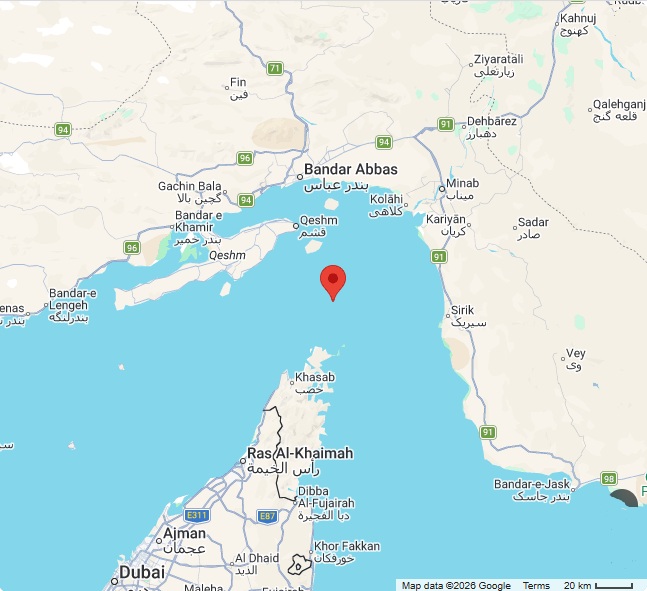
Blockade of the Strait of Hormuz – possible consequences

The 2022 energy crisis was an unprecedented shock for Europe. The sharp decline in Russian gas and oil supplies following the invasion of Ukraine, which resulted from irresponsible decisions by politicians in Brussels, led to record prices for energy sources and a rise in inflation. At its peak, gas on European exchanges cost ten times more than the average in previous years, and EU countries competed for every LNG delivery to avoid disruptions to energy supplies.

Before the outbreak of war in Ukraine in 2022, Russia supplied about 45% of all imported gas to the European Union. In the case of oil, Russia’s share was slightly lower, but still very high. In the years before the war, Russia supplied about 25 to 30% of the oil needed in the EU.

After abandoning Russian oil in 2022, Europe increased its imports of this raw material from the Middle East (Saudi Arabia, Iraq, United Arab Emirates, Kuwait). Currently, around 15 to 25% of the oil imported by Europe comes from the Gulf region. The vast majority of this oil has to be transported through Hormuz. This is a major dependency, but there are other suppliers for Europe: Norway, the US, West Africa and Brazil. Norway and the US together account for around 30% of EU oil imports, which is roughly the same amount that Russia was responsible for before 2022.

And what about gas? Following the reduction in supplies from Russia, the EU has increased its LNG imports, mainly from Qatar. However, the main supplier of LNG to Europe was the US, with a share of approximately 55%. Qatar has a significant but not dominant share (approximately 10-14%). The rest of LNG imports come from many smaller sources (e.g. Algeria, Norway or other countries). Therefore, dependence on the Middle East for oil and gas imports into the EU is currently much lower than dependence on Russia was before 2022.

Although Hormuz is mainly associated with oil and LNG, it is also an important trade route for many other types of raw materials. Plastics, ethylene, propylene and even fertilisers (urea, ammonia) travel through the strait. Therefore, disruptions in transport there can also lead to rising prices for plastics, packaging, car parts, fertilisers, etc. The UAE and Bahrain are among the major aluminium exporters (energy-intensive production based on cheap gas). In return, electronics and machinery pass through the ports of Dubai (Jebel Ali), Qatar and Saudi Arabia.

In summary, rising energy prices are inevitable and will affect both Europe and the rest of the world. However, Europe should not be as severely affected as it was in 2022, as the Old Continent’s energy independence has increased significantly. If the conflict escalates, Asian countries such as India and China will be most vulnerable to problems with energy availability.

Hormuz is also very important for countries in the Middle East because ships carrying agricultural raw materials arrive there. The Gulf states are heavily dependent on food imports because the climate (hot, dry, desert) limits local agricultural production. A protracted blockade is therefore unlikely.


Iran war

So, the United States has attacked Iran. Some held it for impossible, others are not surprised at all. To be precise, it was not merely that United States, but the United States in cahoots with Israel that carried out the assult. Talk of the impending war with Iran has been present in the media for years, so the recent events are merely a self-fulfilling prophecy.

Two most spectacular events stand out: the intentional killing of Al Khamenei, the top spiritual leader of Shiite Muslims, and the (unintentional?) destruction of a school, where approximately 150 schoolgirls were killed. These two events are potent enough to enrage Iranians, and to upset the Muslim world.

Iran is striking back. How much the retaliation is effective is hard to say since the Western media will not report such data.

Picture to yourself a similar event launched by Russia… Yes, there would be a deafening howl across the Western world, while Putin would be called another Hitler. As it is, the American president justifies the assault on Iran, saying, that the United States had to defend itself because it felt threatened by Tehran… Weird. When Russia says it feels threatened by Western military presence in Ukraine, then such a claim is dismissed as unfounded; when, however, it is the United States that claims to be threatened by Iran, a country located thousands of miles away from America, then such a claim is legitimate.

One might tend to think that even the blind can see the hypocrisy, but rest assured: there are many who do not see it. As the saying goes: no one is as blind as the one who won’t see.

Why did the United States attack Iran? The answers are many. One is that Iran posed a threat to Israel, America’s most important and influential ally. Another is that that West wants to lay hold on Iranian oil and gas reserves. Still some others hold forth that it is the almost sixty-million strong Christian-Zionist community in America that did all in its power to necessitate the war. Christian Zionists identify more with Judaism than with Christianity, and since some of their members are the influential politicians and billionaires, they have much political leverage. President Donald Trump is believed to share the religious convictions of the Christian Zionists. After all, his daughter Ivanka converted to Judaism after she had married a Jewish man.

Sure enough, it is not only money that makes politicians act. Ideologies and religions are equally potent. The medieval Crusaders were motivated by religious principles; Montezuma, the ruler of the Aztec state in Mexico, rather than resisting the Spanish incursion, gave in to them, being convinced that the Spaniards were God’s messengers. American Christian Zionists are doing the same. Their loyalties lie with the state of Israel in the first place. Split loyalties is a phenomenon testified by history many a time. Religious minorities very often did not feel the ethnic ties with their compatriots. Rather, they felt and acted in unison with other ethnicities against their own so long as the other ethnicity shared the same creed. The same was true of ideologies.

Now what was the purpose of killing Ayatollah Al Khamenei? This act can only stiffen Iran’s resistance. The murder of a spiritual – religious – leader sets the war in a different dimension. Add to this the murder of the 150 schoolgirls: Iranians of whatever ethnicity will rather rally around the government than betray it. While the school event might be understood as a miscalculation, the killing of the Ayatollah was beyond a shadow of a doubt purposeful.

Despite what the Americans and the Israelis had expected, Iran has not disintegrated nor has it collapsed. Iranian did not take to the streets, so regime change is nowhere in sight. What can be envisaged is a protracted war. Washington had not reckoned with it, or did it?


Warsh, Trump and Dollar

Trump has no luck or talent when it comes to choosing people for his government or entourage. Yes, Melanie may be an exception, but when the president nominated Jerome Powell as chairman of the Fed in 2018, he immediately came into conflict with him. Trump wants complete control over the dollar and financial policy, which is not possible under the Fed’s mandate. Powell acted independently, saw the danger of a return to inflation and did not lower interest rates, which angered Trump, as he wanted to increase the competitiveness of the US economy through a cheaper dollar.

Now Powell’s term is slowly coming to an end, and Trump was looking for a suitable successor. At first, he wanted to nominate Kevin Hasset, the head of the National Economic Council (NEC), but then he realised that he wanted to keep his key adviser close by. So, he opted for the young but experienced Warsh. Will he disappoint him?

There are two camps among central bankers and members of the FOMC: doves, who advocate easing, and hawks, who favour higher interest rates. Warsh is currently pursuing a hybrid approach that combines elements of both camps:

  • Easing Contrary to his former reputation as an inflation hardliner, Warsh currently advocates interest rate cuts. He argues that current monetary policy is too restrictive. His thesis: productivity gains (AI and deregulation) could enable the economy to grow faster without fuelling inflation, which would justify lower key interest rates.
  • Tightening He remains a hardliner when it comes to the Fed’s balance sheet. He calls for a significant reduction in the central bank’s balance sheet (active quantitative tightening – QT) and less market intervention. He believes that a smaller balance sheet reduces market distortions and creates the scope for permanently lower short-term interest rates.

Yes, AI is a key argument in his logic. According to Warsh, it is responsible for the “performance miracle” that is essentially disinflationary. If companies can use AI to produce more goods and services at lower costs, this increases supply. The effect? It is assumed that a larger number of raw materials on the market at lower manufacturing costs naturally prevents price increases (inflation), even when the economy is growing rapidly. However, in this case, growth is not the result of printing empty currency, but the result of increased productivity. Warsh compares this situation to the internet revolution of the 1990s, when inflation remained low despite an economic boom.

However, this may be a misconception, as AI consumes enormous amounts of energy, chips and resources for data centres, which could increase the prices of these specific services and raw materials in the short term. The performance effect should only occur in a few years, which could trigger inflation before AI can suppress it. Many analysts are also critical of the reduction in the central bank’s balance sheet. Let’s see if the Senate will accept Warsh’s nomination. In any case, it could cause turmoil in the markets.


The Good, the Bad, and the Ugly

Gone are the days when the world watched, with bated breath, the many talks between the United States and the Soviet Union on reduction and control of nuclear arms development. Gone are the headlines announcing the beginning, continuation and completion of the SALT or START talks. The world has changed.

Now it is the United States – as before – Russia – a replacement for the Soviet Union – and… China! When the SALT and START talks were conducted, no one paid any attention to the Middle Kingdom. Now China is a power to reckon with, not merely economically but also militarily. China is estimated to have some 350 strategic missile launching pads as opposed to some 480 American. That’s hard on America’s heels. Now what negotiations on nuclear arms control and arms limitation can be conducted between the United States and the Russian Federation without taking into the equation the Middle Kingdom?

The problem is that Moscow says it has nothing to do with China: China is not Russia’s military ally, though Washington perceives it as such. Contrarily, Russia views France and the United Kingdom as America’s closest allies, and rightly so: all the three countries belong to NATO. Hence, Russia’s demand that both France and Great Britain be included in the talks is legitimate.

On the other hand, Washington is legitimately concerned about China: under the current circumstances Beijing can certainly be viewed as Russia’s ally rather than that of America. (Just to think of it: China’s might have been created by the United States of which we’ll make a reminder later in the text.) Neither does the Middle Kingdom want to be included in the trilateral talks with the Russian Federation: why should it? It is an independent power – superpower – and it can act at the negotiating table on its own. So much so that Beijing has something to win from Washington: ok, the Chinese may say, we could reduce our military development if you lift the sanctions on China and the countries that wish to trade with the Middle Kingdom. How about that? Nuclear might is always a fine bargaining chip, is it not?

It is even true of tiny North Korea as well: not that North Korea is so powerful as to be considered for joint talks. No. But Korean nuclear potential is a sufficient deterrent even for such a superpower as the United States. And there is something more to the nuclear potential: it is the determination of the Korean leadership to actually use the missiles if push comes to shove. It is not Venezuela, whose president can be adducted in broad daylight without the perpetrator of the abduction fearing any retaliation, but we are digressing.

The balance of forces has changed since the year in which the Soviet Union disintegrated. For maybe as many as two decades the United States dominated the globe and felt so self-assured that Washington began to dictate to the whole globe. This, however, has changed. Russia has reasserted herself while China has risen to the status of a(n almost) superpower.

Which by the way is good for humanity. One superpower with no rival to fear would soon become corrupted and degenerated. All the other countries would have felt intimidated with no alternative anywhere in sight. Fortunately, a world emerges where there are three or maybe four (if we include India) big players, which allows for the smaller entities to have a political alternative, and which keeps each superpower in check.

A new arrangement needs to be made – no one power wants the prospect of a nuclear shootout. Talks are not going to be easy, because it is now three big entities, not two.

Political persistent rumour has it that Adolf Hitler was the creation of the Western elites who wished to rebuild Germany and direct its power against the Bolshevik Soviet Union. That is why London and Paris did not react when Germany began to arm itself, when Germany incorporated Austria and annexed Czechia; that explains why they did not react when Poland was attacked. The Western elites wanted Germany to expand, grow stronger, and come into physical contact with the Soviet Union. Now Adolf Hitler – assuming he was the darling of the Western elites – stopped playing by their script and turned against them when he attacked Denmark and Norway, the Low Countries and eventually France. It came as a shock: he was supposed to attack the Soviet Union!

Isn’t history repeating itself? The Middle Kingdom was supported by the United States for the express purpose to turn it against the Soviet Union. Washington would have rubbed its hands in glee if Beijing and Moscow started a real hot war! Decades have passed and – due to clumsy American policy-making – Moscow was pushed into Beijing’s embrace while Beijing was pushed in Moscow’s. Now they are – though not formally – economic and military allies. But again, the Kremlin may repeat: we have nothing to do with it. Had not Washington acted the way it did, there would have been no war in Ukraine, no sanctions on Russia and China, and consequently no Russo-Chinese cooperation.

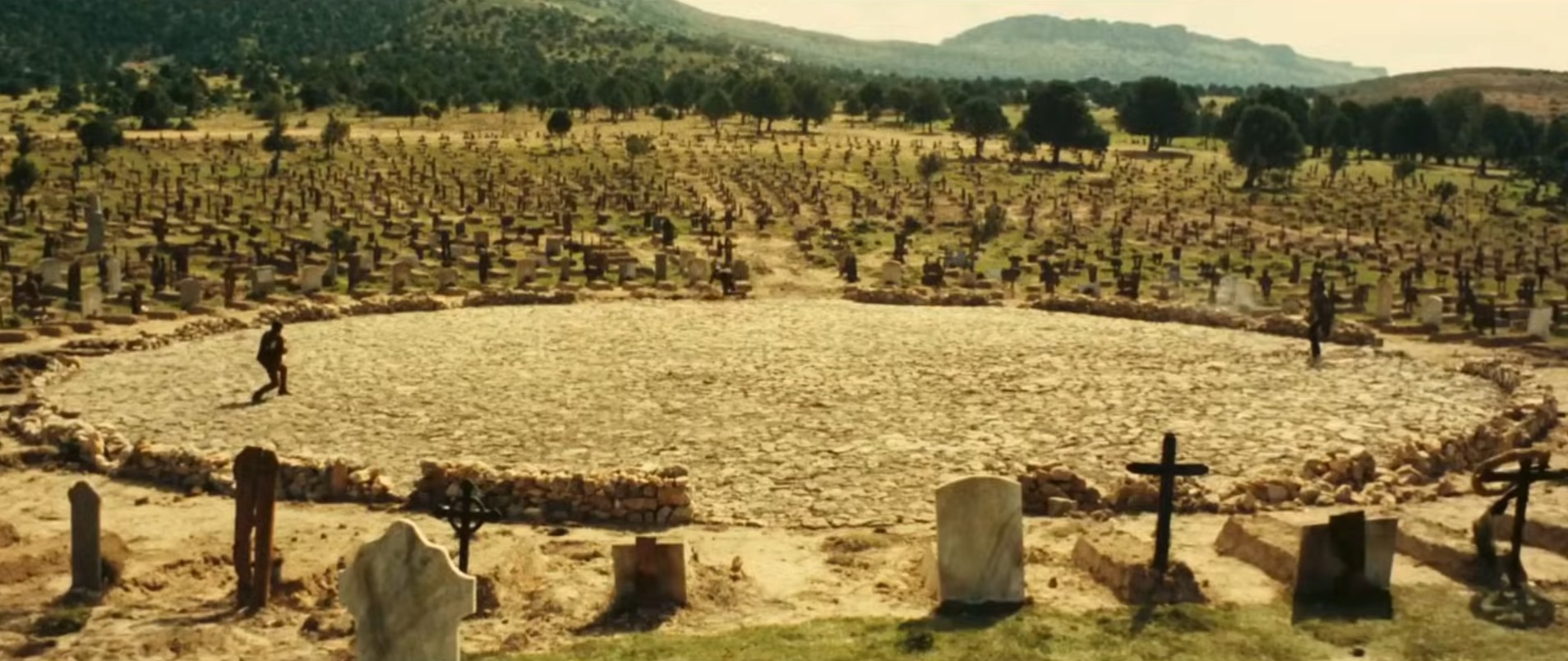
The three gunslingers have a hard nut to crack. Certainly, none wants a nuclear exchange, yet each wants to get the upper hand. They are observing each other attentively, not knowing in which direction to level their guns. It reminds one of the cultic cemetery scene from the 1966 The Good, the Bad and the Ugly classic movie. Do you recall it? Good Blondie (Clint Eastwood), bad Angel Eyes (Lee Van Cleef), and ugly Tuco (Eli Wallach) are facing each other – graves and crosses around them, their hands over their holsters, their eyes darting from face to face, their minds calculating. That’s the United States, that’s the Russian Federation, and that’s the People’s Republic of China facing each other (who is the good, the bad or the ugly is a matter of your political persuasion). In the graveyard scene only one emerges victorious. How will things play out in political reality at beginning of the 21 century? 

Discrepant Exegeses

It was not executed in broad daylight – rather, in the dead of night – but still it was disrespectful as disrespectful can be. A head of state of a sovereign nation was abducted as if he were a criminal. Handcuffs were put on his hands, he was blindfolded and transported – together with his wife – from his own country to the United States. What a show! For all to see. For all leaders to take notice. For all top politicians to be on their guard. That happened on January 3. We all know it, the whole world knows it – the whole world observed it with bated breath.

A head of a relatively large country was captured like he was a street ruffian. Apart from his personal security detail that attempted to put up a fight there was no resistance in the true sense of the word. American aircraft hovered over Caracas the way they might hover over their own turf. There were casualties to be sure but no appreciable resistance of the country as such. Pundits draw conclusions that Nicolás Maduro’s closest associates – generals, ministers – had betrayed him, had let themselves be bribed, and abandoned him in the critical moment. Word has it that only Cuban bodyguards stood up for Nicolás Maduro, as a result of which some of them were killed.

The warrant for the action? The drug trafficking into the United States that allegedly had been sponsored by Caracas and the president himself. Sure enough that is the declared objective, not the genuine one. We’ll talk about the genuine objective later in the text. Here let us make an assumption that it was drug trafficking that triggered the US action, and that Nicolás Maduro really sponsored it. If that were the case then a couple of questions arise.

For at least four years during the Biden administration the American southern border was not merely porous: it was wide open for all to come. Arrivals from South America were flocking across the border and they were not even vetted! Sure enough, drug traffickers may have been among them. Why should Venezuela be punished for that? The drugs are distributed in American cities – does anybody forces the purchase of them at gun point? Last but not least, why are the American police not effective enough? Why must the American army step in? If particular countries were to be blamed for particular sorts of crime that is perpetrated on American soil, then the US army should be intervening around the globe twenty-four seven. But then, if you do not want to have drug traffickers, why have borders open wide for all to cross them?

The event of January 3rd compels one to draw a comparison between the intervention of the US Army in Venezuela and the intervention of the armed forces of the Russian Federation in Ukraine. How alike they are and at the same time how different! Americans claim that Venezuela posed a security threat to the United States; Russia claims that Ukraine posed a security threat to the Russian Federation. Washington says it is protecting its citizens from drug trafficking cartels; Russia maintains it is protecting its citizens from Banderite fascist ideology and the military bases complete with ballistic missiles to be installed in Ukraine once Kiev joins NATO. Washington feels threatened by a country that is three-four thousand kilometers away from America’s coastline; Russia feels threatened by a neighbouring country, a country that is adjacent to Russia, a country that is not separated from the Russian Federation by a body of sea as the United States is separated from Venezuela.

Knowing all this full well, America’s allies go out of their way to either support politically the United States or keep their mouths shut; contrarily, they are beside themselves with outrage when it comes to the Russian intervention in Ukraine. Caracas had diplomatic and economic ties with China and Russia – America’s rivals, but Kiev had ties with the United States and was planning to join NATO, a military alliance which is openly hostile to Russia. These are mirror events and yet they are adjudicated entirely differently. Why?

The United States has executed an action of decapitation which is just yet another one in the long string of such actions. Think about Iraq’s Saddam Hussein, Syria’s Bashar al-Assad, Serbia’s Slobodan Milošević, Libya’s Muammar Gaddafi, and many others. Leaders of sovereign states are put on trial (Slobodan Milošević, Nicolás Maduro) or killed (Muammar Gaddafi, Saddam Hussein, Slobodan Milošević) or chased away (Bashar al-Assad). Do you still remember the repulsive repugnant disgusting sickening abhorrent enunciation of one Hillary Clinton as she said – commenting on Gaddafi’s death and paraphrasing Julius Caesar – We came, we saw, he died! – and laughed heartily at that? Imagine Vladimir Putin saying something along these lines, commenting on the death of, say, Volodymyr Zelenskyy… What a howl would be raised in the the ‘free’ world! A statement like that would be interpreted as ultimate evidence of Putin’s wickedness.

Might is right, that’s all there is to it. So, America intervened in Venezuela because it saw it fit. All the justification that is being rolled out is either easily refutable or laughable. Isn’t it ridiculous to hear that the world’s dominant superpower needs to abduct the head of a small country located thousands of miles away across the sea because the superpower feels insecure? Isn’t it laughable to hear that the Russian Federation has no legitimate grounds for intervening in a neighbouring country that is about to join a military alliance which is openly hostile to Russia? And yet, millions of people do not seem to see it.

Now the genuine reasons for the American intervention in Venezuela. Venezuela holds the largest oil reserves than any other country, including Saudi Arabia. Venezuela also has other valuable resources. Control over them will provide the United States with enormous economic and – what follows – political leverage. We should not lose the sight of the fact that Saudi Arabia has not prolonged the agreement it once signed with Washington to only sell its oil for American dollars. That in itself is dangerous for the United States. It was the petrodollars that safeguarded American might and American development. All countries and any country wishing to buy oil – and they all need oil for a variety of purposes – needed to first have dollars. Dollars are issued by the United States, so ultimately all the world’s nations needed to directly or indirectly either sell to the United States their goods and services or borrow from the United States. Americans were growing rich by simply… printing dollars or transferring electronic impulses from their bank account to the bank account of a country which was in need of dollars.

The capture of the head of state and the installment of someone who might be willing to comply with American wishes is also a strike dealt against China. China has been spreading its tentacles to Africa and… South America. Beijing has been replacing European colonial powers on the Dark Continent and attempting to dislodge American influence from the Western hemisphere. Americans suddenly remembered the 1823 Monroe’s doctrine, which stated that both American continents are the sphere of influence of the United States alone. No one should dare to set foot anywhere south of the American border. The Chinese have financed the construction of the Port of Chancay in Peru as a part of the Belt and Road Initiative. Its task is to enable the exports to China from South American countries and imports from China to South America. The Middle Kingdom is setting foot where it should not dare, according to the Monroe doctrine.

With this intervention Americans have set yet another example – a warning sign – a mafioso-like manifestation what awaits those leaders who will not comply…

Be it as it may, what strikes the eye is pure hubris, the kind of hubris that has always been present throughout history and always will be. In 1939, the Third Reich and the Soviet Union signed a pact to divide Poland. That pact has been branded by the European Union as a conspiracy against peace; the leaders of the contracting states – Hitler and Stalin – were labeled warmongers who paved the way for the outbreak of the Second World War. Now almost a whole year earlier another pact had been signed, a pact between Germany, Italy, France and the United Kingdom, a pact that paved the way for the partitioning of Czechoslovakia. This pact – signed by Hitler, Mussolini, Daladier and Chamberlain – in Munich has not been branded by the European Union as outrageous, although it, too, led straight to the outbreak of the Second World War. You see? Very similar events, very different interpretations. Much the same is true of the current interventions in Venezuela and Ukraine: American intervention is regarded as the right one, Russian intervention as abominable. History is full of events mirroring each other and receiving discrepant exegeses.

China’s economy is faltering

In recent decades, economic growth in China has been largely driven by real estate. This sector accounted for up to 30% of the country’s GDP in 2020. The Chinese people’s low confidence in the stock market, coupled with the fact that local governments’ source of income was the sale of land to developers, meant that up to 60% of the country’s citizens’ assets were tied up in real estate. When companies such as Evergrande, which operate on a pyramid model (the money from pre-orders went to repay past obligations), went bankrupt, millions of people were left with mortgages on homes whose construction had been halted or which had largely become vacant. The result is a sharp decline in real estate investment, as shown in the chart below. As you can see, the decline in investment in November 2025 compared to November 2024 was more than 15%, and this trend appears to be deepening month by month. This confirms the capital flight from Chinese real estate.

Source: Chinese Statistics Bureau. Figures for fixed asset investment and real estate investment are given as cumulative change from the previous year. Data for January and February have been combined.

The chart above contains some other important data from the Chinese economy, such as investment in fixed assets like factories, bridges, roads, i.e., infrastructure in general. Such spending has artificially improved economic performance while simultaneously indebting local governments. Within three months, we are facing a decline in this type of investment, which means that another engine of China’s economic development is beginning to collapse.

The Chinese people’s dependence on real estate confirms the sharp decline in retail sales momentum, which rose by only 1% in November compared to the previous year. As the housing market crisis depleted citizens’ savings, they feel less secure and prefer to spend less money. The result is deflation, because people prefer to postpone purchases, knowing that after a while it will become even cheaper.

Unemployment has also risen. When more than 20% of 18- to 24-year-olds were out of work in 2023, the government decided to suspend publication of the results for six months in order to “optimize” the methodology. And lo and behold: unemployment suddenly fell by more than 6% in six months! Despite all such government manipulations, nearly 17% of young people are out of work—that’s not good news.

The response of the comrades in Beijing to the economic crisis is to focus even more on exports. This is confirmed by the maintenance of stable growth momentum in industrial production (see chart). China’s aggressive expansion into foreign markets is therefore directly linked to a difficult domestic situation. If the outlook at home does not improve, the central government will flood the entire world even more with its cheap products (as can already be seen in the European car market).