Roman-Parthian Wars – a Repeat

The Roman-Parthian Wars were a series of wars that took place between the years 54 BC and 217 AD. The Parthian Empire covered a large area, among others of today’s Iran and Iraq. Sometimes the Romans were victorious, sometimes the Parthians. It was a clash of civilisations, a clash between occidental Rome and oriental Parthia. Today’s war between the United States and Iran appears to be a continuation of that old conflict that extended over centuries. The United States is a descendant of ancient Rome. The names of state institutions like Senate, the names of certain buildings like the Capital, the architectural style – all testify to it. Also, the English language whose vocabulary is almost 80% ultimately of Latin origin (including such common words like money, tender, nice, car, train, pay, peace, pound, face, battle, soldier, navy, missile, message, digital, computer, autumn, dinner, office…) shows in no uncertain terms (with the two last words also being of Latin origin) that the American-Iranian hostilities are a prolongation of that ancient feud.

The American-Israeli Operation Epic Fury, which began on 28 of February 2026 with a launch of 900 strikes within the first 24 hours marked the beginning of something that we do not yet know how it will develop. The United States had hoped for a quick and spectacular victory, a victory guaranteed by the decapitation operation in which Iran’s highest religious leader Ali Khamenei (and his daughter, and his son-in-law, and his granddaughter) was killed. But Iran rather than surrender has struck back and has struck back successfully. Sure, the Persian state cannot stand up to the American might in an old-fashioned duel. It can, however, bite back where it hurts most, and compel Washington to reconsider its policy. Iran is smaller than the United States, both in terms of population and territory, but – as unforgettable Aesop wrote in many of his fables – even a mouse can have its revenge on a lion.

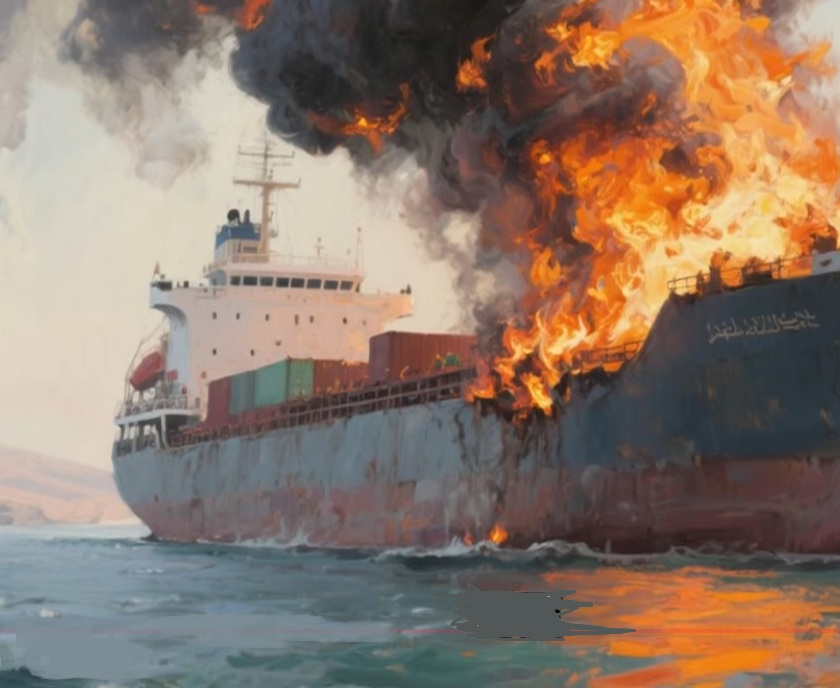
So, Iran struck where it is most painful: Iran struck at the oil refineries, and effectively blocked the Straight of Hormuz. The Strait of Hormuz is the world’s most important choke point through which more than 20% of the global oil trade passes. The incapacitation of oil supply translates into higher prices of anything that is connected with oil, which in turn triggers a chain reaction of price rises, which is actually happening around the globe.

Washington appears to be surprised by Iranian resilience and Iranian defiance. The Americans had hoped for Iran to capitulate within days. Washington had hoped for a repeat of the 12-day war that took place in June last year. Nothing like that is anywhere in sight. Iran is launching missiles against American and non-American targets in Saudi Arabia, Kuwait, the United Arab Emirates, Bahrain, Qatar, Jordania, and Israel. The targets are American military bases and the important infrastructure of those countries which host American bases. The oil refinery in Haifa, Israel, that is said to be hit processed 40% of Israel’s oil.

Two facts testify to America’s miscalculation and America’s second thoughts. First, Americans – Americans! – have proposed to Iran a ceasefire through a third party; second, President Donald Trump has called President Vladimir Putin to talk about… the war against Iran. What they discussed is not known: we can only guess that Washington is looking for off-ramps from the conflict.

Now, Iran seems to be to the United States what Ukraine has been to Russia for the last four years. For years the West has been sending munitions of war to Kiev; now it is Russia which is sending munitions of war to Tehran. The deal about selling Iran the advanced Russian S-400 antiaircraft and anti-missile complex has just sent shockwaves around the globe. The United States is about to taste its own medicine.

It is popular in the West to assume or even believe that Iranian people are against the religious ‘regime’ as the Western journalists are used to saying. Let us assume that it is true. If so, then the savage attack on Iran and the murder of 170 girls by the American Tomahawk missile compelled Iranians of all political persuasions to rally around the same ‘regime’. A historical repeat, again, just like it was in the thirties of the previous century in the Soviet Union. At that time there were many Soviet citizens who hated the Stalinist regime till… till the same regime was brutally attacked by the armies of the Third Reich. Precisely the same phenomenon was triggered in the Soviet Union which has been just triggered in Iran: those people who disliked communism and communist regime rallied around the communists and their leader.

The current Roman-Parthian war is going on. It is not merely a war between present-day Rome and the present-day Parthian Empire; rather, it is a war whose economic and political repercussions afflict the whole globe. India, China, South Korea, and Japan – they all depended very much on the oil supplies from the Persian Gulf. The said countries may wish to remain neutral in the ongoing hostilities, but if push comes to shove, if their economies become strangled by inadequate supplies, they may reconsider their policies and exert pressure on the participants. When Romans and Parthians fought against each other, either side would have looked for allies. Much the same is true of the present conflict. The American-Israeli alliance is facing the solidification of the political, economic, and military cooperation between Russia, Iran, and China. How long will the other countries watch from the sidelines? 
The Spell that Has Lingered for so Long is Broken

Several generations back, India was under British dominion and the British monarch – Queen Victoria – was even crowned Empress of India. We need to understand that India up to the end of the Second World War comprised today’s India along with today’s Pakistan and Bangladesh. The monarch of a lilliputian country – UK – became a ruler of a subcontinent. Then came World War One and World War Two, which resulted at first in the weakening, and then in the disintegration of the British Empire. The world came to be dominated by the United States of America, which was on the one hand a change, but on the other it was not a very great change as the United States is historically the offspring of the United Kingdom or Great Britain. Though the pound sterling has been supplanted by the dollar as the currency of international exchange, the language of the world’s hegemon has remained the same: English.

As the Suez Crisis of 1956 eventually broke the backbone of both France and Great Britain along with their fast shrinking empires and disappearing colonies, the United States emerged as a hegemon which had only the Soviet Union to reckon with. In 1991, the Soviet rival ceased to exist and so – by God’s grace as President Bush senior framed it – America reported a global victory. It seemed the Land of the Free was destined to lord it over for a good couple of decades. If older standards were to be restored, American presidents could be crowned emperors of China and India or viceroys of Russia and Europe. It turned however out, soon enough, that the Middle Kingdom with huge American infusions into its economy gradually emerged as a potentate, and so did India. The mental or psychological inertia lingered, though. Both the Chinese and the Indians are rather prone to looking up to the former powers as something better than they are: English still plays such a role around the globe that Latin did in medieval Europe, while British and American culture is still craved by many Chinese and Indians. One might say that though the economic and political influence has somewhat flagged, the spell still holds. Or does it?

Today Beijing and Delhi are in control of their own countries and pursue an international policy that serves their respective interests. The time when the both capitals would occasionally turn to Washington for advice, aid or approval is gone. The mental or psychological inertia persists… but more on the part of the Western world. In his proxy war against Russia the American president has made an attempt to isolate Russia economically in that he threatened those that continued to purchase Russian gas and oil with exorbitant tariffs. President Donald Trump’s favourite tactics may have had some effect in the case of some governments, but when it came to India, the American president met with a decisive resistance. As soon as India was threatened with retaliatory steps for exports from Russia, India’s Prime Minister Narendra Modi immediately turned to Moscow and Beijing for help, and had the commercial deal with the American Boeing annulled. In an effort to put things to rights, President Donald Trump decided to quickly call India’s Prime Minister Narendra Modi… to no avail. Political rumour has it that Trump made as many as four calls and none was answered. The rumour is spread by the respected Frankfurter Allgemeiner Zeitung and confirmed by other unnamed sources.

Be that as it may, the very idea that a leader of a country that used to be another country’s colony and used to rely on international aid for nourishing its citizens, plus the fact that one can spread news – rumour or no rumour – about any one leader refusing to respond to an American president’s phone four times is a telling mark of the change that is sweeping the whole globe. Narendra Modi’s sudden and decisive political swing towards China is a fact, a disturbing fact. The Moscow-Delhi-Beijing trio is to the United States an unpalatable event. Historically speaking, it was not so long ago when both China and India were under the West’s political and economic control. Today they have both thrown down the gauntlet to their former colonizers. Their ostentatious cooperation makes the Frankfurter Allgemeine Zeitung’s rumour look like fact. Trump’s remark on TruthSocial that we’ve lost India and Russia to deepest, darkest China substantiates this rumour even further. While Queen Victoria was India’s Empress, Donald Trump is not even India’s respected partner.

UK is a Third World Country

The United Kingdom under Rishi Sunak has become a Third World country. What is a Third World country? It is a country battling such problems as economic instability, high poverty rates, lack of basic infrastructure and basic necessities, lack of life-saving drugs, overcrowded prisons, shortage of electricity networks, polluted rivers and the like. No, we are not talking about Venezuela or Sudan: we are talking about the United Kingdom. Such was a comment delivered on WION (World Is One News), an Indian international English language news channel, three weeks ago.

The United Kingdom, once the ruler of India (then this term included today’s India along with Pakistan and Bangladesh), the United Kingdom run by a Hindu, has been lambasted by an Indian broadcaster. The former colony is looking down on the former colonizer, almost with satisfaction and – who knows? – contempt. British women – WION continues in the same report and in the same vein – are more and more stressed and sadder; many bank branches are closing down while Great Britain has a housing crisis (do we know by any chance why?). The United Kingdom’s economy is the worst performing among the countries of the G7.

Rishi Sunak, one of those precious enrichments imported to the Isles, has received from his Indian compatriots severe criticism. If someone who qualifies for the position of the country’s prime minister is such a failure, what can we say about all the other millions of enrichments flocking into Great Britain day after day after another day? WION cannot be denounced as racists or nationalists: WION’s staff are Hindu and they took on Rishi Sunak – a Hindu who has been made and identifies as British (never mind his religion, totally alien to the British Isles).

Britannia, which onces ruled the waves, Britannia, which once possessed India, Australia and New Zealand, a third of Africa, Canada and what later came to be known as the United States; Britannia, which has given the world such scientists as Isaac Newton and Charles Darwin, James Watt and Michael Faraday, economists David Ricardo and Adam Smith, writers William Shakespeare and Charles Dickens, philosophers John Locke and Thomas Hobbes, the poetry of William Wordsworth and Alfred Tennyson, the music of the Rolling Stones and the Beatles; Britannia, whose much admired and imitated Queen Victoria was crowned Empress of India, the same Britannia is looked down on by India, which used to be Britain’s dependent territory.

And mind you! When India was ruled by the Saxon Race, as the British would have called themselves at that time, India was elevated in terms of civilization. It was a time when the nations of the subcontinent looked up to the United Kingdom. Now when Great Britain is ruled by a Hindu and blessed with millions of Third World arrivals, it is becoming a laughing stock of this part of the globe that for many, many years was termed as… the Third World.

India, once definitely a Third World country, castigates its former colonizer for dirty rivers, lack of drugs, poor infrastructure, overcrowded prisons, economic instability, housing crisis, psychological depression of a large sector of its society, and so on! The world is changing. What used to be its military, economic, scientific and cultural centre is spiraling downwards. How does it fare with the other G7 countries? They cannot be much different. All G7 states pursue the same policy: they are hellbent on ecology, they all import Third World people by the thousands, and they all propagate the alphabet-plus sexuality. Soon the Western World will be synonymous with the term the Third World, and replaced by China and India, Brazil and Iran, Argentina and Mexico, and… who’s going to complete the new G7? What a historic turn, indeed!