No more lies about migrants

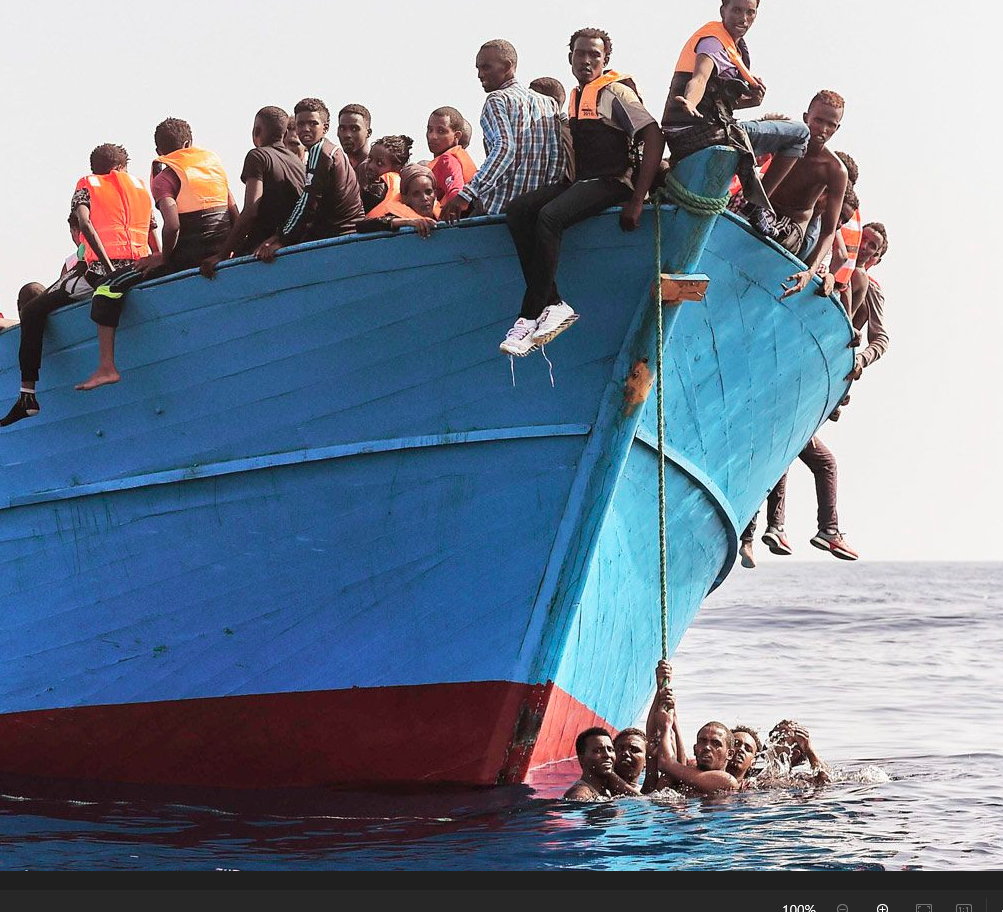
The traffic light coalition (Ampelkoalition) is like a deer caught in headlights: it has been letting migrants in for years and telling its fairy tales, its lies that it benefits the German economy and demography in the long run. Now there is a defiant professor of economics in Freiburg, Bernd Raffelhüschen, who has calculated exactly what the cost of this madness is. In his study for the Market Economy Foundation, he estimates the cost of “immigration” at 5.8 trillion euros. This is due to the fact that immigrants hardly integrate, and even if they are able to operate on the labor market after years of qualification, the taxes that they pay are too low compared to the transfers offered to them by the state and municipalities to be able to call them “profitable” citizens who contribute to prosperity. Without immigration, the financial gap for the tax and social systems would be 13.4 trillion euros instead of 19.2 trillion euros – i.e. 5.8 trillion euros lower, according to Raffelhüschen.

The traffic light coalition expects a rejuvenation dividend from immigration: immigrants are their godless religion, the politicians living in their unrealistic Berlin bubble worship colorful idols, but even if they hold the office of finance minister, they are not financial experts who care about the positive fiscal balance of their undertakings and decisions. The idiotic welfare state, which functions in a socialist way (everyone is equal and on an equal footing), is in danger of collapsing because the traffic light coalition gives the green light to non-taxpayers and imported recipients of benefits. Wouldn’t it make more sense to transfer these funds to the indigenous farmers in Cottbus and other German cities, to make life easier for those who manufacture foodstuffs?

The Errors of Russia

The end of the old year and the beginning of the new year make one think both about the recent past and the not-too-distant future. The conventional borderline separating the 31 of December and the 1st of January (actually not the precise astronomical turning point, which is 24th of December) makes us not only think about the prognostics based on science, but also about prophecies of whatever kind. Why, science has conquered the minds of the modern man, but it does not – and it cannot – answer all the questions. Strictly speaking, science is about repetitive things – occurrences – phenomena i.e. things that can be checked, and rechecked, and double checked. Yet, we know that reality is also made up of one-time events (all of human history) that can only be experienced once by a limited number of people. We cannot reproduce such events – experiences – phenomena, and yet we cannot do away with them, we cannot pretend that they are not part of our life, part of reality. Such are prophecies. They are experienced by very few and are not repeatable. If you want, you believe in them; if you do not want, you deny them. In any way, if you are open-minded, you take them into consideration and remain on the look-out whether they come true. If they do, then – well – then they are worthy of your attention, of reconsideration.

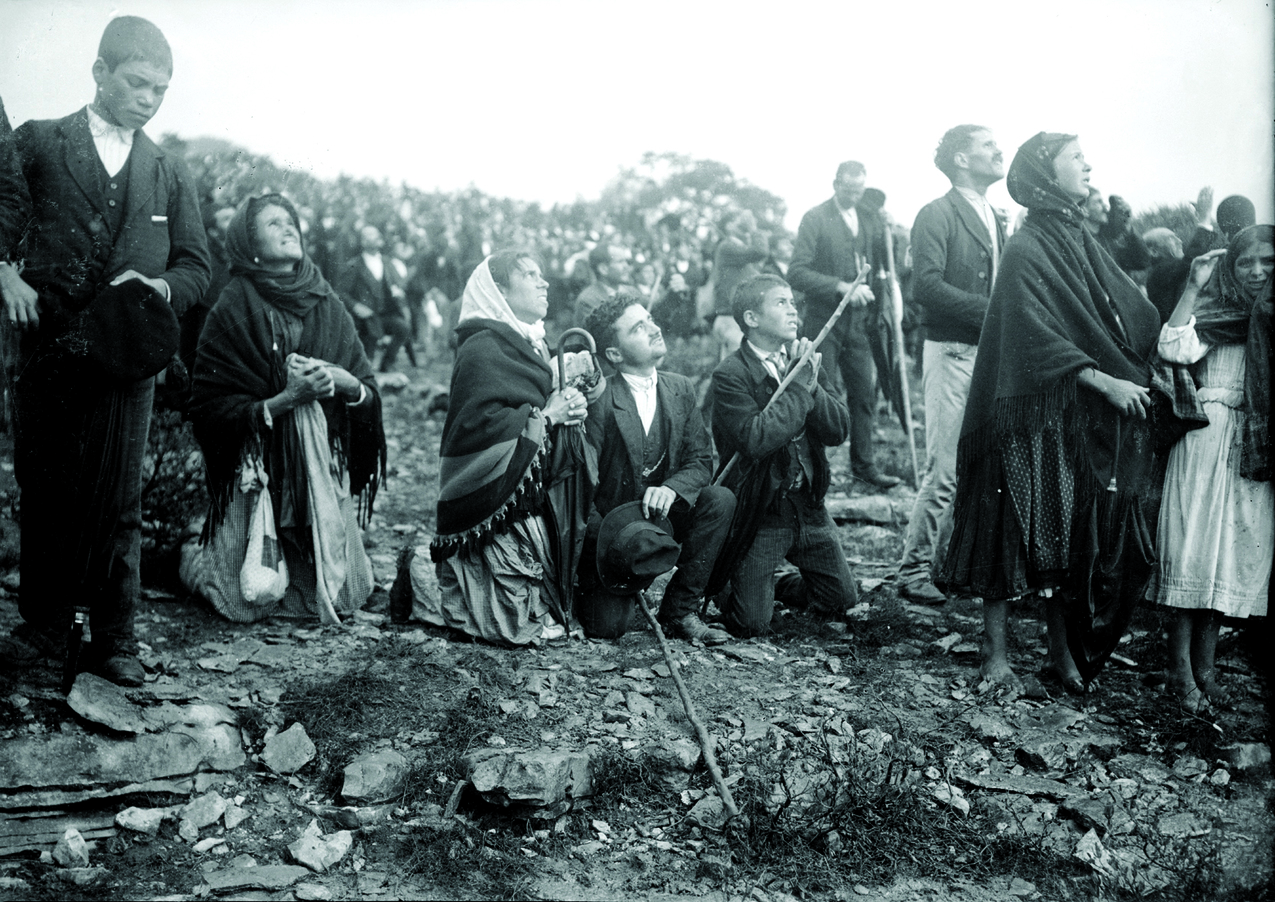
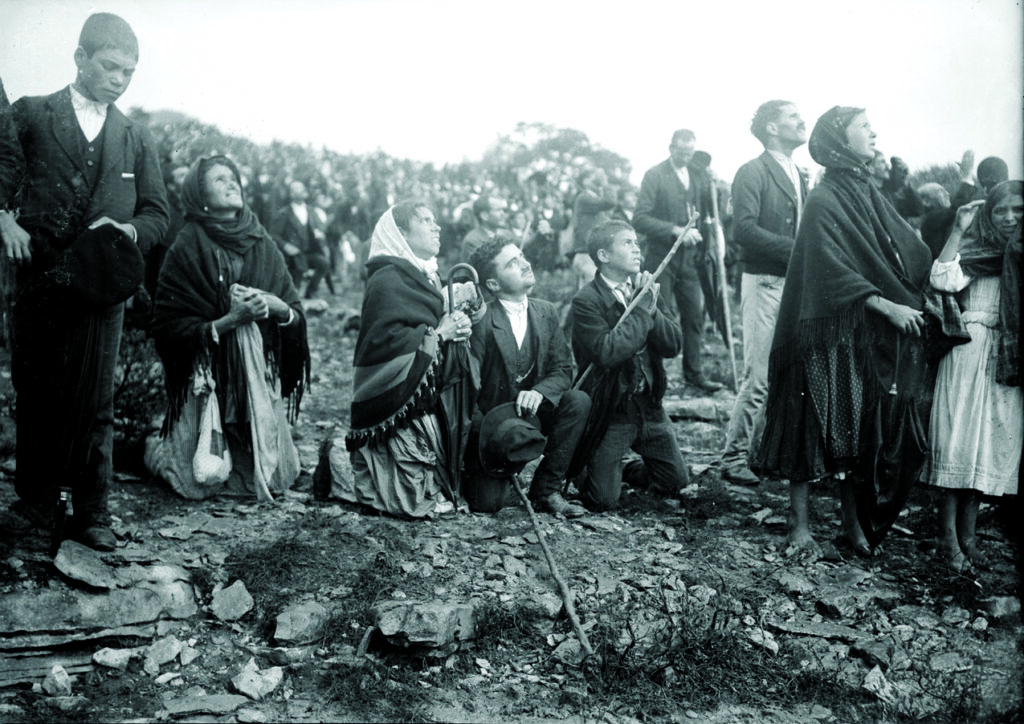
Such was the Fatima prophecy of 1917. The apparition of Saint Mary, the Mother of God in Fatima, Portugal – because that’s what we are talking about – said a few things about the future. The message was not strictly speaking cryptic; conversely, it was fairly compelling. One of the predictions was that the future world would be infected with the “errors of Russia.” It is important to bear in mind that the apparitions occurred in the same year when the two Russian revolutions or – properly speaking – coups d’état broke out. The first was carried out by the Russian bourgeois, while the second by the Russian social-democrats, better known – especially later – as communists. Consequently, hard times descended on Russia that people in the West have rarely been fully cognizant of. Persecution of the church or any religious faith, the empowerment of the uneducated and the slow-minded over the educated and the smart, mass dispossession of the propertied classes, cultural revolution on a large scale, the destruction of the family and the morals, the egalitarian utopia, the re-writing and re-interpretation of history, the devastation of social cohesion by among others the promotion of informants (even children were used to this purpose against their parents), character assassination (people were often forced to confess and accuse themselves before others), condemnation of the memory of persons that fell out of grace with the current authorities (damnatio memoriae: big public figures were removed from all publications as if they had never existed), and so on, and so forth.

A century has passed since the infamous October Bolshevik Revolution. What do we see? We can see the errors of Russia everywhere in the Western world. Survey the list above and put it up against any Western society the way you would put up a mirror against someone’s face. The Christianity in the West is as dead as it was in Russia in the twenties and the thirties of the previous century; the empowerment of the uneducated people of colour and the protection of the slow-minded (so long as they are immigrants) is in full sway; mass dispossession of the propertied classes is under way with the notorious phrase that is doing the rounds to the tune of “you will own nothing and you will be happy”; cancel culture on a large scale; the destruction of the family and the morals complete with cohabitation, childlessness, parades of homosexuals; equity promoted in furtherance of the egalitarian utopia; the re-writing and re-interpretation of history with people of colour being cast in typical historical or mythological roles occupied by white men and women; social cohesion being more and more diluted by larger and larger influxes of Third World people, which translates into the disappearance of societies and nations (understood as people that are genetically related) and the emergence of multiple ethnic communities; censorship based on a network of informants (mendaciously presented as the opinion of mysterious communities), character assassination by means of magic, powerful words like racist, xenophobe, antisemite, misogynist, right-wing, extreme-right; condemnation of the memory of historical persons – especially white males – and the erasure of their names from books, street names and the like. Enough?

These are the errors of Russia that have spread to the Western world as prophesied in Fatima in 1917. Take note of one fact. The errors were not transported to the West after the collapse of the Soviet Union; rather, they had been trickling on and on since 1917, so that by the fifties of the previous century two big Western (and Catholic, at least nominally) countries – France and Italy – were almost taken over by their respective communist parties. Think about Spain that was for a time and would have remained immersed in the errors from Russia even before the outbreak of the Second World War but for the intervention of General Francisco Franco. Notice also the following glaring fact. In 1989, when the Soviet Union disintegrated and relinquished its grip on Eastern Europe, which till that time had been dependent on Moscow, all those countries flocked to the embrace of the European Union, while the most enthusiastic supporters and champions of the membership in the European Union were former communists! If that does not speak volumes, then I don’t know what does. Surely, former communists did not turn capitalist and right-wing overnight, en masse. They desired to become a part of the European Union simply because the European Union was made up and run by their ilk.

And just such as persons as Francisco Franco of Spain and Antonio Salazar of Portugal were officially hated in the USSR, so they are hated by the European Union. And no wonder. These two were opposed to communism that the Soviet Union stood for, and socialism or liberalism that the European Union stands for; they were conservative and nationalist – in other words: they stood for the values that the European Union strives to – and the Soviet Union strove to – obliterate, expunge, stamp out. 

Chat Control 2.0 – big brother sees you

These days, almost everyone uses email or instant messaging applications such as Messenger. But have you ever wondered whether you would enjoy using these applications as much if you knew that every message or photo you send is being monitored?

This is exactly what the European Commission’s Chat Control 2.0 law is all about – in practice, the end of privacy when sending messages via email, SMS or uploading content to cloud storage services. Applications that offer encrypted messaging, such as WhatsApp or Signal, would also be controlled. Signal has already announced that it will leave Europe if this happens. The European Union’s proposal violates human rights, the Convention on the Rights of the Child and also the Charter of Fundamental Rights of the European Union. As always, lofty aims such as protecting young people, combating child pornography etc. are intended to disguise the real aim – total control.

At this stage, it looks as if a number of countries, including Germany, Austria, Poland and Estonia, are clearly opposed to the controversial bill. The problem, however, is that the bill has not been rejected, only its vote postponed. It is very likely that the bill (at least in a somewhat abridged version) will eventually be adopted. If this is the case, it will be possible to develop this law “quietly” over the coming years, and such changes will slowly and quietly begin to invade our privacy.

The European Union, which should offer its citizens a better standard of living, freedom and democracy, is slowly turning into a police state that wants full access to our private conversations and photos. As if surveillance by officials should make children safe!

This raises a question: should the Union be addressing these issues at all? Did the people who once voted in favour of joining the EU, for example in Central and Eastern Europe, approve the abolition of privacy?

Who benefited from all this?

The mechanism is simple. The Hegemon has power. The Hegemon has power not only because it is economically powerful and because it has a powerful military force. The Hegemon has power also and perhaps above all because it has a mint where it mints the world’s coin. The Hegemon can therefore, for example, put too much money into circulation, i.e. create inflation, and since the whole world uses the Hegemon’s money in trade between countries, this inflation hits all the economies of the world! Inflation in the Hegemon translates into inflation in all the other political players. This is a political masterstroke!

We wanted to draw attention to yet another mechanism, equally efficient, equally cleverly devised. Here it is. The Hegemon looks around to select nations or states, anywhere on the globe, but especially those where there are various natural resources or developed industries. Having found a region of the world that the Hegemon would like to exploit, the Hegemon looks around for such two nations, two states or social groups that do not like each other very much. Never and nowhere in the world is this task difficult. All neighbourhoods are fraught with a long history of conflict: France-Germany, France-England, Germany-Poland, Hungary-Romania, Croatia-Serbia, Greece-Turkey, Poland-Russia, Poland-Ukraine, Ukraine-Russia… and these are just a handful of conflicts and just European ones! They all can be revived, they all can be fuelled and they all can be exploited. Religious and ideological divisions can also be skilfully manipualted: Catholic-Protestant, Catholic-Orthodox, Sunni-Shiite, believer-infidel, right-left, liberal-conservative, you name it.

States are governed by different people, not necessarily the wisest, not necessarily the most sensible, not necessarily the prudent. Since they are not the wisest or most prudent people, since they are people who have weaknesses and (often) burning ambitions, they can be skilfully controlled. This is precisely what the Hegemon does. The Hegemon seeks out individuals who have exuberant political ambitions and helps such individuals to take power in a country. The Hegemon selects people with a psychological profile that ensures they will be remotely controllable. The Hegemon can create compromising situations for such an individual or it can nurture such an individual: the Forum of Young Global(!) Leaders of the International Economic Forum or universities founded or financed by various NGOs are breeding grounds for such leaders.

Political dissidents from the countries of Central Europe before 1989, people who often emigrated to the West, acted in the West, received support from the West, these people were excellent material for the Western secret services. These services were able to pick and choose human tools, human puppets for their intelligence games and political manoeuvres, and these puppets usually did not even realise that they were someone else’s… tools. The awarding of scholarships to such people for study or research, or the granting of prizes in various fields, tied the beneficiaries to the centres that exercised power over them in an extremely strong and thus permanent manner. Who can resist an award, international recognition, acclaim, or interviews for CNN or the BBC? Continue reading

Pro-Western fifth column in Russia by default

It’s not just a question of how much military power a given side to the conflict has at its disposal; it’s not even a question of whose economy is stronger. It’s more a question of which side prevails culturally, spiritually, or psychologically (psyche is Greek for soul or spirit).

Consider. The names of the months in Germanic and Romance languages, i.e. languages spoken in the West, have Latin origin. The names of the same months in Russian… also have Latin origin. Russians could have named the months giving them names in their native language, as the Poles or Czechs did; or they could have created the names of the months by drawing from Greek. The latter would have been more natural and understandable than taking those names from Latin: after all, the Russian principalities modeled themselves on Byzantium (a state that, although derived from the Roman Empire, used not Latin but Greek). Medieval Russians referred to Byzantium (and rightly so! and correctly so!) as to the Greek state; medieval Russians took Christianity from Byzantium; from the Greeks – Rus’ took (and slightly modified) the alphabet and modeled its own political system on Constantinople, which it called Tsargrad (Царьград) or Carigrad – the city of the emperor or the city of emperors. And yet, Russians adopted the names of the months from Western languages. And not only the names of the months. Those who know the language know how many German and French and now English words have found their way into Russian. These foreign inclusions are foreign to the point that they are not even declined by grammatical cases, although all native words are. Why are we talking about this? Is it because we are interested in proper names or etymology or languages in general?

We talk about it because language reflects the soul of a nation. It’s not the Germans, French or Americans who have Russian words in their own languages, but, conversely, the Russians have plenty of French, German and English words in their language. This, in turn, attests to who has an overwhelming cultural, philosophical, mental, spiritual and psychological influence on whom. It shows who really rules over whom. This is a better litmus test for demonstrating who is subject to whom than finances, the economy or military conquests. Why? Because financial or economic advantage can be coerced, because military advantage is demonstrated through the use of brute force. In the case of language, it is quite different. No one outside Russia told Russians to adopt foreign words! They did it on their own, willingly, and they did it because they recognized the superiority of Western civilization. Patriotic Russians may deny it, but it is the language that is hard evidence that Russians have always considered themselves inferior.

To get an Oscar (or a similar award given in the West) is the dream of every Russian film director; to get a Nobel Prize for literature (or a similar award given in the West) is the dream of every Russian writer. Does any Western film director or Western writer dream of getting an award in Moscow or St. Petersburg?

It is the above-described sense of the inferiority complex on the part of Russians that makes rich Russians buy properties in the West and keep their money in Western banks. In other words, rich Russians are at the mercy and disfavor of the West, which can take these estates and accounts from them at any time it sees fit. Such Russians with estates and bank accounts abroad constitute a fifth column within the Russian Federation. Russians who have accounts in Western banks, who have properties in the West – what’s more – whose children study at Western universities do not think in Russian, whether they want to admit it or not. These Russians are a powerful force, scattered about the country, that works to the advantage of the West and to the detriment of their own homeland whether they want to admit it or not. Continue reading

Soft power that has been dissipated by fools

If you ask the average Westerner which places in the world he would like to see, he will answer that he would like to see Paris, Rome, Venice, Barcelona, Los Angeles, Florida, the Riviera, the Alps. If you ask the same question to a man from other parts of the world, he will answer that he would like to see… Paris, Rome, Venice, Barcelona, Los Angeles, Florida, the Riviera, the Alps. Similarly, if you ask a man from the West which university he would like to study at, he will answer that Oxford, Cambridge, Sorbonne, Harvard… If you ask the same question to a man from other parts of the world, you will get the same answer. If you ask a man from the West in which banks he would like to keep his money, he will mention one of the Western banks. If you ask a non-Western man, you will get the same answer. Let’s go further. If you ask a Westerner what his favorite movies or books or music are, you will hear titles, authors and performers that belong to the Anglo-Saxon world. If you ask the same question to a non-Western man, you will get the same answer. Questions with similar content can be multiplied. The result will always be the same. And it has always been the same. Representatives of previous generations would have answered the same way, people living in the nineteenth and eighteenth centuries would have answered the same way. One could say that the world is arranged in such a way that Westerners love the West and non-Westerners also love the West. Statistically speaking, no one in France, Great Britain, Germany or the United States dreams of their child studying in Poland, Hungary, Romania or even Russia. Conversely, parents from Poland, Hungary, Romania and Russia would give a lot for their children to study in France, Great Britain, Germany or the United States.

Western political scientists and politicians should be aware of this. They should know that they wield enormous soft power. They should realize that they have enormous power over non-Westerners. They can control them almost at will. All they have to do is wave a carrot or a sausage, and a non-Westerner is ready to do almost anything, including actions that will be detrimental to his own country, to his own people. The only thing the West should not do is to use a stick, to show exaggerated contempt for non-Westerners or to be too insulting to their feelings. If Westerners can’t help but show superiority or contempt, they should show this superiority or contempt in a measured way, intensifying these demonstrations gradually so that non-Westerners don’t notice it too much. If, on top of this, the West accepts at least some of the elites of non-Western nations into its club, the West’s power over the rest of the world is guaranteed.

Unfortunately, stupidity, hubris, greed, overconfidence – you name it – cause Western elites, Western leaders, Western think tanks to continually make the same mistake: they begin to ostentatiously escalate their display of contempt, they begin to ostentatiously and excessively pillage non-Western nations, they begin to hurt these nations’ sense of dignity too quickly and too violently (such as by imposing marches of sexual deviants in morally traditional societies), all of which leads to conflict. The West has made this mistake over and over again and continues to do so, and is unable to learn from the past.

Consider Russia. The elites of this country capitulated before the West at the end of the 1980s, declared the bankruptcy of their own system, behaved with allegiance to the West, began to take over and imitate everything as far as culture is concerned, and their only dream was if not to settle or at least live for a long time in the West – because, as is known, there is paradise for humanity – then at least to recreate this West at home. The elites not only of Russia, but also of Ukraine, Poland, Czechia, Hungary, Romania and so on, as well as the elites of India and China would do anything to shed their own culture and to embrace the West. How many Indians and Chinese go to Great Britain or the United States to be able to study there or at least to see with their own eyes those countries they have dreamed of since the cradle! If smart people ruled in the West, they would use this soft power to rule over the rest of the world until… the end of the world. But no. Continue reading

Partitioning Russia

Competing large states, the superpowers, aim to eliminate their opponent from the game. This can be done in a variety of ways. One of these, of course, is war: one rival destroys the other, subjugates it or wipes it off the world map. This is how, in three wars, ancient Rome wrestled with Carthage and brought about its annihilation; Rome did not annihilate Greece, but subjugated it, and since the Greeks did not resist in the time in which they were subject to Rome, and that’s where it ended. Another way of settling a rivalry is to weaken the state that one sees as a rival to rule over a region of the world or over the whole world. The victorious state takes away industrially or strategically important parts of territory from the defeated state. Still another way is to make the competitor economically or financially dependent. This is how perennial colonial states continue to rule former colonial territories, although they have officially withdrawn from them: they rule them through money and economic connections. The last way to subjugate an adversary, to weaken or eradicate it, is through territorial partition: the breaking up of a state territory into several smaller ones, which is generally done by exploiting frictions, resentments and hostilities that exist on national religious or anthropological grounds. This is how Yugoslavia was dealt with. This state of the southern Slavs, whose territory had an area comparable to that of Romania, was divided into several smaller political entities.

The West conceived a similar collective fate for the Russian Federation. The driving force is the United States and the United Kingdom, while the tool is the European Union and especially the countries of Central Europe, as well as so-called dissidents – citizens of the Russian Federation who act to the detriment of their own state. The idea of dividing Russia into a dozen or more parts was given the name of decolonization. The creators of this notion assume that Russia is in fact a conglomeration of the Russian centre with many colonies, and that the difference between the colonies ruled by Moscow and those once ruled by Paris, London or Berlin is only that the Russian colonies are not overseas. What is being proposed, therefore, is decolonization – as it is now fashionably said and written – 2.0 (that is, the second, as the first was either the decolonization carried out between 1950 and 1970 in Africa and Asia, or the decolonization of the USSR, a preliminary to the now proposed division of the vast territory that was under the Kremlin’s rule until 1991).

The idea of splitting the Russian Federation into multiple political entities is justified on the grounds that Russia, its elites and even the mentality of its people, grew out of dictatorial and slave traditions and as such are unreformable. It is said that Russia as it exists will be a constant threat to world peace and that a single centre of power is incapable of efficiently managing such a large territory, let alone such a large and ethnically and religiously diverse population. (One might ask, as an aside, how it is that the same judgement is not applied either to the United States, which is, after all, a territorially huge and population-diverse state, or to the European Union, which is absorbing more and more new members and seeking to administer the whole uniformly from a single centre in Brussels, but never mind). Since Russia is a nuclear-armed state, it is not proposed to provoke a war for this purpose; rather, it is recommended that the various nationalities and religions living on the territory of the Federation should peacefully assert their independence. The weapons are to be strikes, demonstrations, pickets, civil disobedience and all that makes up the technique of instigating and carrying out colour revolutions. Continue reading