Cat turned mouse

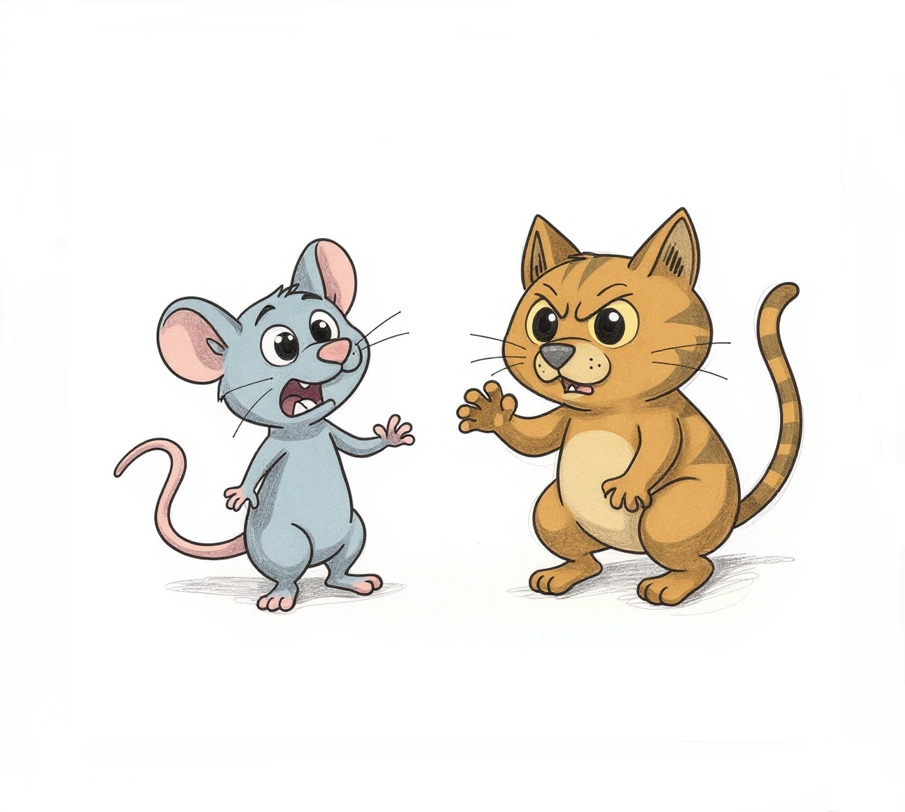
Three weeks into the war and it has emerged that the predatory cat – the United States (and Israel) – has turned into the mouse, while the mouse – Iran – has become the cat. What a turn of events! The United States has stepped into a quagmire and now has difficulties extricating itself from it. Is this the beginning of the end of the global superpower?

It was in 1979 that the Soviet Union deployed its troops to Afghanistan. The Western world condemned the action. The Soviets stayed in Afghanistan for a decade and then withdrew. They withdrew on the eve of the collapse of the first state of the workers and the peasants.

The same seems to be happening to the United States. Its troops have not put their boots on the ground as yet, but its air force and its missiles are operating against Iran, while Iran is striking back, and striking back successfully. Targets are hit not only in Israel but also in all the Persian Gulf countries that have American military bases. The leaders of those countries must have nurtured hopes of security once they had invited American soldiers on their soil, now they must regret it. It is also a signal to other countries having American bases: a warning to Poland, Romania, Germany, the United Kingdom, and Italy. Safe are they not.

In an attempt to save face, the American president has recently talked about negotiations with the Iranian leadership. The problem is that Iran denies ever taking part in any negotiations. President Donald Trump has issued a forty-eight-hour ultimatum, threatening that if the Strait of Hormuz was not made accessible to vessels from around the world, American troops would destroy Iranian power plants. The forty-eight hours did not elapse and the American president extended the period by a further five days. He is losing face. Worse, the American president is divorced from reality. And still worse, the American president has unleashed a war on purely ideological or religious grounds of ‘destroying the enemies of Israel, God’s chosen people.’ Wasn’t it the same in the case of the Soviet Union, whose military intervention in Afghanistan was dictated by the ideological urge to come to the aid of Afghan communists? Afghanistan did not threaten the Soviet Union at that time, nor is Iran a threat to the United States nowadays.

Tehran has become self-confident and daring. It is not waiting for the Americans and the Israelis to propose a ceasefire. Rather, Tehran has laid down conditions, and these are conditions of a victor:

[1] the US must withdraw from the region its military units,

[2] the US must unilaterally put an end to the hostilities,

[3] the US must pay Iran compensation for all the material damage and loss of human life. 

One might say, it is Tehran that has issued an ultimatum rather than the United States.

It is not merely that Iran seems to be gaining the upper hand: almost the whole world is on Iran’s side. Why? Because the whole world saw that the United States and Israel attacked Iran unprovoked, during the negotiations; because the whole world perceives the hostilities as a war of aggression on the part of the United States and Israel; because the whole world has had enough of American bullying, of American policing.

Iranians have surprised the world with the missiles that they have at their disposal. Some of them develop speeds of more than 10 Mach. Some of them have a reach of 4000 km (Iranians attempted to hit the American base on Diego Garcia Island on the Indian Ocean). Iran has decentralized its command centre; Iran has learnt to strike back asymmetrically. Iran is militarily supported by Hezbollah in Lebanon, Hamas in the Gaza Strip, and the Houthis in Yemen. Iran is also backed up by Russia and China, both of which supply it with satellite data.

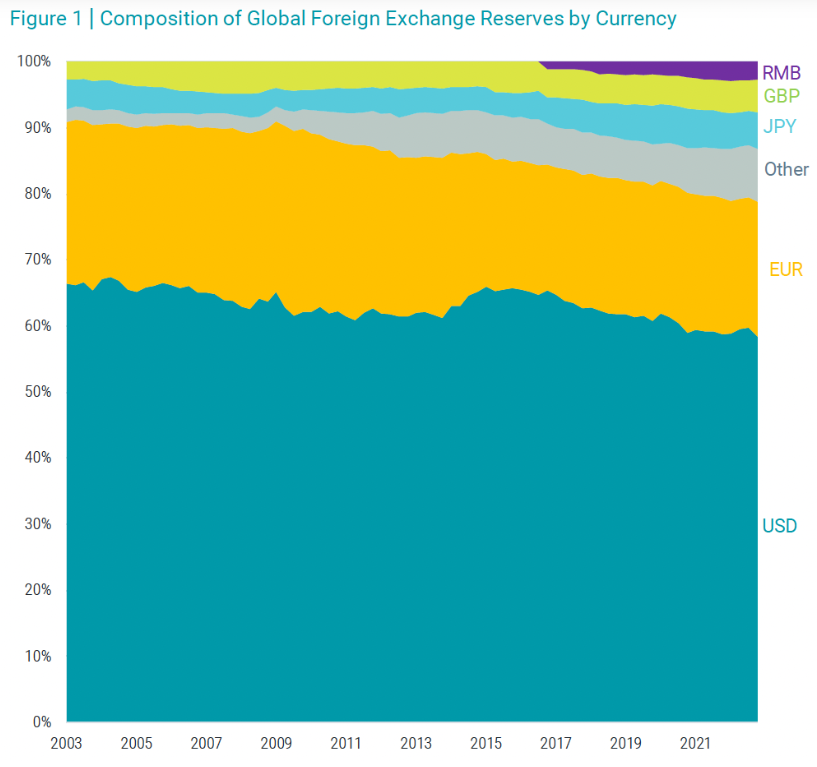
What if? What if the United States will be compelled to admit its defeat? Will it be another Vietnam or worse for America? The image of a superpower will have vanished in thin air. The Gulf states might as well demand that Washington withdraw its troops from their territory. Why should they have them on their soil? To further expose themselves to attacks? Iran – in league with China – might begin the sale of its oil and gas in return for the Chinese currency. That might lead to the end of the petrodollar. And if the dollar stops being in demand worldwide, the United States will spiral into a position of a country that will have difficulties solving its financial problems. Without the dollar as the international currency all American economic might will shrink. Till now, for decades nations would have bought dollars – i.e. sold goods and services – to stock them and to have currency for purchasing oil. Once this scheme comes to an end, America will cease to be flooded by foreign goods and services: America will be compelled to manufacture things on its own. Due to the outsourcing, there are not so many factories, engineers and skilled workers in the world’s most admired democracy. Rebuilding will take time…

The war against Iran was to be a walkover. The United States has already handled, in one way or another, Libya, Syria, Iraq, and Venezuela. Americans thought that Iran was to be yet another intervention of the same small calibre. How wrong they were!

When you drink alcohol, you feel good after the first couple of drams. Then slowly but surely the substance begins to impede your speech and motor activity. Eventually one of the drams becomes one too many. They say proverbially: one over the eighth. Was the attack on Iran – after Venezuela, Libya, Syria – one over the eighth?
 

Sulphuric acid and helium – or why the war in Iran is bad for Kazakhstan and Taiwan

The Hormuz blockade has turned sulphur into a black swan event in the mining industry. This is because a large proportion of the global sulphur trade passes through the Strait of Hormuz. Sulphur is the raw material from which sulphuric acid is produced, which is indispensable in mining, amongst other things. Consequently, a disruption to the availability of sulphuric acid on the world market could mean that the conflict in the Middle East affects a number of less obvious sectors, such as the uranium sector.

Sulphuric acid is mainly produced during the processing of oil and gas. Consequently, the situation in the Middle East affects the sulphuric acid market in two ways: firstly, less sulphur is entering the global market, leading to a reduced supply of sulphuric acid; secondly, the infrastructure for hydrocarbon processing – and thus the infrastructure in which sulphur is produced – is being destroyed. This means that even if the Strait of Hormuz is reopened, the supply of sulphur will remain limited for some time.

One of the world’s largest uranium producers – the Kazakh company Kazatomprom – will be particularly affected by this problem. The recent floods in the country meant that sulphuric acid supplies for uranium mining operations did not arrive on time, which restricted production and ultimately led to a decline in the expected supply of uranium on the market. It is all the more significant that Kazatomprom extracts uranium using the ISR (In-situ Recovery) method. This is a technology in which a chemical solution is injected into the uranium minerals to dissolve them, and sulphuric acid forms the basis of this solution. Furthermore, it turns out that more than 90% of the sulphur imported into Africa comes from the Middle East… and therefore flows through the Strait of Hormuz. New uranium exploration projects are currently underway on the African continent (for example, in Namibia), where sulphuric acid is urgently needed for operations. Traders are already struggling to secure any supplies. Consequently, sulphuric acid prices in Africa are rising significantly… and if the shortages last longer than three weeks (and there are many signs that, in our view, they will last much longer), then mining projects will have to be temporarily shut down because they are running out of acid.

The problem with sulphuric acid is therefore becoming a more global issue and will affect more companies, which, paradoxically, would significantly improve the long-term outlook for the price of uranium.

As for helium: Qatar is the world’s second-largest producer of helium and is set to account for around 33% of global production in 2025 – 63 million m³.

When the Ras Laffan plant, the world’s largest LNG export facility, was shut down due to the war with Iran, helium supplies were halted, as helium is produced as a by-product of natural gas processing. As a result, the market is currently losing around 5.2 million m³ of helium per month, with virtually no global reserves of this raw material – helium evaporates during storage and should reach consumers in around 45 days. The disruption has already doubled helium prices since the start of the war with Iran. The ships transporting this gas have stopped sailing through the Persian Gulf and the Red Sea. This is a serious problem, as a large proportion of the world’s helium supply is transported via this very route. Consequently, companies such as Samsung and SK Hynix, which account for 60% of global SSD production, have reported problems. Helium is, in fact, absolutely essential for the manufacture of semiconductors. It is used to cool and stabilise lithographic equipment, and there is no substitute for it. If the supply of helium is cut off for an extended period, chip factories will begin to scale back production within a matter of days. This will immediately trigger a domino effect: memory production for Nvidia will fall, Apple will be unable to assemble iPhones, Tesla will cut back on car production, and AI data centres will not receive enough GPUs. The entire semiconductor industry – worth more than $600 billion – could start to grind to a halt. Unlike the 2021 chip crisis, which was caused by the pandemic and factory downtime, the current problem is geopolitical in nature. The raw material is not reaching the factories because sea routes are blocked or too risky. And helium is just one of many critical gases whose absence could cripple global technology production.

Iran did not need to target a semiconductor factory with missiles. It was enough to jeopardise road safety to undermine the foundations of the modern digital economy and the energy supply.


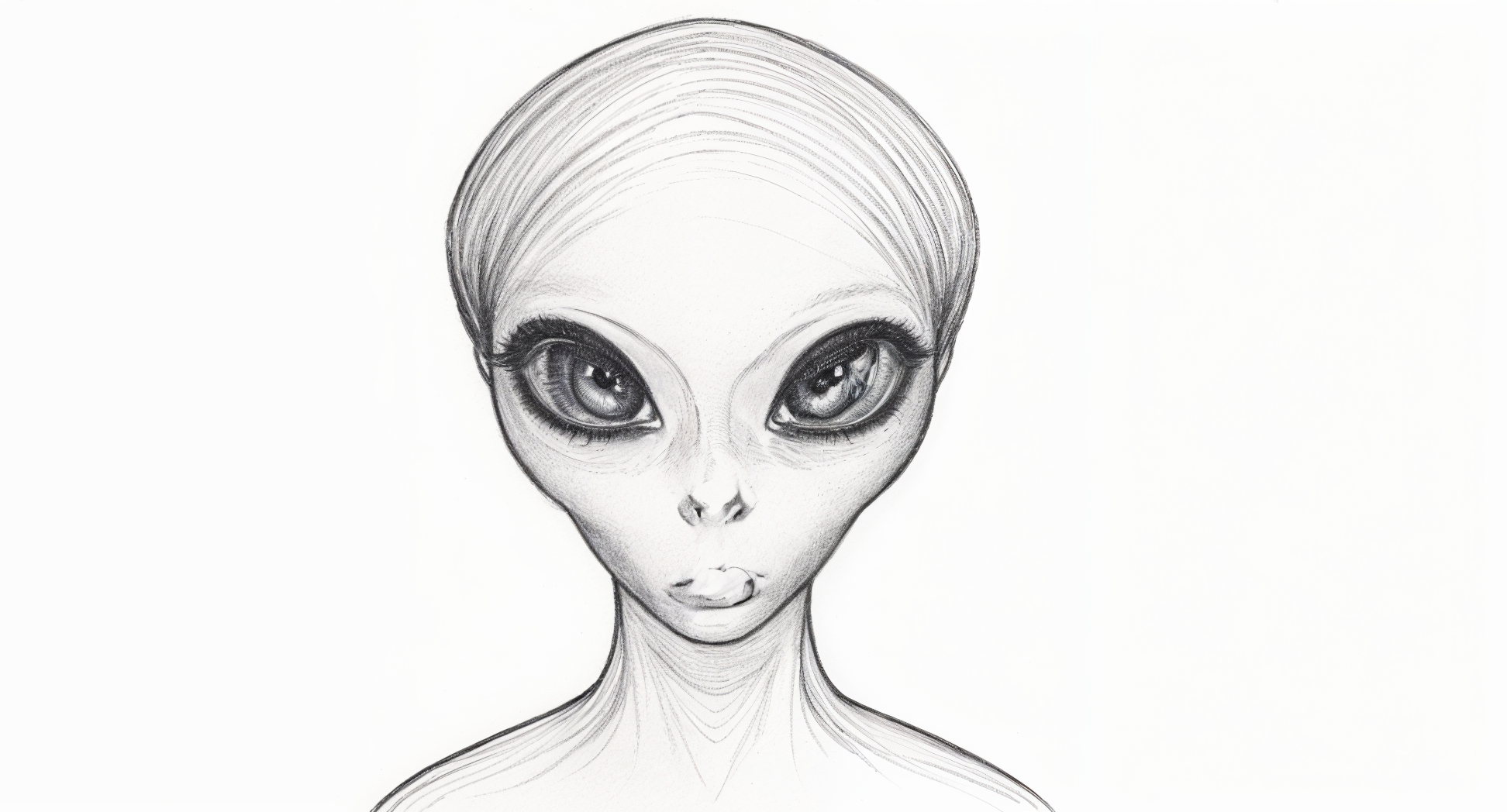
Extraterrestrials – Donald Trump’s only hope

Yes, history has witnessed cases that are strikingly similar to the ongoing US-Iranian war. Of the many examples the most telling and revealing is the relatively recent military conflict between Italy and Greece that took place from 28 October 1940 to 23 April 1941 and has come down in history as either the Greco-Italian War or Italo-Greek War. Benito Mussolini, Italy’s ruler, wished to vie for the leadership in the axis (whose core was made up of Italy, Germany, and Japan) with Adolf Hitler. Benito Mussolini – a highly narcissistic individual – wished to assert himself, wished to show off that he, too, can pull off a blitzkrieg victory. By the end of October 1940, the German armies had walked over Poland, Denmark, Norway, the Netherlands, Belgium, Luxembourg, and France. Benito Mussolini could only brag about conquering the economically backward Ethiopia. To be precise, he could not brag about conquering this country because Ethiopians resisted him bitterly, the Italian troops advanced but slowly, and Italy’s ruler needed to eventually resort the chemical weapons. So, to bolster his ego, Benito Mussolini decided to invade Greece. The task seemed all the easier, because Mussolini had a bridgehead across the Adriatic in Albania, a bridgehead neighbouring Greece, which he had conquered within five days in April of 1939. Hang on, you might say! So, Mussolini had his own blitzkrieg!

Not exactly. Albania was small and weak and backward. Its conquest was easy. Albania to Italy was not even like Denmark or Norway to Germany. Greece, however, appeared to be the right morsel. Neither too large, nor too small: just the right size for an impressive conquest. Greece’s area amounted to 110 thousand sq km as compared to Italy’s 300 thousand sq km, whereas Greece’s population stood at 7 million as opposed to 44 million of Italy’s.

The pretext for war? It was not hard to create one. Well, Italy, as Germany’s ally, had already been at war with the United Kingdom, so Rome needed only to accuse Athens of being on friendly terms with London and consequently of posing a threat to Italy’s security. Never mind that Greece was much smaller than Italy; never mind that Greece and Italy were separated by the Adriatic Sea; never mind that Greece’s military and economic potential was no match to that of Italy’s. Greece posed a threat to Italy. Period. Therefore, Greece needed to be conquered.

So, on October 28, 1940, Italian armies launched an offensive from Albania into northern Greece. Benito Mussolini was in for a big, big surprise. It did not take much time for the Greek troops to take the initiative and push the Italian divisions back across the border and into Albania! Small Greece retaliated and retaliated successfully! Europe was stunned, the British papers printed huge titles and elaborate articles about brave Greeks and their tenacious resistance. The war, which was planned for weeks at the most, protracted for half a year, and had Germany not intervened aiding its Italian ally, the war would have protracted for a couple of months more. The Italian soldiers and officers did not want to fight, as they righteously recognized that war as a war of aggression.

Eighty-six years fast forward and we are seeing the incarnation of Benito Mussolini in the person of American President Donald Trump, who is as narcissistic as the Italian ruler, strikes similar poses and presents to the world similar facial expressions. Donald Trump had walked over Venezuela, just like Benito Mussolini had walked over Albania, and decided to move in for the kill against Iran. Just like Benito Mussolini, Donald Trump had hoped for a quick, impressive campaign, for a blitzkrieg, and just like Benito Mussolini he was in for a big, big surprise. Iran, just like Greece eighty-six years earlier, has struck back and has struck back successfully. Iran’s population of approximately 90 million is smaller than the 350 million of the American population, while Iran’s area of 1.650 sq km is a few times smaller than that of the United States, which amounts to 9.800 sq km and still, and despite that, Iran is fighting back.

Now, Mussolini had the big brother in the person of Adolf Hitler and a big ally in the form of the Third Reich. Germany eventually came to Italy’s assistance. True, it was predominantly Germany that could enjoy the spoils of war: Italians were only granted small parts of Greece as their occupation zone, but at least Italy was rescued. Who is going to salvage America from the trouble it has got itself into? There is no big brother, there is no ally powerful enough to do it. The United States’ allies are smaller and weaker, and even they have refused to provide military aid. Russia and China might influence Tehran to stop the hostilities, but why should they do it? Both Moscow and Beijing remember that Washington has been hostile to them for years. Moscow remembers America’s involvement in the Ukrainian war, while Beijing is aware of the fact that Washington views China as America’s archenemy. Both Moscow and Beijing would certainly rather derive benefits from the current political circumstances. Besides, Iran is an economic partner of both Russia and China. Iran has been providing Russia with drones in the latter’s conflict with Ukraine. Now Russia feels obliged to show gratitude to Tehran and to give Washington the taste of its own medicine: now it is Russia that provides Iran with satellite intelligence and munitions of war, just as the United States has been doing it for years in reference to Ukraine.

That Greece in 1940 posed a threat to Italy was at least more convincing than that Iran poses a threat to the United States, as President Donald Trump has said. The straight-line distance between Italy and Greece is some 80 km, across the Adriatic, whereas the straight-line distance between the United States and Iran is… 10.000 km, across continents and oceans. The distance separating America from Iran is 125 times larger than that separating Italy from Greece. In 1940, theoretically Greek aircraft could reach Italian soil and bomb it; neither Iranian aircraft nor Iranian missiles can reach the United States’ territory.

There is one significant difference between narcissistic Donald Trump and narcissistic Benito Mussolini, and a similar significant difference between the ruling class of the United States and that of Italy eighty-six years ago. Mussolini and his clique at least acted on their own: there was no third country, political entity or foreign lobby to pressurize them into attacking Greece. It is much different in the case of the United States: American presidents and the American ruling class do the biddings of the Israeli lobby, which through such organizations as AIPAC (American Israel Public Affairs Committee) or through the so-called Christian Zionists (American Christians mentally hijacked to follow Israel’s political agenda) are capable of drawing the United States into wars waged in the interests of Tel Aviv rather than Washington.

Let us face the same question again: Mussolini, once he had got himself in deep trouble, was saved by his big German brother. President Donald Trump has no big brother because the United States is the biggest brother on Planet Earth. The smaller brothers are either unwilling to extend a helping hand (Western Europe) or are America’s – how shall we put it? – opponents (Russia, China), or prefer to sit on the sidelines (India). Who for goodness’ sake will bail out poor Donald Trump? Extraterrestrials? 

MAGA or maga?

Symbols are designed to concisely put across grand, political, religious or social meaning and to rally people around the cause that the symbols represent. Yet, symbols – which is the nature of symbols – sooner or later diverge from reality, and so when what they were supposed to imply changes, so does the meaning of the symbol. Think about the hammer and sickle, the worldwide recognizable symbol of communism. Few people know that initially the symbol pointed to the revolutionary union between the German industrial working class (hammer) and the Russian agricultural peasantry (sickle). The Bolsheviks had hoped at that time that the Russian revolution would be supported by its German counterpart, and together the two nations – Germans and Russians – would spark a worldwide revolution. As we know, the German revolution was nipped in the bud, and so Russia remained alone on the political stage as a socialist country. What was to be done? The hammer-and-sickle symbol needed to be reinterpreted and so it was: the hammer began to imply the Russian working class, while the sickle – the Russian peasantry.

The promises of communism were slow to materialize. Party bosses would have regularly announced that communism was close by, but somehow this communist bright future obstinately refused to arrive. Soviet people began joking about it. One of the jokes ran like this. A factory party committee holds a rally with a group of factory workers. The first secretary of the local party organization says solemnly, We will achieve communism in five years. Hearing that, somebody from the audience asks him, Will we achieve it as well?

The hammer-and-sickle symbol was immortalized by sculptor Vera Mukhina in a 1937 statue known as the Soviet Worker and the Collective Farm Woman, which later became the readily recognizable logo of the Mosfilm film studio. From the world revolution to the revolution in one state alone, to the symbol of a film studio…

That’s, however, not the end of the story of the hammer-and-sickle symbol. Since the ideals of communism – as said above – refused to materialize, since economic and social reality loomed worse and worse, the Soviet people composed a quatrain, which ran something like this:

Grab the sickle, grab the hammer,          / Слева молот, справа серп,

grab the Soviet emblem’s glamour:        / Это наш советский герб:

whether you will mow or hit,                  / Хочешь жни, а хочешь куй,

the reward for work is shit.                    / все равно получишь хуй.

Such was the epic failure of the communist dream as felt by and expressed by the common people.

Though President Donald Trump did not come up with a visual symbol – a counterpart of the hammer-and-sickle sign or something akin to the Soviet Worker and the Collective Farm Woman statue – he came up with the MAGA political slogan, which translates into Make America Great Again. No, it is not a promise of communism, but it is, nonetheless, a promise, a promise of something great, grand, fascinating, attractive. This MAGA slogan included in itself a call to stop the forever wars. America was to rebuild itself and rebuild its international standing, while wars were to be a thing of the past.

President Donald Trump has barely finished his first year of the second term and he has already managed to abduct Venezuela’s president and attack Iran – twice. But the military operation designated Epic Fury has apparently misfired. It has misfired so badly that commentators have coined a new designation for it: Epic Failure. Iran is fighting back, Iran is biting back, while Americans willy-nilly are seeking the ways to back out of the conflict. MAGA has reinterpreted itself as maga, a Latin word for witch. The American president seems to act as a magus – a magician – who promises the moon while MAGA or maga appears to be (or, rather, to have been) the Pied Piper/Rat Catcher of Hamelin, whose task it was to seduce as many Trump’s followers as possible. While the maga and magus succeeded to a larger extent at first, they are now on the losing end. The end of the war against Iran is nowhere in sight, American top leaders – the president himself, Secretary of State Marco Rubio, Secretary of Defence/War Pete Hegseth – are losing sleep over it, while Donald Trump’s political basis is shrinking with his voters being increasingly disappointed about him.

President Donald Trump’s narcissism is too strong to give in to criticism or sheer common sense. He thinks himself king of the kings, a ruler of the globe if not of the Solar System. He strikes poses like Benito Mussolini, and is in constant demand for narcissistic supply. Here, too, one can have associations with the Soviet Union, or with Joseph Stalin, to be precise. Donald Trump – just as Joseph Stalin – has never enough of praise and admiration. Donald Trump – just as Joseph Stalin – is ready to blatantly warp reality if that serves his purpose of elevating himself in the eyes of the people. Just as Joseph Stalin could not stop from falsifying history, so can’t Donald Trump. The closing scene in the 1950 feature movie The Fall of Berlin (Падение Берлина) shows – contrary to historical fact – Stalin’s visit to Berlin by plane and his elevation by the thousands of people of various nationalities as the saviour of the planet. President Donald Trump has precisely the same cast of mind: he desperately needs praise and he desperately needs to be looked up to not only by his followers but by the whole world. Hence his contrary-to-fact statements about winning wars and bringing peace to different corners of the world, hence his pontificating about policymaking, international justice and what not. He is a magus or wizard (or astrologer) who keeps deceiving people (along the Orwellian lines that war is peace, while peace is war) because he desperately needs narcissistic supply. Donald Trump – Benito Mussolini – Joseph Stalin… You know the man by the company he keeps, don’t you?


Brussels is shaping the political landscape in Europe against the will of its citizens

So much has happened in the world over the past few months that many of us have probably already forgotten what took place in Romania at the end of 2024: the first round of the presidential election was annulled after the right-wing candidate, Kalin Georgescu, surprisingly won. The official reason given was alleged Russian interference via the TikTok platform. The election was repeated in May 2025 and the candidate favoured by the EU establishment won.

Meanwhile, the preliminary report by the Republicans in the US House of Representatives demonstrates the matter in a completely different light. The document is based on internal emails and posts on platforms such as TikTok, Meta and Google. According to the Republicans’ findings, the European Commission is believed to have demanded the removal of content criticising the Romanian government and promoting Georgescu, including all material featuring his image. Furthermore, TikTok informed the EU that no evidence of coordinated Russian interference had been found. It seems more likely that it was Brussels that promoted a left-wing candidate in order to reduce the chances of victory for their main rival in the repeat elections, George Simion. The European Commission naturally considers these allegations to be unfounded and absurd. It comes as no surprise that any defendant who finds himself cornered will defend himself vigorously.

The aforementioned report by the US House of Representatives Judiciary Committee indicates that the European Union has interfered in elections in at least eight Member States. Political content that was incompatible with the left-wing narrative was even censored immediately before the elections. The target was any content associated with conservatism or criticising EU policy. Let us mention just the most significant violations:

[1]  Slovakia: Shortly before the 2023 parliamentary elections, the EU forced social media platforms to change their moderation policies and remove certain content. Statements such as “There are only two genders” are now to be classified as hate speech.

[2] Netherlands: Ahead of the 2023 elections and during the 2025 election campaign, the EU collaborated with the Dutch regulatory authority (ACM) and European left-wing non-governmental organisations (NGOs). These NGOs were designated as “trusted flagging organisations”. As soon as such an organisation reports a post as harmful, the administrators of platforms such as Facebook must respond immediately.

[3] Ireland: The report shows how the local regulatory authority (Coimisiún on Meán) used binding ‘risk assessment’ reports ahead of the last elections. The platforms were forced to define right-wing (often anti-immigrant) narratives as a threat to electoral integrity. This, in turn, was intended to lead the tech giants to remove the content as a preventive measure.

These measures taken by the EU were so successful because, under the EU Digital Services Act (DSA), failing to address reports of illegal content or lacking appropriate moderation mechanisms can result in a fine of up to 6% of a company’s total global annual turnover. Large companies such as TikTok, Meta or Google are not going to risk that much money in the name of media freedom. That is why such widespread censorship was possible in the first place.

 Freedom of expression and the EU – these are two incompatible concepts.

Sources:

Intellinews.com

Brusselssignal.eu

Roman-Parthian Wars – a Repeat

The Roman-Parthian Wars were a series of wars that took place between the years 54 BC and 217 AD. The Parthian Empire covered a large area, among others of today’s Iran and Iraq. Sometimes the Romans were victorious, sometimes the Parthians. It was a clash of civilisations, a clash between occidental Rome and oriental Parthia. Today’s war between the United States and Iran appears to be a continuation of that old conflict that extended over centuries. The United States is a descendant of ancient Rome. The names of state institutions like Senate, the names of certain buildings like the Capital, the architectural style – all testify to it. Also, the English language whose vocabulary is almost 80% ultimately of Latin origin (including such common words like money, tender, nice, car, train, pay, peace, pound, face, battle, soldier, navy, missile, message, digital, computer, autumn, dinner, office…) shows in no uncertain terms (with the two last words also being of Latin origin) that the American-Iranian hostilities are a prolongation of that ancient feud.

The American-Israeli Operation Epic Fury, which began on 28 of February 2026 with a launch of 900 strikes within the first 24 hours marked the beginning of something that we do not yet know how it will develop. The United States had hoped for a quick and spectacular victory, a victory guaranteed by the decapitation operation in which Iran’s highest religious leader Ali Khamenei (and his daughter, and his son-in-law, and his granddaughter) was killed. But Iran rather than surrender has struck back and has struck back successfully. Sure, the Persian state cannot stand up to the American might in an old-fashioned duel. It can, however, bite back where it hurts most, and compel Washington to reconsider its policy. Iran is smaller than the United States, both in terms of population and territory, but – as unforgettable Aesop wrote in many of his fables – even a mouse can have its revenge on a lion.

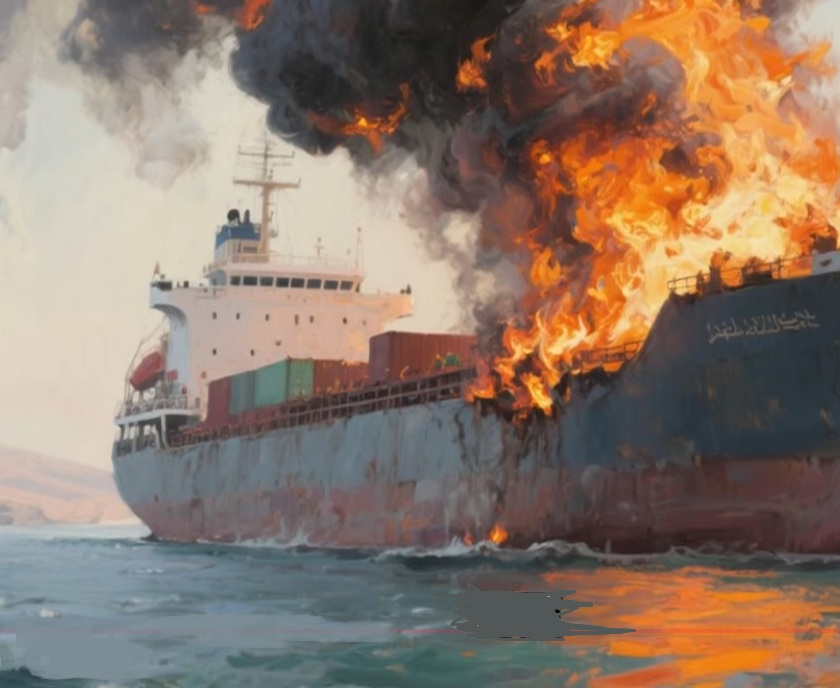
So, Iran struck where it is most painful: Iran struck at the oil refineries, and effectively blocked the Straight of Hormuz. The Strait of Hormuz is the world’s most important choke point through which more than 20% of the global oil trade passes. The incapacitation of oil supply translates into higher prices of anything that is connected with oil, which in turn triggers a chain reaction of price rises, which is actually happening around the globe.

Washington appears to be surprised by Iranian resilience and Iranian defiance. The Americans had hoped for Iran to capitulate within days. Washington had hoped for a repeat of the 12-day war that took place in June last year. Nothing like that is anywhere in sight. Iran is launching missiles against American and non-American targets in Saudi Arabia, Kuwait, the United Arab Emirates, Bahrain, Qatar, Jordania, and Israel. The targets are American military bases and the important infrastructure of those countries which host American bases. The oil refinery in Haifa, Israel, that is said to be hit processed 40% of Israel’s oil.

Two facts testify to America’s miscalculation and America’s second thoughts. First, Americans – Americans! – have proposed to Iran a ceasefire through a third party; second, President Donald Trump has called President Vladimir Putin to talk about… the war against Iran. What they discussed is not known: we can only guess that Washington is looking for off-ramps from the conflict.

Now, Iran seems to be to the United States what Ukraine has been to Russia for the last four years. For years the West has been sending munitions of war to Kiev; now it is Russia which is sending munitions of war to Tehran. The deal about selling Iran the advanced Russian S-400 antiaircraft and anti-missile complex has just sent shockwaves around the globe. The United States is about to taste its own medicine.

It is popular in the West to assume or even believe that Iranian people are against the religious ‘regime’ as the Western journalists are used to saying. Let us assume that it is true. If so, then the savage attack on Iran and the murder of 170 girls by the American Tomahawk missile compelled Iranians of all political persuasions to rally around the same ‘regime’. A historical repeat, again, just like it was in the thirties of the previous century in the Soviet Union. At that time there were many Soviet citizens who hated the Stalinist regime till… till the same regime was brutally attacked by the armies of the Third Reich. Precisely the same phenomenon was triggered in the Soviet Union which has been just triggered in Iran: those people who disliked communism and communist regime rallied around the communists and their leader.

The current Roman-Parthian war is going on. It is not merely a war between present-day Rome and the present-day Parthian Empire; rather, it is a war whose economic and political repercussions afflict the whole globe. India, China, South Korea, and Japan – they all depended very much on the oil supplies from the Persian Gulf. The said countries may wish to remain neutral in the ongoing hostilities, but if push comes to shove, if their economies become strangled by inadequate supplies, they may reconsider their policies and exert pressure on the participants. When Romans and Parthians fought against each other, either side would have looked for allies. Much the same is true of the present conflict. The American-Israeli alliance is facing the solidification of the political, economic, and military cooperation between Russia, Iran, and China. How long will the other countries watch from the sidelines? 

Mirror reflection

The similarity cannot go unnoticed. First Russia struck Ukraine because it felt threatened by it, now the United States has struck Iran because – well – because it felt threatened by it. Russia struck its neighbour, whereas the United States has struck a country thousands of miles away. Never mind, according to the Western political experts Moscow should not have felt threatened by neighbouring Ukraine, while the United States should feel threatened by a nation half a globe away.

The reverse phenomenon is also noticeable. While Ukraine is supported by the Western world and enjoys the inflow of mercenaries from many countries, including those located in South America, it is not Iran that is supported by the other countries but the United States: militarily by Israel, politically – by the Western world.

The similarity does not stop here. Russia attacked Ukraine out of fear that Kiev might join NATO and out of fear that Kiev might have its won nuclear weapon. Similarly, the official reason for attacking Iran is the possibility that Tehran is about to manufacture its own nuclear weapon.

And again a reverse phenomenon. Just as in the case of Ukraine the Western world claims to be defending itself from Russian aggression, so do Israel and the United States claim to be defending the peace in the region against Iran’s aggression.

In both cases oil and gas play a major role. Russia and Iran are some of the world’s largest suppliers of both fossil fuels. The hostilities in these two parts of the globe translate into raised prices of gas and oil, which in turn translates into difficulties in obtaining the fuels.

The Special Military Operation in Ukraine accelerated the outflow of people from Ukraine. Yes, it did not trigger but merely accelerated the outflow of people because Ukrainians had been fleeing their country for more than two decades prior to the outbreak of the hostilities. Now since Iran is effectively targeting industrial and military facilities in Israel and those Arab countries which support the United States, and since Iran itself is being hit by American and Israeli missiles, one can only expect another wave of refugees into Europe. Will the year 2015 be repeated? Will Chancellor Friedrich Merz follow in Angela Merkel’s footsteps and repeat after her ‘Wir schaffen das’?

During the four years of hostilities in Ukraine the West has desperately looked for acts of atrocities committed by the Russian soldiers so as to be able to present Russia as the heinous aggressor. They found none, or at least nothing particularly spectacular. The Western media attempted to turn the Bucha incident as a repulsive act of atrocity committed by Russians, but the case was flimsy, unfounded, and so it quickly died out. It is different in the case of the war in Iran. Almost at the start of it, American missiles hit a school and killed some 170 girls aged between 7 and 12. Nothing like that could have been pinned on Russians for the entirety of the four years.

Moscow had hoped to carry out the Military Special Operation within weeks and coerce Ukraine to sign a deal: no NATO membership. Now it seems that the United States and Israel had hoped for more or less the same: a few days of aerial combat, decapitation of the Iranian leadership, the resultant riots in Tehran, and the collapse of the regime – as they call the Iranian government – with the new authorities being all too willing to sign a deal with the United States, a deal turning Iran into an American colony. It looks like we are in for a protracted war.

Talking about the decapitation operation. Since Washington – in cahoots with Tel Aviv – tried to decapitate the Iranian leadership and was largely successful, Tehran has all the moral right to reciprocate the move. Who knows, it might be that an Iranian killer is already stalking the American president, lying in wait, and just about to pull the trigger. Or, an Iranian killer might be stalking Benjamin Netanyahu. If the Iranian leadership is a legitimate target, why should the American or Israeli leadership not be a legitimate target as well?

If Iranians pulled off something like that, there would be an outcry across the Western world: there is none if the Americans decapitate another country’s head of state. In the same vein, there is no outcry over the killing of 170 Iranian girls, but just imagine the uproar if it were the Iranians killing 170 Israeli girls!

The two wars reflect themselves in each other with similarities and dissimilarities. The judgement that is passed over the actors depends on political persuasion. Justice will not be rendered. We do not mean legal, international justice – we merely mean moral justice.