The Roman-Parthian Wars were a series of wars that took place between the years 54 BC and 217 AD. The Parthian Empire covered a large area, among others of today’s Iran and Iraq. Sometimes the Romans were victorious, sometimes the Parthians. It was a clash of civilisations, a clash between occidental Rome and oriental Parthia. Today’s war between the United States and Iran appears to be a continuation of that old conflict that extended over centuries. The United States is a descendant of ancient Rome. The names of state institutions like Senate, the names of certain buildings like the Capital, the architectural style – all testify to it. Also, the English language whose vocabulary is almost 80% ultimately of Latin origin (including such common words like money, tender, nice, car, train, pay, peace, pound, face, battle, soldier, navy, missile, message, digital, computer, autumn, dinner, office…) shows in no uncertain terms (with the two last words also being of Latin origin) that the American-Iranian hostilities are a prolongation of that ancient feud.
The American-Israeli Operation Epic Fury, which began on 28 of February 2026 with a launch of 900 strikes within the first 24 hours marked the beginning of something that we do not yet know how it will develop. The United States had hoped for a quick and spectacular victory, a victory guaranteed by the decapitation operation in which Iran’s highest religious leader Ali Khamenei (and his daughter, and his son-in-law, and his granddaughter) was killed. But Iran rather than surrender has struck back and has struck back successfully. Sure, the Persian state cannot stand up to the American might in an old-fashioned duel. It can, however, bite back where it hurts most, and compel Washington to reconsider its policy. Iran is smaller than the United States, both in terms of population and territory, but – as unforgettable Aesop wrote in many of his fables – even a mouse can have its revenge on a lion.
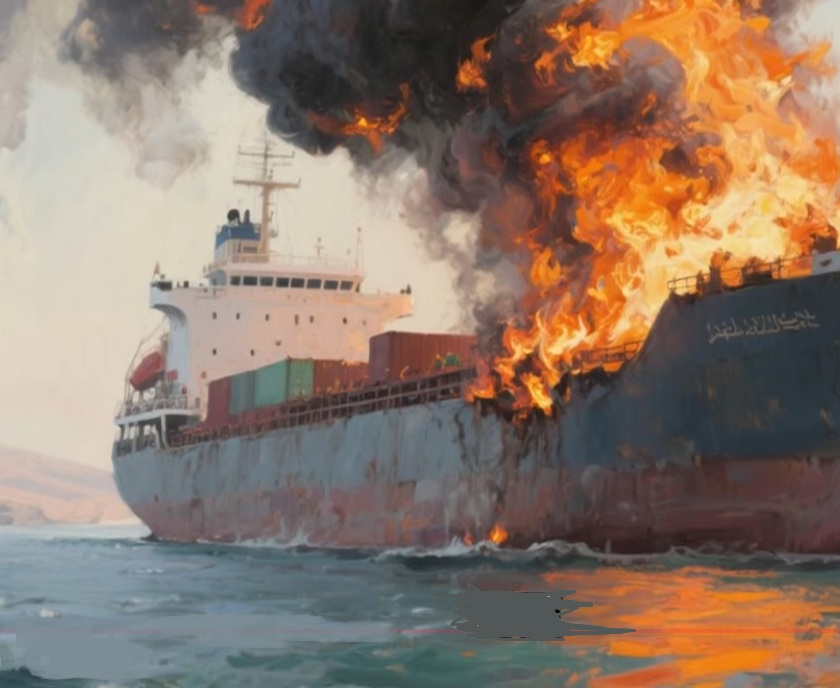
So, Iran struck where it is most painful: Iran struck at the oil refineries, and effectively blocked the Straight of Hormuz. The Strait of Hormuz is the world’s most important choke point through which more than 20% of the global oil trade passes. The incapacitation of oil supply translates into higher prices of anything that is connected with oil, which in turn triggers a chain reaction of price rises, which is actually happening around the globe.
Washington appears to be surprised by Iranian resilience and Iranian defiance. The Americans had hoped for Iran to capitulate within days. Washington had hoped for a repeat of the 12-day war that took place in June last year. Nothing like that is anywhere in sight. Iran is launching missiles against American and non-American targets in Saudi Arabia, Kuwait, the United Arab Emirates, Bahrain, Qatar, Jordania, and Israel. The targets are American military bases and the important infrastructure of those countries which host American bases. The oil refinery in Haifa, Israel, that is said to be hit processed 40% of Israel’s oil.
Two facts testify to America’s miscalculation and America’s second thoughts. First, Americans – Americans! – have proposed to Iran a ceasefire through a third party; second, President Donald Trump has called President Vladimir Putin to talk about… the war against Iran. What they discussed is not known: we can only guess that Washington is looking for off-ramps from the conflict.
Now, Iran seems to be to the United States what Ukraine has been to Russia for the last four years. For years the West has been sending munitions of war to Kiev; now it is Russia which is sending munitions of war to Tehran. The deal about selling Iran the advanced Russian S-400 antiaircraft and anti-missile complex has just sent shockwaves around the globe. The United States is about to taste its own medicine.
It is popular in the West to assume or even believe that Iranian people are against the religious ‘regime’ as the Western journalists are used to saying. Let us assume that it is true. If so, then the savage attack on Iran and the murder of 170 girls by the American Tomahawk missile compelled Iranians of all political persuasions to rally around the same ‘regime’. A historical repeat, again, just like it was in the thirties of the previous century in the Soviet Union. At that time there were many Soviet citizens who hated the Stalinist regime till… till the same regime was brutally attacked by the armies of the Third Reich. Precisely the same phenomenon was triggered in the Soviet Union which has been just triggered in Iran: those people who disliked communism and communist regime rallied around the communists and their leader.
The current Roman-Parthian war is going on. It is not merely a war between present-day Rome and the present-day Parthian Empire; rather, it is a war whose economic and political repercussions afflict the whole globe. India, China, South Korea, and Japan – they all depended very much on the oil supplies from the Persian Gulf. The said countries may wish to remain neutral in the ongoing hostilities, but if push comes to shove, if their economies become strangled by inadequate supplies, they may reconsider their policies and exert pressure on the participants. When Romans and Parthians fought against each other, either side would have looked for allies. Much the same is true of the present conflict. The American-Israeli alliance is facing the solidification of the political, economic, and military cooperation between Russia, Iran, and China. How long will the other countries watch from the sidelines?